US Electric Vehicle Share Tripled in Two Years

[Asia Economy Reporter Yujin Cho] The Wall Street Journal (WSJ) reported on the 18th (local time) that the shortage of semiconductors and batteries has caused a backlog of orders, leading to a severe shortage in electric vehicle (EV) supply among U.S. automakers.
General Motors (GM), Ford, Rivian, and others are experiencing order backlogs for new electric vehicle models, with delivery times exceeding one year, WSJ reported.
Steven Center, head of Kia Motors' U.S. sales division, said, "The strong demand for recently launched electric sport utility vehicles (SUVs) is astonishing," adding, "For the EV6, the order backlog extends from 3 to 6 months."
Demand for electric vehicles is increasing significantly. According to research firm Motor Intelligence, the proportion of electric vehicles sold in the U.S. has tripled over the past two years during the COVID-19 pandemic. Currently, electric vehicles account for 6% of the total U.S. automotive market.
According to market research firm Edmunds, five out of the six best-selling vehicles in the U.S. in July were electric vehicles or plug-in hybrid electric vehicles (PHEVs).
WSJ cited federal and state tax incentives as the background for this surge in electric vehicle demand. The recently enacted Inflation Reduction Act (IRA) extended tax credit benefits of up to $7,500 per electric vehicle through 2032.
Additionally, WSJ analyzed that major automakers are expanding their electric vehicle lineups with pickup trucks, SUVs, and off-road models, thereby attracting new demand.
The global automotive industry is also under pressure to secure an early lead in the electric vehicle market and narrow the gap with Tesla, the current frontrunner.
WSJ reported that executives from GM, Ford, and Volkswagen are confident in the solid demand for electric vehicles and believe they can surpass Tesla's performance.
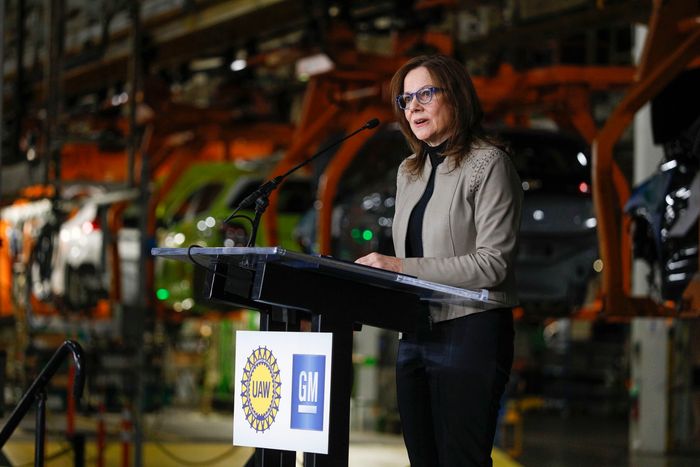
However, it is analyzed that catching up with this demand is not easy, as it takes more than a year to increase factory production targets and there are difficulties in scaling up production among thousands of suppliers.
WSJ explained that while automakers were initially hesitant to fully enter the electric vehicle market, they are now struggling to increase production due to shortages of automotive semiconductors and batteries.
GM stated that production of new electric vehicle models is constrained by battery supply. Electric vehicle startups Rivian and Lucid also faced difficulties launching new models due to parts shortages. Rivian lowered its annual production target earlier this year because of this, and Lucid halved its annual production target in August.
WSJ pointed out that batteries will be the biggest long-term challenge. A GM spokesperson said, "The Detroit plant and the Tennessee plant, which have been fully converted to electric vehicle production, are limited in production due to battery supply," adding that production of the new electric vehicle 'Hummer' has been disrupted by battery issues. Although 700 workers have been assigned to the Hummer production line at the Detroit plant, daily output remains at about 12 units.
Jim Farley, CEO of Ford, emphasized during a conference call after the July earnings announcement, "Automakers are only able to secure about half of the battery materials needed to meet electric vehicle sales targets," stressing, "This is why normalizing the supply chain is very important and strategic."
As prices for battery materials such as nickel and lithium soar, some automakers have signed direct contracts with mining companies. WSJ noted that this is a significant change for the automotive industry, which has had little involvement in mineral supply chains for decades.
One of the main obstacles to the spread of electric vehicles is the increase in vehicle prices. Due to recent rises in raw material and battery costs, electric vehicles have become significantly more expensive compared to internal combustion engine vehicles.
According to market research firm JD Power, the average actual purchase price of electric vehicles in the U.S. in July was $66,000, a 28% increase compared to the same month last year. In contrast, the average actual purchase price of non-electric vehicles was $45,000, rising only 12% during the same period.
© The Asia Business Daily(www.asiae.co.kr). All rights reserved.


















