Golf Boom Driven by 2030 Generation Culture
"Like Being Able to Guess Opponent's Assets"
High Entry Barriers... Concerns Over Promoting Polarization
[Asia Economy Reporter Jang Hee-jun] The so-called 'Golf-ting,' where people find romantic partners through golf, is becoming popular among young people. Golf, once recognized solely as a leisure sport, is transforming into a medium for various play cultures among the MZ generation.
However, due to the high costs involved, the entry barrier is steep, leading to criticism that the golf culture among young generations may be fostering social polarization.
MZ Generation 'Golf Boom'... 1 in 5 Golfers Are in Their 20s and 30s

The domestic golf industry, which has rapidly grown since COVID-19, has been driven by the 20s and 30s age group. They account for about 20% of the total golf population of 5.64 million (as of last year), establishing themselves as the main consumer base in the golf market.
Young women, in particular, are the market segment most closely watched by related industries. In fact, last year, Shinsegae Department Store's golf wear sales grew by 56.3% compared to the previous year, and Hyundai Department Store's sales growth rate reached 65.5%. The group that purchased golf wear most frequently and spent the most money was women in their 30s.
Playing Golf and Meeting Someone... "How About Golf-ting This Weekend?"
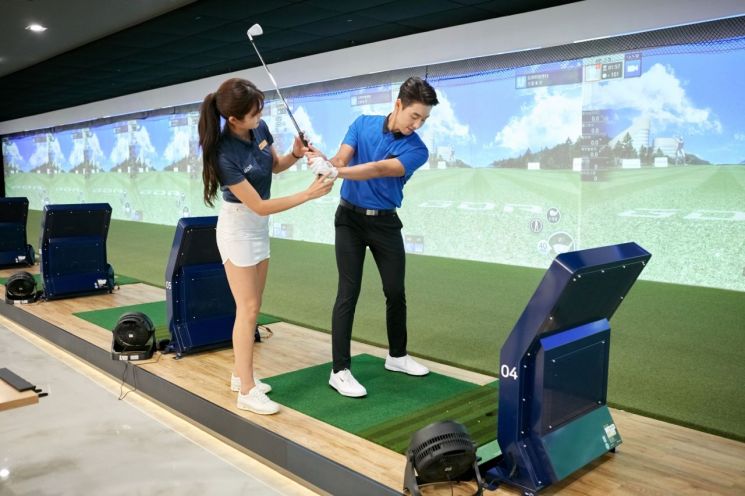
With the influx of the MZ generation onto the golf course, 'Golf-ting' has emerged. While 'lightning meetings' existed before, meetings mediated by golf have become commonplace largely due to the influence of the younger generation. On internet communities, KakaoTalk open chats, and Naver Band, posts recruiting golf-ting partners can be easily found.
Kim Seong-mo (33), an office worker who started learning golf early last year, met his current partner through golf-ting during a round this spring. Kim said, "I started out of curiosity with a friend, but playing golf paired with a partner made conversations much easier, and we quickly became close," adding, "It's better than enduring awkward moments at a cafe during a blind date."
The forms of golf-ting vary. Some have a meal or a drink after finishing a round, while others meet at less burdensome screen golf venues. There are even apps that match golf-ting partners. Users share information including photos, body type, education, and style, similar to dating apps.
"Guessing Partner's Wealth" vs. "Concerns Over Polarization Within the Generation"

The advantage cited by the 20s and 30s generation enjoying golf-ting is ironically the 'high entry barrier of golf.' Beyond simple blind dates or sharing hobbies, golf as a medium allows them to somewhat gauge each other's wealth and cultural level. The perception is, "If someone plays golf, they must be earning a certain amount."
However, negative views are also significant. Unlike other sports, golf requires relatively high initial costs, which could reproduce new economic polarization among young people. There are voices expressing concern about the sense of deprivation among low-income youth.
Professor Lee Eun-hee of Inha University's Department of Consumer Studies explained, "Golf-ting requires the economic power to have the skills, experience, and equipment to go out for rounds, so it is only possible for those with financial leeway," adding, "It is similar to the past culture of finding romantic partners at luxury health clubs within hotels."
She continued, "Since participation requires bearing the initial costs of golf, it can be interpreted as a facet of economic polarization appearing among the younger generation," and added, "It could degenerate into a culture like strict dating apps where high-income individuals seek partners only within their own social class."
© The Asia Business Daily(www.asiae.co.kr). All rights reserved.
![User Who Sold Erroneously Deposited Bitcoins to Repay Debt and Fund Entertainment... What Did the Supreme Court Decide in 2021? [Legal Issue Check]](https://cwcontent.asiae.co.kr/asiaresize/183/2026020910431234020_1770601391.png)

















