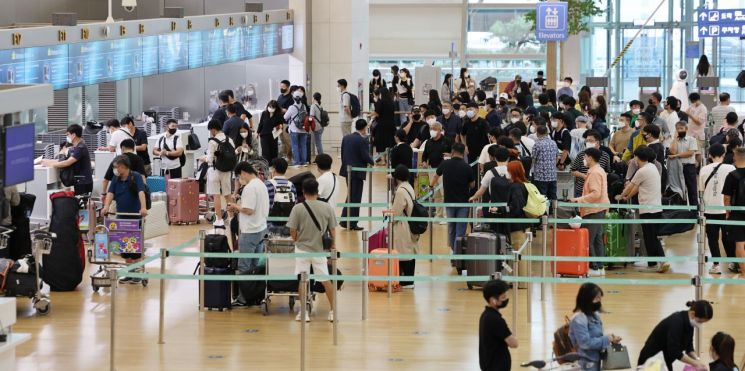
[Asia Economy Reporter Kim Young-won] As COVID-19 social distancing measures have been lifted and aviation restrictions around the world have eased, more people are preparing for overseas travel. However, when traveling abroad during the peak mosquito activity season, caution is needed regarding mosquito-borne infectious diseases.
Malaria can be contracted domestically, but there are also cases where mosquitoes infected overseas bring the disease into Korea. Yellow fever, malaria, dengue fever, chikungunya fever, West Nile fever, and Zika virus infection are mosquito-borne infectious diseases imported from abroad.
Mosquito-borne infectious diseases are usually transmitted when a mosquito that has bitten an infected patient bites another person. They are not transmitted through ordinary person-to-person contact. Rarely, transmission can occur through blood transfusions or organ transplants, and Zika virus infection can also be transmitted through sexual contact.
Symptoms vary depending on the disease but mainly include fever, headache, muscle pain, joint pain, and conjunctivitis. Sometimes symptoms do not appear. Zika virus infection mainly causes rash symptoms, accompanied by joint pain, arthritis, and conjunctival injection. Malaria is characterized by fever and fatigue that gradually develop and persist for the first few days. Severe patients may experience jaundice, blood clotting disorders, liver failure, and acute encephalopathy.
Before traveling, check the status of mosquito-borne infectious diseases in the destination country, and if necessary, get vaccinated or take preventive medication. It is also advisable to bring mosquito repellent, mosquito nets, light-colored long clothing, and essential medicines.
During travel, avoid places with many mosquitoes such as grassy areas or mountains. When engaging in outdoor activities, wear bright long clothing and avoid using strongly scented cosmetics or perfumes. If you sweat, shower and wash clothes promptly.
Most mosquito-borne infectious diseases imported from abroad have no specific treatment. Therefore, symptomatic treatment is provided according to symptoms, making early diagnosis and prompt treatment important. If suspicious symptoms appear within two weeks after returning, it is advisable to visit a medical institution, inform them of your travel history, and receive treatment. Regarding blood donation, there are deferral periods depending on the countries visited, so check with the blood center before donating.
© The Asia Business Daily(www.asiae.co.kr). All rights reserved.
![Clutching a Stolen Dior Bag, Saying "I Hate Being Poor but Real"... The Grotesque Con of a "Human Knockoff" [Slate]](https://cwcontent.asiae.co.kr/asiaresize/183/2026021902243444107_1771435474.jpg)
















