[Seoul District News] Fine Dust Adsorption Filters Attached to 86 Village Buses on 10 Routes in Gangnam-gu & 12 'Fine Dust Free Zone Shelters' Operated at Bus Stops from Gangnam Station to Samsung Station on Teheran-ro Since Last Year, Expanded with 20 More at Dosan-daero and Hakdong-ro Bus Stops This Year ...Smart Garden Created at Seocho 4-dong Community Center in Seocho-gu
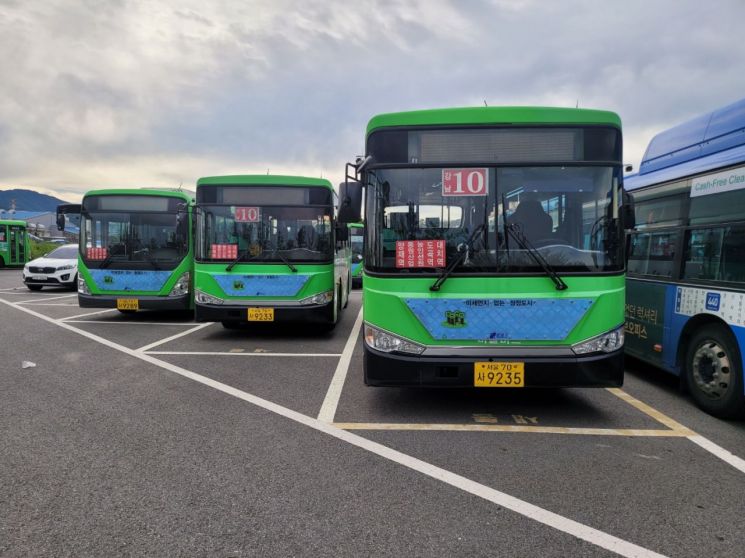
[Asia Economy Reporter Jongil Park] Gangnam-gu (District Mayor Seongmyeong Jo) has attached fine dust adsorption filters to 86 village buses on 10 local routes and officially started operation from this month.
When village buses equipped with fine dust adsorption filters run on the road, fine dust is filtered by the filter and converted into clean air.
The fine dust adsorption filter is made of a special fabric composed of four layers, including melt-blown fabric that can capture 97% of (ultra) fine dust based on 0.3μm (micrometer) and carbon fabric with high harmful gas removal efficiency (sulfur dioxide (SO2) 98%, toluene 78%, n-butane 71%), playing a role in removing fine dust and harmful substances.
Also, the adsorption filter frame is made of PET (polyethylene terephthalate) material to enable 100% recycling later. The filter will be replaced every three months, and filter component inspections will be conducted to verify its effectiveness.
The district is carrying out various projects to reduce fine dust in the urban area. Since last year, 12 'Fine Dust Free Zone Shelters' have been operated at bus stops on Teheran-ro between Gangnam Station and Samsung Station, and this year, 20 more will be installed and operated at bus stops on Dosan-daero and Hakdong-ro.
The 'Fine Dust Free Zone Shelter' is a facility that removes more than 90% of roadside fine dust using an electrostatic precipitator and activated carbon, purifying the outside air and maintaining the indoor fine dust at a 'good' level by introducing purified air.
In addition, fine dust free zones are operated to improve air quality in underground walkways such as the Cheongdam Station underground pedestrian section (650m), Seolleung underground passage (35m), and Yeoksam underground passage (125m). On main roads, 39 fine dust reduction cleaning vehicles operate daily to vacuum fine dust and perform water cleaning.
District Mayor Seongmyeong Jo said, “We expect that the fine dust adsorption filters attached to village buses will be effective in reducing fine dust on the roads,” and added, “We will implement various projects to create a clean city free of fine dust for 2050 carbon neutrality and strive to realize Green Smart City Gangnam.”
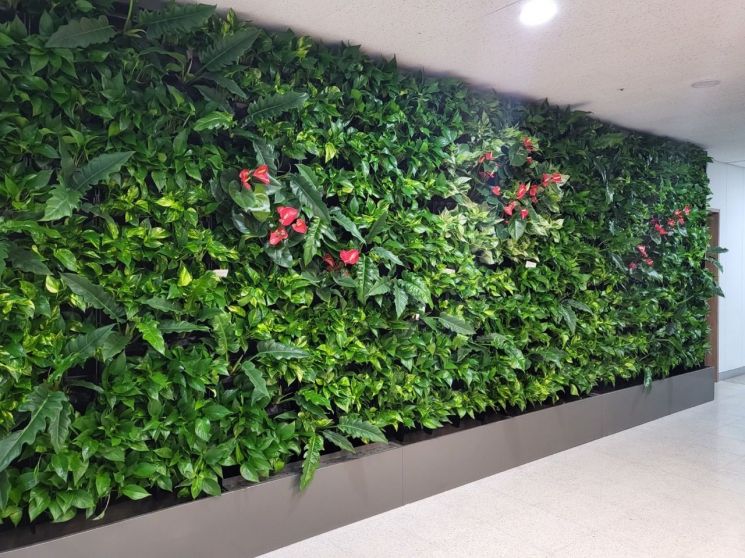
Seocho-gu (District Mayor Seongsu Jeon) announced that it has created a smart garden in the lounge on the 2nd floor of Seocho 4-dong Community Service Center to provide healing for residents visiting public institutions.
This place has been used as an open resting area where residents can comfortably relax, and with the installation of the smart garden, it will offer new attractions and provide a more pleasant environment for residents.
The 'Smart Garden' is a small indoor garden composed of five types of plants, 560 in total, including Cheongskin and Marbleskin, which are highly effective in reducing air pollutants such as fine dust and formaldehyde, and a plant automation system that controls illumination and watering. It was prepared to provide residents with a nature-friendly healing space.
Through this, the district expects to help residents heal their minds exhausted by COVID-19 and contribute to stress relief and psychological stability.
Last year, the district started creating a smart garden at the 'Seocho-gu Nut Tree Rest Area' and received great responses from residents. Encouraged by this, the district has installed a total of four smart gardens so far, including at the Seocho-gu Lifelong Education Center for People with Developmental Disabilities, the Supreme Court West Building, and Seocho 4-dong Community Service Center, to allow more residents to enjoy small breaks in their daily lives nearby.
Seocho District Mayor Seongsu Jeon said, “I hope residents will remember public institutions, which can sometimes feel stiff, as comfortable resting places through the smart garden,” and added, “We will continue to expand smart gardens to provide residents with resting spaces they can enjoy comfortably throughout all four seasons.”
© The Asia Business Daily(www.asiae.co.kr). All rights reserved.
![Clutching a Stolen Dior Bag, Saying "I Hate Being Poor but Real"... The Grotesque Con of a "Human Knockoff" [Slate]](https://cwcontent.asiae.co.kr/asiaresize/183/2026021902243444107_1771435474.jpg)

















