French Government to Hold Debate on "Right to Choose Death"
South Korea Also Proposed 'Assisted Dying Law' Last June
Related Discussions Expand Amid "Unethical" Criticism
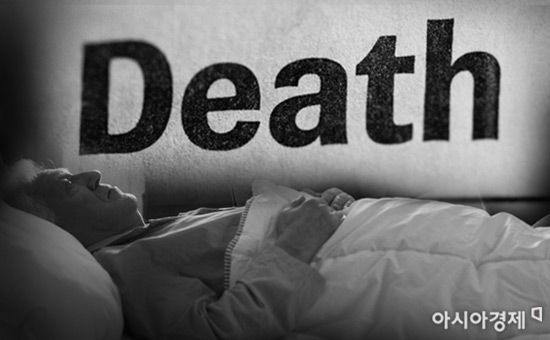 As the number of people ending their own lives increases in countries where assisted dying is permitted, social discussions about the 'right to choose death' are becoming more active.
[Asia Economy Reporter Yoon Seul-gi] As the number of people ending their lives in countries where assisted dying is permitted increases, interest in the 'right to choose death' is also growing. In South Korea, awareness of assisted dying is rising, and related discussions are becoming active, including the proposal of the 'Assisted Dignified Death Act.' However, religious circles firmly maintain that there is no 'right to die.'
The cause of death of Jean-Luc Godard, a master of the 1960s French New Wave (Nouvelle Vague), was confirmed as 'assisted suicide.' On the 13th (local time), according to AFP, The New York Times (NYT), and others, Godard's legal counsel Patrick Zanarelle revealed that the late director passed away by assisted suicide.
Zanarelle stated that Godard had suffered from 'multiple incurable diseases' during his lifetime and had wished to die with dignity. He told the NYT, "Godard was not in a condition to live normally like you or me, and as he had throughout his life, he very clearly said, 'This is enough now.'"
Assisted suicide involves medical professionals prescribing medication, but the patient self-administers the drugs to choose death, distinguishing it from euthanasia, where medical staff directly administer lethal substances.
Switzerland, where Godard ended his life, is the only country that permits assisted dying. Active euthanasia is illegal, but since 1942, assisted suicide has been allowed for both nationals and foreigners. Other countries permitting assisted dying include the Netherlands, Belgium, Luxembourg, and Canada. In the United States, only certain states such as California, Oregon, New Jersey, and Washington allow assisted dying.
However, euthanasia and assisted suicide are illegal in France. According to the law revised in 2016, only terminally ill patients may receive sedation from medical staff to induce sleep until death, with life-sustaining treatment withdrawn. Because of this, some French patients reportedly travel to neighboring European countries where euthanasia is permitted to end their lives.
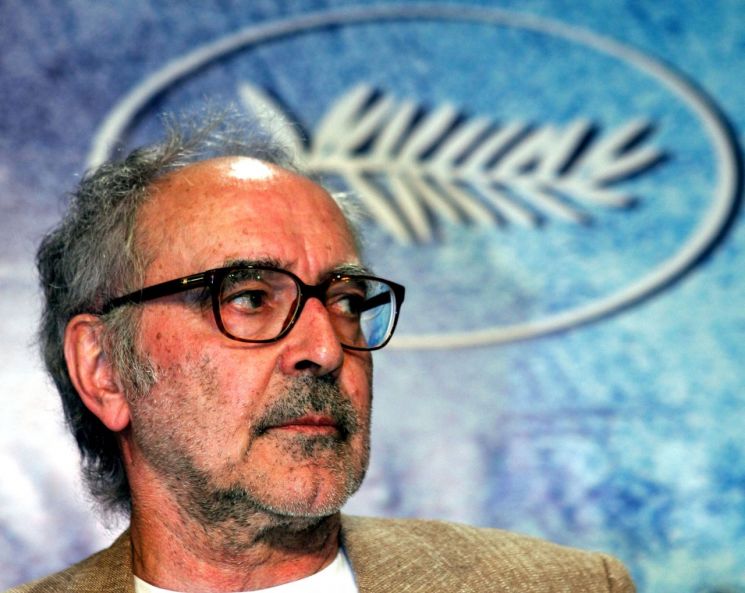 French daily newspaper Lib?ration and other local media reported that film director Jean-Luc Godard passed away on the 13th (local time) at his home in Nyon, Switzerland.
 [Image source=Yonhap News]
Godard's assisted death has energized related discussions in France. On the day of Godard's passing, the French presidential office issued a statement on its website announcing a national debate on the so-called 'right to choose death.' A committee composed of ordinary citizens will address this issue over the next six months. Additionally, regional discussions will be held across France.
The 'right to choose death' is also being discussed in South Korea. Support for assisted dying reaches 76%. According to a survey conducted last year by a research team at Seoul National University Hospital involving 1,000 adults, 76.3% responded in favor of euthanasia or assisted dying laws. In a similar 2016 survey, support was about 50%, indicating a 1.5-fold increase over five years. Reasons for support include 'life remaining is meaningless' (30.8%), 'it is a right to a good death' (26.0%), and 'alleviation of suffering' (20.6%), in that order.
In June, a related bill was proposed. Assemblyman Ahn Kyu-baek of the Democratic Party of Korea introduced the 'Partial Amendment to the Act on Hospice and Palliative Care and Decisions on Life-Sustaining Treatment for Patients at the End of Life' (Assisted Dignified Death Act). The core of the bill is to allow terminal patients in extreme pain to choose the timing of their life’s end.
The bill defines the assisted dignified death candidates as those who meet all three conditions: ▲ terminal patients ▲ experiencing unbearable pain ▲ applicants who wish for assisted dignified death according to their own will.
Although public interest in assisted dying is growing, opinions remain sharply divided. Especially in religious circles, the 'right to die' is viewed as unethical and unacceptable. Pope Francis reiterated in a general audience last February that "there is no right to die."
He added, "We must accompany those who are facing death, but we must not cause death or assist suicide," and said, "Life is a right that must be accepted; it cannot be artificially managed."
© The Asia Business Daily(www.asiae.co.kr). All rights reserved.
![Clutching a Stolen Dior Bag, Saying "I Hate Being Poor but Real"... The Grotesque Con of a "Human Knockoff" [Slate]](https://cwcontent.asiae.co.kr/asiaresize/183/2026021902243444107_1771435474.jpg)
















