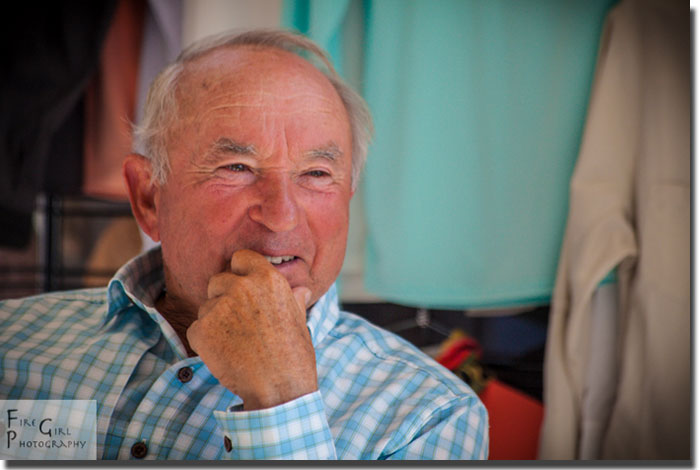
[Asia Economy Reporter Lee Ji-eun] The founding family of Patagonia, an outdoor apparel manufacturer, has transferred ownership stakes worth $3 billion (approximately 4.182 trillion KRW) to a nonprofit environmental organization.
On the 14th (local time), The New York Times reported that the Shinnard couple and their two children transferred 100% of their shares to a climate crisis response organization instead of selling or listing the company. The organization receiving the shares was established to protect undeveloped lands worldwide. Additionally, the Shinnard family decided to allocate $100 million of the company's profits to environmental protection activities.
In an interview with The New York Times, Chairman Yvon Shinnard said regarding his donation decision, "I hope this helps form a new type of capitalism that does not end with a few wealthy people and many poor people," and added, "We will donate as much money as possible to those actively working to save the planet."
Earlier in August, the Shinnard family also transferred all voting rights corresponding to 2% of the total shares to a newly established corporation known as the Patagonia Purpose Trust. The new corporation was established to help Patagonia fulfill its social responsibilities and donate profits for environmental protection.
Chairman Shinnard's passion for environmental protection is well-known in the business world. In 1973, he founded Patagonia, an outdoor manufacturer, based on his beliefs about the environment. Patagonia uses organic cotton in its products and gained attention by placing an advertisement in newspapers on Black Friday, the biggest shopping day in the U.S., saying "Don't buy this jacket." This was due to concerns that excessive clothing consumption could accelerate environmental pollution.
The New York Times reported that company insiders had suggested selling or going public to Chairman Shinnard, but he chose to donate shares of the privately held company. The reason was that going public could cause the company to lose its direction and lead to irresponsible management aimed at maximizing shareholder profits.
Chairman Shinnard stated, "I feel a great sense of relief after organizing my life," and added, "For our family, donation was the most ideal solution."
© The Asia Business Daily(www.asiae.co.kr). All rights reserved.
![User Who Sold Erroneously Deposited Bitcoins to Repay Debt and Fund Entertainment... What Did the Supreme Court Decide in 2021? [Legal Issue Check]](https://cwcontent.asiae.co.kr/asiaresize/183/2026020910431234020_1770601391.png)















