Nongshim Raises Ramen Prices by 11.3%, Snacks by 5.7%
Orion Increases Prices for 16 out of 60 Products Produced
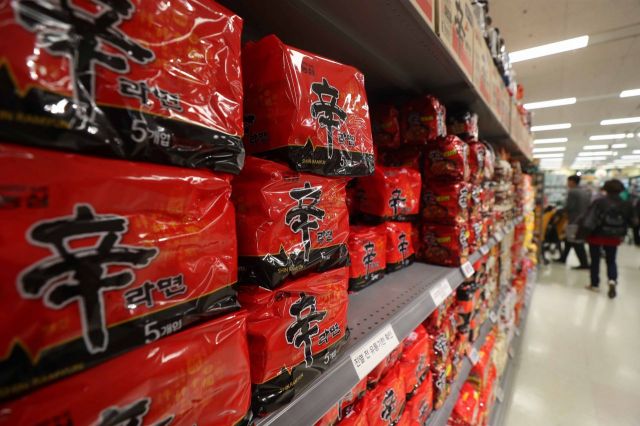 On the 15th, ramen was displayed at a large supermarket in downtown Seoul. With rising recognition through Korean dramas and movies, ramen is gaining global popularity. According to the industry, Nongshim's cumulative overseas sales of Shin Ramyun in the third quarter have surpassed domestic sales. Samyang Foods' overseas sales accounted for 57% of its total sales last year. Photo by Moon Honam munonam@
[Asia Economy Reporter Koo Eun-mo] As food companies have been raising product prices one after another, increasing the burden of grocery prices on consumers, the price hikes that were announced after Chuseok are being implemented one after another.
According to the food industry on the 15th, Nongshim will raise the ex-factory prices of major ramen and snack products by an average of 11.3% and 5.7%, respectively, starting today. Nongshim is known to have pulled out the price increase card as its domestic operating profit recorded a deficit for the first time in 24 years, worsening its management situation.
The last time Nongshim raised ramen prices was in August last year, and snacks in March this year. Nongshim stated that since April this year, raw material prices have surged and the exchange rate has risen due to international conflicts and inflation, intensifying cost burdens. In particular, after increasing the supply prices from domestic partner companies since the second quarter of this year, Nongshim's manufacturing cost burden has further increased. In fact, the supply prices of most raw materials such as wheat flour and starch have risen.
A Nongshim official said, "Considering the impact of ramen and snack prices on consumer prices, we have internally endured cost increase pressures by promoting cost reduction and management efficiency, but it was a situation where price adjustment was urgently needed as we recorded a deficit domestically in the second quarter. Especially, due to the increase in supply prices from partner companies, the price increase of ramen and snacks was urgent, but we postponed it until after Chuseok to consider the stability of consumer grocery prices," emphasizing.
The items to be increased this time are 26 ramen and 23 snack brands. The main products' increase rates based on ex-factory prices are Shin Ramyun 10.9%, Neoguri 9.9%, Saewookkang 6.7%, and Honey Twist Snack 5.9%. Accordingly, the price of Shin Ramyun, which is sold at an average of 736 won per pack in large supermarkets, is expected to be adjusted to about 820 won, and the price of Saewookkang is expected to be adjusted from 1,100 won to about 1,180 won.
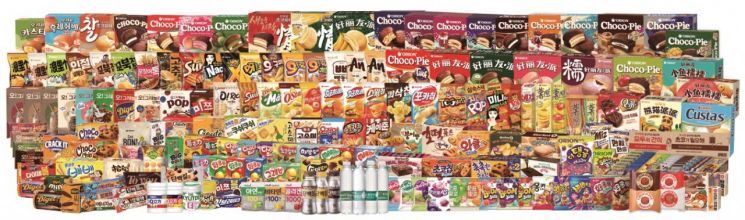
Orion will also raise prices of 16 products including pies, snacks, and biscuits out of 60 products produced in total by an average of 15.8% starting today. By major products, Choco Pie will increase by 12.4%, and Pokachip, Kkobukchip, and Yegam will increase by 12.3%, 11.7%, and 25%, respectively. Prices of 44 products including Squid Peanut, Digestive, Whale Snack, Dr. You Energy Bar & Protein Bar, and My Gummy will not be raised. Orion plans to increase product quantity or lower product prices if raw material prices and energy costs stabilize downward in the future.
Orion has frozen prices of all products for nine years since 2013 through cost reduction, etc. However, since last year, prices of major raw materials such as dairy products, sugars, and potatoes surged, making it difficult to endure, and the company explained that it decided to raise prices mainly for products whose profit margins sharply declined due to rising raw material prices and energy costs.
Meanwhile, Paldo will also raise ramen prices by an average of 9.8% starting from the 1st of next month. The items to be increased are 12 ramen brands. The main products' increase rates based on supply prices are Paldo Bibimmyun 9.8%, Wang Ttukbaegi 11.0%, and Tteokbokki Red Spicy Ramen 9.9%. A Paldo official said, "The manufacturing cost pressure has intensified due to rising raw material, logistics, and labor costs," adding, "We decided to minimize the increase rate considering the impact on consumer prices."
© The Asia Business Daily(www.asiae.co.kr). All rights reserved.


















