Concerns Over Sharp Rise in Grain Prices Due to Reduced Production
Europe May Struggle to Meet Food Demand
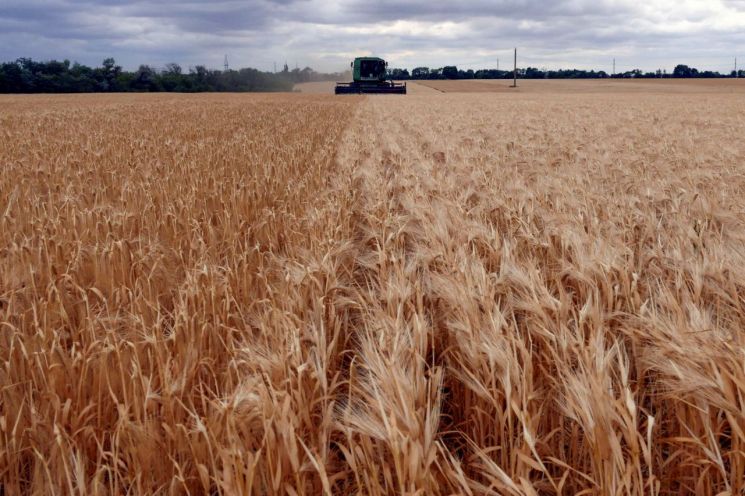 Barley harvesting is taking place in the fields of Odesa, a southern port city of Ukraine, last June. [Image source=Yonhap News]
[Asia Economy Reporter Lee Ji-eun] The European Union (EU) is reportedly postponing its plan to reduce pesticide use by half by 2030. The reason is that reducing pesticides could lead to a decrease in grain production, causing food prices to soar.
On the 13th (local time), major foreign media outlets reported, citing EU sources, that the EU Council is delaying approval of pesticide reduction measures.
Earlier in June, the European Commission, the EU's executive body, proposed a plan to reduce the use of chemicals, including pesticides, by 50% by 2030. The measure primarily aims to ban the use of chemical pesticides in all other urban spaces such as parks and gardens.
However, Eastern European countries, which already use small amounts of pesticides, are reportedly opposing the regulation that enforces the same reduction rate across all European countries. EU sources told major foreign media, "Eastern European countries are concerned that major EU countries will devise pesticide reduction alternatives favorable to themselves."
Another issue is the lack of measures to compensate for the drop in production if pesticide use is reduced. According to data from the EU agricultural cooperative association (COPA-COGECA), grain harvest in the European region this year is expected to decrease by 7% compared to last year, totaling 269 million tons. This is due to the sharp rise in energy prices caused by the Russia-Ukraine war, which increased the costs of crop cultivation, as well as a reduction in imports from Russia.
Christia Lambert, head of the EU agricultural cooperative association, told major foreign media, "If pesticide use is banned, it may become impossible to meet food demand," adding, "It is important that the decision to ban pesticide use be based on science, not politics."
EU officials believe it will be difficult to find a compromise on this measure by the end of this year. An EU diplomat stated, "Each member state has a different position, so we have to review each case individually."
© The Asia Business Daily(www.asiae.co.kr). All rights reserved.

















