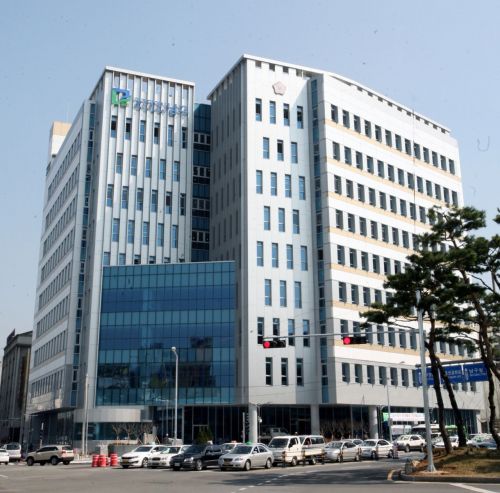
[Asia Economy Honam Reporting Headquarters Reporter Park Jin-hyung] Nam-gu, Gwangju Metropolitan City, in line with the government's basic plan to innovate public service culture by expanding autonomous work systems, has decided to expand flexible working hours, including time-based commuting.
This aims to improve work efficiency by reducing overtime and allowing employees to commute at their preferred times, while also promoting a balance between work and life.
On the 13th, Nam-gu announced, "We will expand the flexible working system to improve work efficiency and productivity by enhancing work methods and to create a vibrant workplace culture that harmonizes life at work and home," adding, "To eliminate hesitation, senior public officials from grade 5 and above will lead by example."
The background for expanding the flexible working system is that the recent basic plan policy released by the Ministry of Personnel Management for public service innovation includes flexible working hours, and there was a special directive from Nam-gu Mayor Kim Byeong-nae, who emphasizes work efficiency and work-life balance.
In particular, since July, Mayor Kim Byeong-nae has, on three occasions during meetings on current issues and other gatherings, urged senior officials to lead by example by adopting staggered commuting hours and to actively utilize the flexible working system. He also instructed to gather employees' opinions on expanding the flexible working system and to prepare activation measures.
With the expansion of the flexible working system, the mayor, directors, department heads, and senior officials of grade 6 and above will implement flexible working hours at least once a week. Additionally, various meeting times such as weekly work report meetings, current issue meetings, and Communication & Empathy Days will be shifted from 9 a.m. to after 10 a.m.
Furthermore, to ensure uninterrupted civil service, employees working on-site and at civil service counters will participate in the flexible working system within the scope that does not disrupt their duties, and they are required to enter their commuting times in the next-generation personnel management system, Chasedae Insarang.
Among the total 879 employees, 298 have used the flexible working system at least once this year.
The most common reason for application was unavoidable telecommuting due to COVID-19 infection, followed by efficient work promotion and reasons such as pregnancy and childcare.
Meanwhile, in a flexible working system survey conducted among employees in July, 63% of respondents cited "concern about supervisors and colleagues' perceptions" as the biggest factor hindering flexible working.
Also, 80% responded that they would participate if senior officials took the lead in flexible working, and the most preferred working hours were from 8 a.m. to 5 p.m., accounting for 42%.
© The Asia Business Daily(www.asiae.co.kr). All rights reserved.
![Clutching a Stolen Dior Bag, Saying "I Hate Being Poor but Real"... The Grotesque Con of a "Human Knockoff" [Slate]](https://cwcontent.asiae.co.kr/asiaresize/183/2026021902243444107_1771435474.jpg)
















