
[Asia Economy Reporter Jeong Hyunjin] As major central banks, including the United States, have consecutively implemented significant interest rate hikes this year due to the surge in inflation, the impact on the real estate market has become visible. From new homebuyers to existing homeowners, the increased burden of mortgage interest rates is causing many to distance themselves from the real estate market.
Bloomberg reported on the 12th (local time) that "from Sydney, Australia to Stockholm, Sweden, and Seattle, USA, buyers are withdrawing at the fastest pace in decades due to central banks' interest rate hikes," adding that "millions of people who took out cheap loans for home purchases during the pandemic boom are now facing high costs from loan refinancing."
According to the report, in Sydney, home prices peaked at a 28.0% increase in January 2020 but fell to 18.6% last month. In Auckland, New Zealand, prices rose by 26.9% as of November last year compared to January 2020 but have since decreased to a 23.4% increase. Stockholm and Toronto, Canada, also reached their peaks in May and June this year, respectively, before turning downward.
Professor Hirata Hideaki of Hosei University in Japan, who formerly worked as an economist at the Bank of Japan (BOJ), said that the impact of interest rate hikes on the real economy appears with a time lag, adding, "In 2023 and 2024, we will see global housing markets decline simultaneously."
◆ What about countries with high variable interest rates like Australia and Canada?

Bloomberg focused on variable interest rates. It noted that countries with many borrowers holding variable-rate mortgages are more likely to experience real estate market shocks due to rising financial costs from central bank rate hikes. As interest rates rise, potential homebuyers may withdraw their purchase intentions due to increased interest burdens, and existing owners may increasingly consider selling.
Bloomberg cited a report published by international credit rating agency Fitch in May, stating that 93% of new mortgage loans in Australia in 2020 were variable-rate. Outside Australia, the proportions were Spain (52%), the UK (42%), Canada (24%), Italy (19%), the Netherlands (13%), Germany (10%), Denmark (9%), France (1%), and the United States (1%).
Bloomberg also noted that many countries not included in the Fitch report face similar issues. For example, in New Zealand, about 55% of mortgages are either variable-rate or fixed-rate loans with interest rates resetting in July next year. New Zealand's housing prices rose nearly 30% last year but dropped 11% in July compared to November last year.
Bloomberg reported that in countries where real estate bubbles are considered severe, such as Australia and Canada, forecasts already predict double-digit declines in housing prices. Although Canada requires stress tests before lending, making large-scale defaults unlikely in the short term, Bloomberg expects the economy could still be affected.
Rob Subramanian, Global Market Research Head at Nomura Holdings, said, "Young families with loans have never experienced a sharp interest rate hike that reduces real wages during their lifetime," adding, "This will come as quite a shock to them."
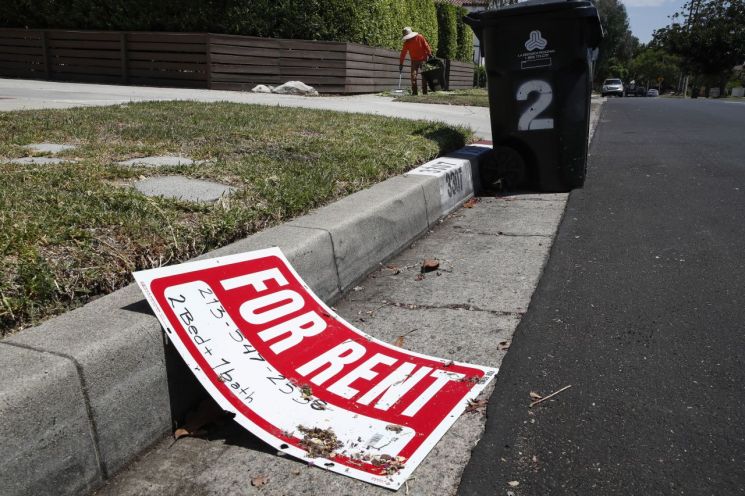
Bloomberg reported that the United States, which experienced the 2007 subprime mortgage crisis, generally uses fixed-rate loans, making it the least affected country in this interest rate hike phase. Most U.S. borrowers take out 30-year fixed-rate mortgages, and only about 7% of loans in the past five years were variable-rate, it added.
◆ Still okay for now... Rising concerns over real estate-driven economic impact
Bloomberg said that large real estate owners are still holding on despite rising costs. However, economists warn that if paper losses from falling home prices lead to financial losses for households, banks, and real estate developers, the crisis could spread into a recession.
Nira Sharma, an economist at Bloomberg Economics, said, "If central banks tighten policy too much, the prospect of a soft landing (inflation easing without recession) will disappear," diagnosing that "housing prices could fall faster and worsen, leading to a recession."
Bloomberg noted that some countries have already taken policy measures to address these issues. For example, the South Korean government decided to inject over 400 billion won to support the Safe Conversion Loan program, which converts variable-rate mortgages to fixed rates. Poland also implemented a measure earlier this year to suspend interest payments for up to eight months, Bloomberg reported.
Bloomberg concluded, "A sharp decline in real estate, a core household asset, risks worsening the global economic downturn," adding, "So far, the decline is not as severe as during the 2008 financial crisis, but how central banks manage efforts to curb inflation without damaging consumer sentiment and causing a recession will be a key variable."
© The Asia Business Daily(www.asiae.co.kr). All rights reserved.
![User Who Sold Erroneously Deposited Bitcoins to Repay Debt and Fund Entertainment... What Did the Supreme Court Decide in 2021? [Legal Issue Check]](https://cwcontent.asiae.co.kr/asiaresize/183/2026020910431234020_1770601391.png)


















