Floating ball makes Nanji-style swing easy... Precise impact needed for cool-season grass
Grass trends change with recurring abnormal weather
Shot etiquette must be followed to maintain grass condition
[Asia Economy Reporter Jang Hee-jun] "The ball strikes well on Korean grass, but it's difficult on cool-season grass!"
Although both are green, they look different upon closer inspection. Some grasses have broad leaves, while others grow densely with narrow blades. Swing strategies vary depending on the grass type, affecting performance. Recently, due to abnormal weather, preferred grasses at golf courses have also changed. For novice golfers with limited rounding experience, here is some essential knowledge about grass types.
"The ball is floating"... Cool-season grass is easier for beginners
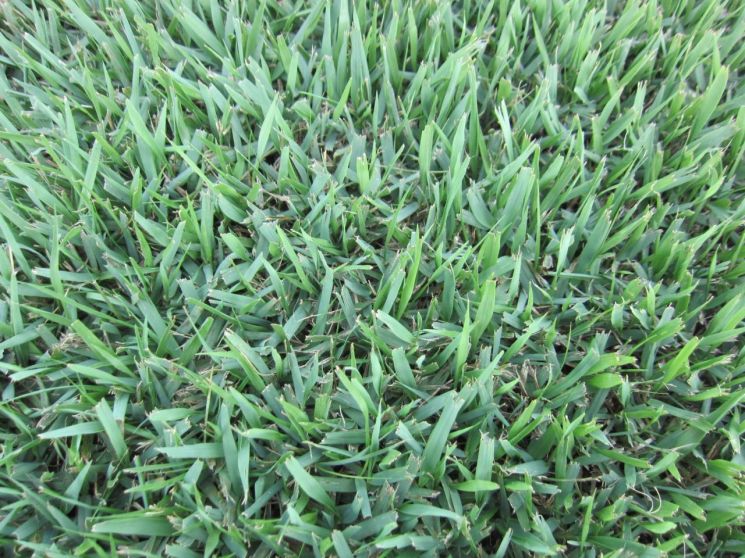
Golf course grasses are broadly divided into warm-season and cool-season types.
'Warm-season' grass is the most commonly encountered on domestic golf courses. It is also frequently seen outside golf courses. Among golfers, it is sometimes called 'Joseon grass' or 'Korean grass.' Representative types include Koryoji, known as Geumjandi, and Bermuda grass, native to Africa. Zoysia and Seonok are also widely used on courses.
As the name suggests, it thrives in warm weather. Its advantages include excellent wear resistance and rapid recovery. Vigorous growth occurs typically between July and September, maintaining green color from late spring to early autumn. From autumn, when the air temperature drops to around 10 degrees Celsius, it enters dormancy for the winter. If you go out for a round in chilly weather and see yellowing, it is likely warm-season grass.
The leaf blades are relatively broad and stiffly upright. Because of this, the ball slightly floats above the grass on the fairway. Even with a sweeping swing rather than a downward strike, it is easy to lift the ball. This helps maintain distance. Compared to other grasses, it has lower density, so there is less resistance on impact. This can be easier for beginners whose shots are inconsistent.
Cool-season grass requires "precise impact"
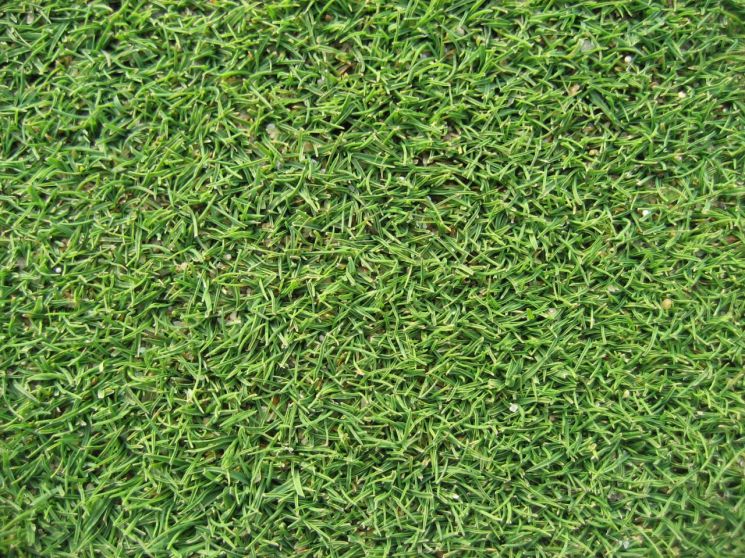
'Cool-season' grass is commonly called 'yangjandi' in Korean. It is relatively difficult to manage but grows well in cool environments and maintains its green color for a long time, earning the name 'all-season grass.' In the Jeju region, it remains green year-round. Its dormancy period is relatively short from December, when temperatures drop below freezing, to March of the following year.
Kentucky bluegrass, fine fescue, and creeping bentgrass are representative types. Kentucky bluegrass is widely used, mainly on tee boxes and fairways. Creeping bentgrass can be mowed very short and has high density. It grows quickly and recovers well but is vulnerable to hot and humid conditions. This species is the one planted on greens.
With cool-season grass, precise ball striking is crucial. The grass is dense and cut short. A representative example is Jeju Nine Bridges. This golf course, the only one in Korea hosting a PGA Tour official event, has grass resembling a green. During tournaments, the grass length is only 6 mm, making the ball feel like it is stuck to bare ground. Even slightly thick or thin shots result in misses.
Fescue, mainly used in roughs, has long leaves. When the ball is in the rough, it is better to aim for escape rather than lifting it onto the green.
Although cool-season grass may seem difficult, intermediate and advanced players find it advantageous for skill execution and appreciate the 'shot feel.'
Climate change is altering golf course grasses
In the early 2000s, it became trendy to use cool-season grass for teeing areas and around greens. This was due to the perception of it being premium grass. Golf courses aiming to sell expensive memberships or differentiate themselves preferred it. However, according to the Korean Turfgrass Institute, most domestic golf courses choose warm-season grass for fairways. The reason lies in changing weather conditions.
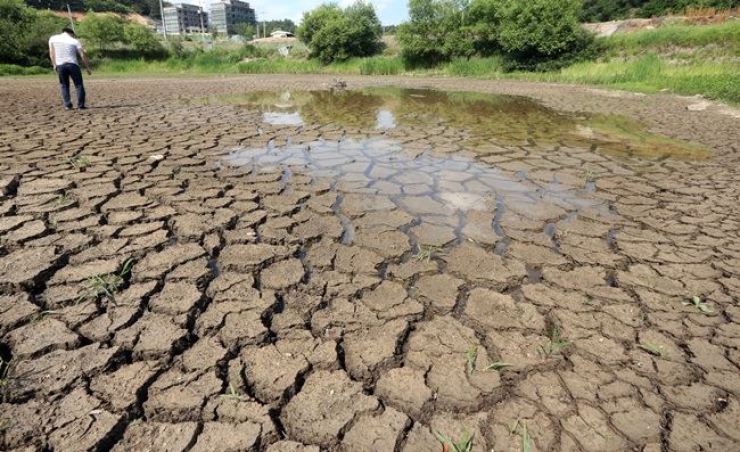
Last winter, considered the worst drought, the Korea Meteorological Administration recorded nationwide precipitation of only 13.3 mm. Considering the 30-year average winter precipitation of 89.0 mm, this is less than a quarter. It is the lowest since weather observations began in 1973. The drought is also why prices for cool-season grasses like Kentucky bluegrass and bentgrass have more than doubled this year. Repeated monsoons and hot, humid weather are also unfavorable for cool-season grass growth.
Jang Deok-hwan, senior researcher at the Korean Turfgrass Institute, explained, "As the industry boomed, competition like 'grass differentiation' became practically meaningless, and management importance increased. In terms of cost, Korean grass requires about 800 to 1000 tons of daily watering per golf course, while cool-season grass can need up to 2000 tons, showing a significant difference."
Overambitious revenue goals amid golf boom... grass is overworked
 Asia Economy DB
So, is the proliferation of 'poor-quality grass' in teeing areas and fairways simply due to weather? According to several greenkeepers (course managers), the biggest negative factor for grass is the 'revenue greed' of golf courses. Typically, golf courses reduce or halt operations in winter. However, last winter many extended operations to three shifts, overworking the grass.
A greenkeeper managing a member-only golf course in the metropolitan area said, "As the number of visitors increases, the grass has less time to rest and suffers more wear. The rising popularity of golf inevitably leads to increased costs and management time, but some golf courses ignore this and focus solely on revenue."
He added, "Perhaps due to cost burdens, two-player rounds are rarely seen recently; most rounds are with four players, so the grass condition deteriorates as many people step on it multiple times. Night rounds further overwork the grass," he criticized.
Practice swings should not touch the ground... "Golfer manners are important"
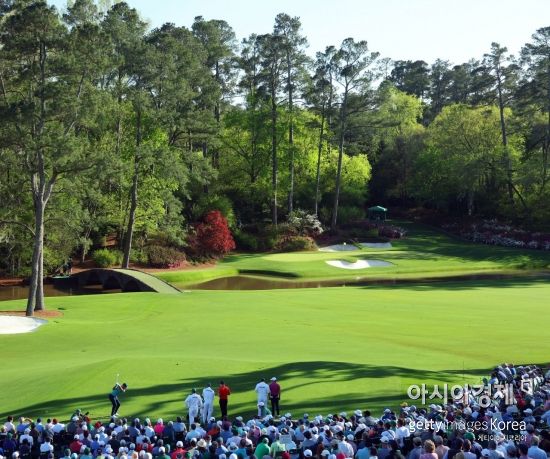
What about overseas? Augusta National, known as the holy ground of American golf, even coined the term 'Augusta Syndrome.' It is famous for the perfect quality of its fairways and greens. This course closes for six months from April, after the Masters Tournament. When the Bermuda grass (warm-season grass), which grows well all summer, turns yellow, ryegrass (cool-season grass) is overseeded before reopening. Taking half the year off is the secret to maintaining optimal grass condition.
A golf course management company official advised, "Continuing operations excessively in winter is problematic, but if the course does not close even during July and August, the most damaging months for cool-season grass growth, course quality cannot be guaranteed. It is necessary to close for at least one to two weeks in summer to welcome golfers in better condition during the autumn peak season."
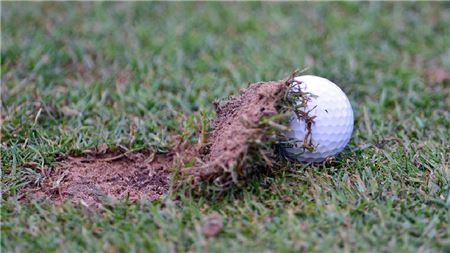
Along with golf course management, golfers' careful consideration is also important. Divots caused during normal play are unavoidable, but it is best to refrain from making divots during practice swings. Turf that has been torn off should be placed back over the divot mark and firmly pressed to aid recovery. Choosing spikeless golf shoes is also a way to protect the grass.
© The Asia Business Daily(www.asiae.co.kr). All rights reserved.



















