
[Asia Economy Reporter Yoo Hyun-seok] Hyundai Motor Group has agreed to exchange shares with KT. This exchange is expected to enable Hyundai Motor to actively target the future mobility market.
On the 7th, Hyundai Motor Group announced that it will pursue comprehensive and extensive cooperation with KT in next-generation communication infrastructure and ICT fields, including joint preliminary research on 6G autonomous driving technology and satellite communication-based AAM (Advanced Air Mobility) communication networks. In addition to joint preliminary research on future technologies, the business alliance areas will be diversified through collaboration on 5G communication network-based connected car customized services and secure communication module technology based on existing core competencies.
Hyundai Motor Group and KT have agreed to focus their cooperation on advancing vehicle technology in the field of 'Connectivity,' which is the foundation for realizing MECA (Mobility service, Electrification, Connectivity, Autonomous). Connectivity is considered a core element of MECA. High-quality and stable communication networks must support smooth technology operation. To this end, the global automotive industry is fiercely competing to secure related technologies through partnerships and share exchanges with leading telecommunications companies.
KT, the world's first company to commercialize 5G, is leading the expansion of the next-generation ultra-high-speed communication network ecosystem. In addition to wired and wireless communication networks, KT is actively conducting business in convergence ICT and data service fields such as intelligent traffic control and integrated security, making it a key partner for Hyundai Motor Group to strengthen its connectivity business.
Both parties have also agreed to acquire mutual shares through a treasury stock exchange method to create synergy in future businesses, enhance the execution and sustainability of mutual cooperation, and strengthen long-term partnerships. The two companies will exchange approximately KRW 750 billion (7.7%) of KT treasury shares for Hyundai Motor's approximately KRW 445.6 billion (1.04% stake) and Hyundai Mobis's approximately KRW 300.3 billion (1.46% stake) treasury shares to acquire mutual stakes.
A Hyundai Motor Group official explained, "In the past, when collaboration was conducted only through business alliance MOUs without share exchanges, there were difficulties in cooperation due to insufficient establishment of a partnership based on trust between the two companies. This time, share exchange transactions were conducted in parallel for responsible collaboration."
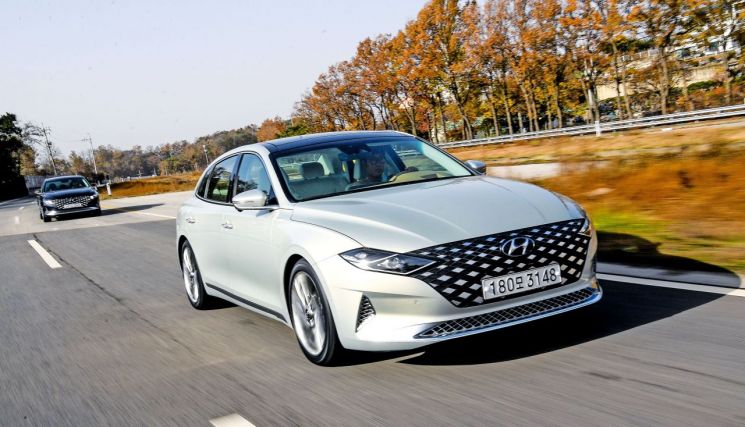
◆ Hyundai Motor Group Initiates Securing Future Autonomous Driving Technology = Hyundai Motor Group will first proactively cooperate with KT to secure future autonomous driving technology in preparation for the full-scale autonomous vehicle era. They plan to jointly develop 6G communication standards optimized for autonomous vehicles to preempt next-generation breakthrough technologies.
For autonomous vehicles, the role of advanced communication networks capable of smoothly processing data due to increased vehicle connectivity is paramount. Hyundai Motor Group and KT will develop next-generation 6G communication-based autonomous driving technology capable of processing large volumes of data at faster speeds through demonstration projects and joint preliminary research.
6G offers data transmission speeds up to 50 times faster than 5G. It is expected to significantly contribute to enhancing the technical stability of various future mobility solutions, including fully autonomous vehicles that require ultra-large data processing in real-time below the second level, and AAM.
Hyundai Motor Group and KT will also establish satellite-based AAM communication infrastructure. Hyundai Motor Group will take charge of aircraft development and vertiport (vertical takeoff and landing site) construction, while KT will build essential control and communication networks for AAM operations linked with its own communication satellites. Beyond long-term joint preliminary research, they will expand business alliance areas based on existing core competencies. First, they will expand EV charging infrastructure by utilizing KT sites and networks nationwide. KT sites are expected to aid early establishment and expansion of the charging ecosystem due to their accessibility.
They also plan to consider developing new services to meet the explosive data demand in the connected car era. As Korea's number one paid broadcasting subscriber KT possesses high-quality content supply, diverse big data analysis, and vehicle-mobile data linkage, it is expected to provide optimized customer experiences.
New businesses based on data and software will also be explored. They plan to consider operating a future technology fund for ICT technology development cooperation such as big data, and collaborate on secure communication module technology essential for future business expansion. Additionally, they will conduct autonomous shuttle demonstration operations centered around KT's future-oriented new headquarters.
Furthermore, they plan to cooperate diversely in ESG areas such as phased expansion of hydrogen fuel cell use in KT's business areas, conversion of KT's commercial vehicles to EVs, and joint response to RE100 (Renewable Energy 100). A Hyundai Motor Group official stated, "With the strategic partnership expansion between Hyundai Motor Group and KT, we expect to accelerate providing innovative mobility experiences to customers throughout the entire future EV connected car lifecycle."
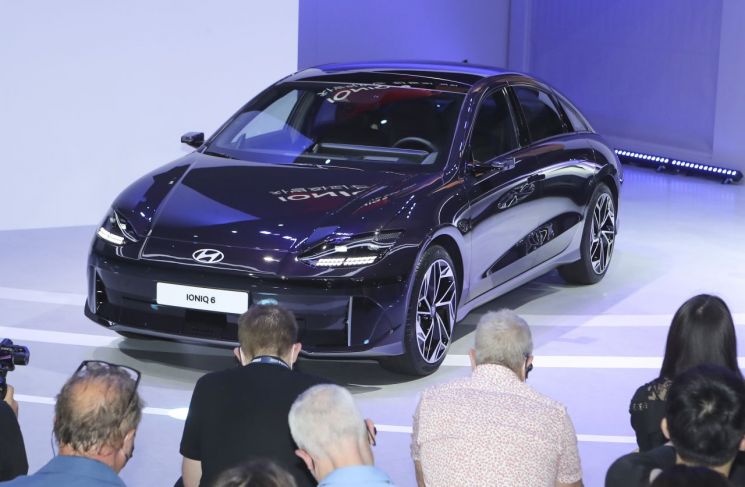
◆ Leading the Future Mobility Market = Hyundai Motor Group decided to expand and strengthen its strategic partnership with KT, considering KT's abundant ICT infrastructure assets and active business vision in the future mobility field. The automotive industry is rapidly reorganizing around MECA. Among them, connectivity capabilities are a core element that can enhance competitiveness in other MECA areas such as ▲mobility services ▲electrification ▲autonomous driving.
Developing and operating mobility service applications, online charging and payment systems to expand the EV charging ecosystem, and implementing V2X technology?where vehicles exchange information with other vehicles and road objects via wired and wireless communication networks?require high-quality, stable communication networks linked with connectivity capabilities.
Global automakers from the US, Japan, China, and Germany are actively partnering and exchanging shares with leading regional telecommunications operators, showing proactive moves to secure communication infrastructure and ICT-based connectivity technologies.
GM announced plans to jointly develop 5G-connected cars with AT&T, the largest US telecom company, targeting a 2024 launch. Toyota agreed to mutual share exchanges with NTT, Japan's largest telecom company, to develop new technologies. Beijing Automotive Group (BAIC) signed a strategic MOU related to connected cars with China Telecom, China's largest telecom company, and Audi signed a 5G technology partnership MOU with Deutsche Telekom, Germany's largest telecom company, to collaborate on connected car technologies.
Hyundai Motor Group has been promoting the expansion of 'hyper-connected connected cars' that connect customers' diverse lifestyles more safely, freely, and conveniently beyond simple wired and wireless communication connections.
Hyundai Motor Group aims to lead the future mobility market by fusing core competencies with KT to advance vehicle technology as connectivity devices. KT is evaluated as the optimal partner for leading the future mobility market based on connectivity capabilities and pursuing various future new businesses for customers.
KT possesses extensive high-quality communication infrastructure, including five satellites that can complement shadow areas in autonomous driving and AAM communication networks, and a total of 14 Internet Data Centers (IDCs), the most in Korea. Utilizing its in-house large-scale network operation experts, KT can efficiently cooperate in future new businesses promoted by Hyundai Motor Group. KT is also actively acquiring core technologies and talents in business areas such as communication AI, big data, and cloud.
A Hyundai Motor official said, "KT has high-quality communication infrastructure including satellites not available to other telecom companies and internalized network operation experts, which allows flexible collaboration optimized for our group. By actively utilizing KT's accessible sites nationwide and its unique customer network, we believe we can promote early expansion of the EV charging ecosystem and enhance customer convenience." He added, "Real-time vehicle-to-vehicle communication is crucial for realizing future autonomous driving, directly linked to customer safety. We expect to provide safe autonomous driving systems anytime and anywhere to customers by leveraging KT's excellent communication infrastructure."
© The Asia Business Daily(www.asiae.co.kr). All rights reserved.














