Foreign Minister Liz Truss Elected as Next Prime Minister
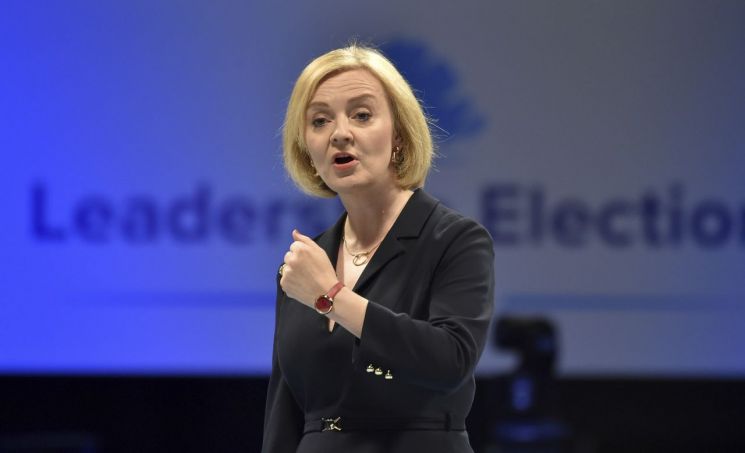 Foreign Minister Liz Truss, appointed as the new Prime Minister of the United Kingdom
 [Photo by Yonhap News]
Liz Truss, a woman in her 40s, has been appointed as the new Prime Minister of the United Kingdom. She will become the head of the UK, the world's 5th largest economy, a permanent member of the United Nations Security Council, and a member of the Group of Seven (G7).
On the 5th (local time), the UK Conservative Party announced that Minister Liz Truss (47) was elected as the new party leader by receiving 81,326 votes (57.4%), defeating former Chancellor of the Exchequer Rishi Sunak (42), who received 60,399 votes (42.6%). The vote saw a turnout of 82.6% among 172,437 Conservative Party members.
In the UK's parliamentary system, the leader of the majority party becomes the Prime Minister. As the Conservative Party leader, Truss will automatically succeed to the prime ministership. She is classified as a hardline conservative who claims to be the successor to the original "Iron Lady," former Prime Minister Margaret Thatcher (in office 1979?1990).
The third female Prime Minister in UK history
Truss is the third female Prime Minister of the UK, following Margaret Thatcher and Theresa May. She also holds the record as the first Prime Minister in her 40s since David Cameron. On the 6th, she will meet Queen Elizabeth II at Balmoral Castle in Scotland, be formally appointed as Prime Minister, and officially take office.
Boris Johnson, who announced his resignation on July 7, will report his resignation to the Queen and step down.
Earlier, Truss barely passed the parliamentary leadership contest that narrowed the candidates to two, but during the approximately six weeks of nationwide campaigning, she led in general party member polls. Her emphasis on economic stimulus through tax cuts and loyalty to Prime Minister Johnson worked positively in her favor.
Her competitor, former Chancellor Sunak, aimed to become the first Prime Minister of Indian descent but was labeled a traitor for being the first to resign, triggering the collapse of the "Johnson administration."
Truss entered the House of Commons in 2010. Three years ago, when Johnson's cabinet was formed, she was appointed Minister of International Trade, and last September, she was promoted to Foreign Secretary, considered one of the most important cabinet positions.
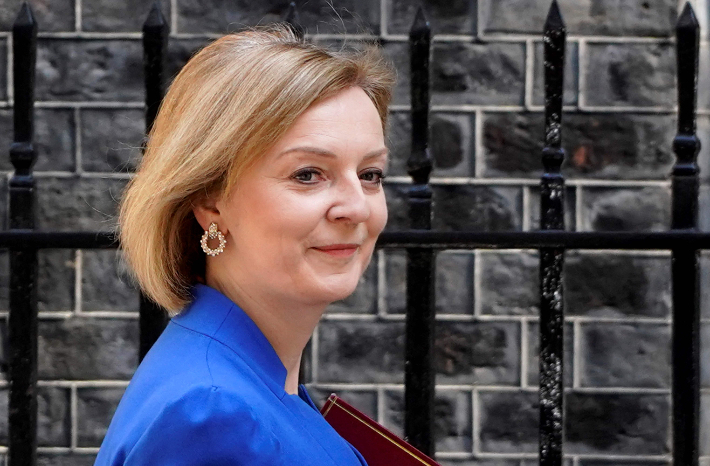
Hardline stance on China... numerous challenges ahead
Truss is expected to maintain a tough stance toward China going forward. On the same day, China's state-run English-language media Global Times published an editorial titled "The new UK Prime Minister should not normalize a hardline attitude toward China," stating, "To be an Iron Lady, one must recognize the trends of the times and change the rigid and outdated imperial spirit," issuing a warning.
Truss also holds a hardline position not only on China but also on Russia, which initiated the war in Ukraine. After taking office, her first phone call will be with Ukrainian President Volodymyr Zelensky, and she plans to visit the United States soon to garner support related to Brexit.
The UK is currently in a poor situation, comparable to the "Winter of Discontent" in the late 1970s when public sentiment was turbulent. Truss must stimulate the economy through tax cuts and growth while also preparing household energy support measures. A ?100 billion package of tax cuts and household support is being discussed to boost the economy, but concerns remain about increased debt and inflationary side effects.
The UK is suffering from a comprehensive crisis, including double-digit inflation rates, recession forecasts, and a series of public sector strikes. With an 80% increase in household energy bills expected next month and widespread dissatisfaction, Truss is likely to first present a response plan regarding the energy crisis.
© The Asia Business Daily(www.asiae.co.kr). All rights reserved.


















