[Seoul Autonomous District News] Geumcheon-gu Designates Doksan-ro 64-gil Jeonghun Complex Section (Doksan-ro 200 ~ Doksan-ro 64-gil 70) as Pedestrian Priority Road & Improves Walking Environment with Road Resurfacing and Coating-Type Pavement Installation ... Seongdong-gu Adds Logo Lights at Jungnangcheon Yongbigyo Rest Area and Seongsu 1-ga 2-dong Community Center Following District Office ... Guro-gu Completes Light Environment Improvement Project in Gaebong 3-dong, Replacing 103 Old Metal Lights with High-Efficiency LED Lights ... Dongjak-gu Expands Installation of Security CCTV to Reduce Safety Blind Spots ... Yeongdeungpo-gu, KB Kookmin Bank
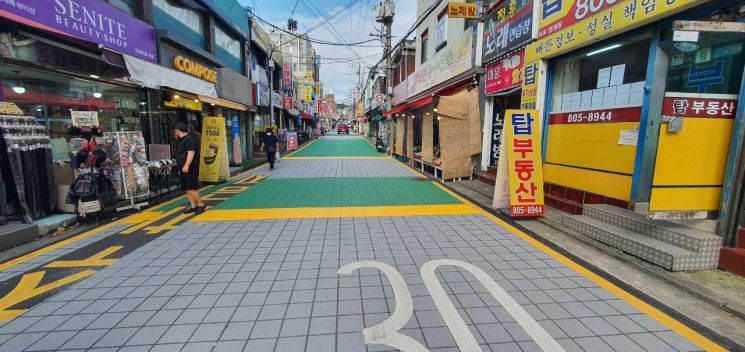
[Asia Economy Reporter Park Jong-il] Geumcheon-gu (Mayor Yu Seong-hoon) has designated the Jeonghun Complex section of Doksan-ro 64-gil as a pedestrian-priority road.
A pedestrian-priority road refers to a road where sidewalks and roadways are not separated, and pedestrian traffic is given priority over vehicle traffic to ensure the safety and convenience of pedestrians.
The Jeonghun Complex section of Doksan-ro 64-gil is a major access route connecting Doksan-ro and the residential area of Doksan-dong. It is heavily used by residents and has a high volume of vehicle traffic, posing a significant risk of traffic accidents. Additionally, the road surface was deteriorated, causing inconvenience to residents.
Accordingly, Geumcheon-gu, selected through a Seoul city contest and supported with funding, repaved the road and installed a new membrane-type pavement in this section.
The road design reflected the opinions of nearby shop owners and residents. In the future, directional signs will be installed, and additional feedback from residents will be gathered to create a safer and more comfortable road for pedestrians.
Yu Seong-hoon, Mayor of Geumcheon-gu, said, “With this project, the Jeonghun Complex section of Doksan-ro 64-gil has become a road where pedestrians have priority over vehicles. We will continue to strive to create a safer and more pleasant walking environment for residents using the roads.”
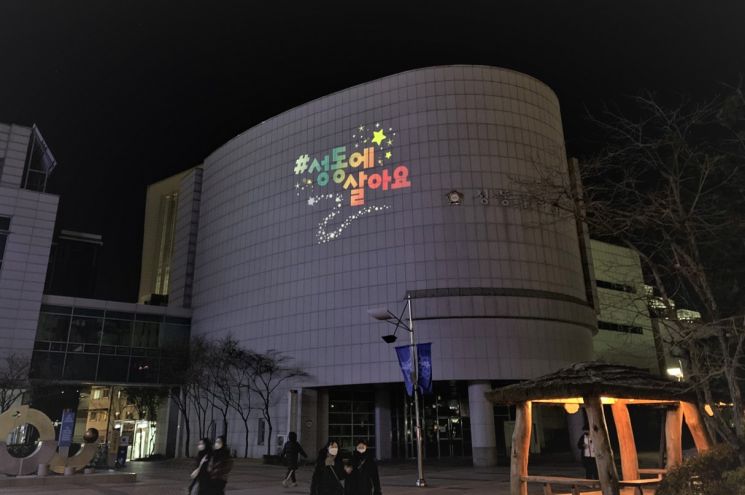
Seongdong-gu (Mayor Jeong Won-oh) broadcasts the lighted phrase “Life is always open toward me” along with a whale light image every night at 8 PM on the walls of the district office, Jungnangcheon Yongbi Rest Area, and Seongsu 1-ga 2-dong Community Service Center, delivering an encouraging message to residents.
Logo lights are LED devices that project images onto walls. They were first installed on the outer wall of the district office in December last year. Encouraged by residents’ positive response, two additional logo lights were installed at Jungnangcheon Yongbi Rest Area and Seongsu 1-ga 2-dong Community Service Center, both high foot-traffic locations, at the end of August.
Seongdong-gu plans to install logo lights in places with minimal light pollution and high pedestrian traffic, delivering emotional administration through captivating lighted phrases and images.
The logo lights operate from 8 PM to 6 AM during summer and from 7 PM to 7 AM during winter, projecting four large images approximately 8 meters in diameter in rotation, each displayed for 20 seconds.
The phrases and images change monthly to reflect the season and events, adding variety. From late August to late September, four images are broadcast: ▲ Whale image (“Life is always open toward me”) ▲ Chuseok scene (“May your heart be as full as the full moon this Chuseok”) ▲ Autumn scenery (“Drunk on the scent of autumn, swaying in the wind”) ▲ “#I live in Seongdong.”
Especially, inspired by the recent popularity of the drama “Extraordinary Attorney Woo,” the large whale image broadcast for a month from late August is believed to have feng shui value, attracting wealth and warding off external misfortunes, symbolizing family harmony and good fortune. It is expected to bring hope to residents weary from the prolonged COVID-19 pandemic.
Lee ○○ (50), a resident of Eungbong-dong who saw the emotional lighted phrase under the Yongbi Bridge during a nighttime walk, said, “I often take walks along Jungnangcheon after dinner. Seeing the bright images and hopeful phrases under the otherwise desolate bridge warms my heart, making it a place I always stop by.”
Jeong Won-oh, Mayor of Seongdong-gu, said, “As people are mentally exhausted from COVID-19 and economic crises, I hope the emotional lighted phrases in the night sky offer residents a small comfort and encouragement as they end their busy days.”
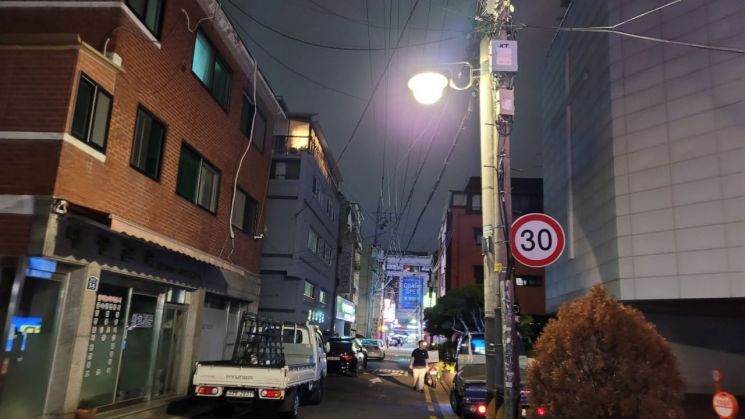
Guro-gu (Mayor Moon Heon-il) announced that it completed the lighting environment improvement project in the residential alleyways of Gaebong 3-dong on August 31.
This improvement project involved replacing 103 metal security lights under 100W with LED light sources under 50W. A total budget of 55 million KRW was invested, and construction took place over three months from June to August.
The existing metal lights had significantly lower brightness relative to power consumption and a short lifespan, requiring frequent replacements and repairs.
In contrast, the newly installed LED lights have a longer lifespan than metal lamps, CDM lamps, and sodium lamps, and they save electricity, resulting in lower maintenance costs.
Additionally, LED security lights provide higher illuminance, improving object recognition and thus enhancing crime prevention. Their light does not spread beyond the alley, effectively reducing light pollution compared to previous security lights.
A Guro-gu official said, “One of the important factors affecting residents’ quality of life is the lighting environment. We will continue efforts to improve lighting conditions, including replacing old discharge lamps with LED light sources.”
Guro-gu is conducting annual replacement projects to upgrade old lighting facilities to LED lights while also implementing noise support projects for residents affected by aircraft noise.
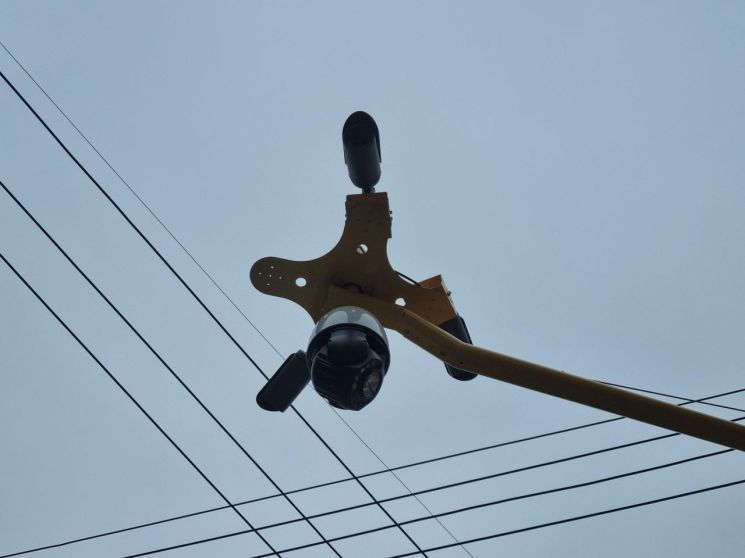
Dongjak-gu (Mayor Park Il-ha) completed the installation of 24 security CCTV cameras at six crime-vulnerable locations in the district last month.
This expansion of CCTV installation is a campaign pledge of the 8th local government administration aimed at preparing for various incidents and accidents, reassuring residents, and strengthening the safety network.
Since the beginning of this year, Dongjak-gu has newly installed 172 cameras at 42 locations and currently operates a total of 1,681 security CCTV cameras.
The newly installed CCTV cameras include one 2-megapixel rotating main camera and 1 to 4 fixed auxiliary cameras per location to minimize blind spots.
Emergency bells and guide signs were also installed so that pressing the emergency bell in a crisis connects directly to the integrated control center.
CCTV video information is transmitted in real-time to the district office’s integrated CCTV control center, where monitoring staff and police officers check 24/7 to establish a rapid response system.
Additionally, the district plans to install 17 more CCTV cameras at four locations around university areas by the end of the year and aims to expand CCTV installation to 20 locations annually while improving the performance of aging CCTV systems.
Park Il-ha, Mayor of Dongjak-gu, said, “We will continue to expand security CCTV installation and conduct thorough monitoring. We will do our best to create a ‘smart safe city’ Dongjak-gu by closely safeguarding residents’ safety.”
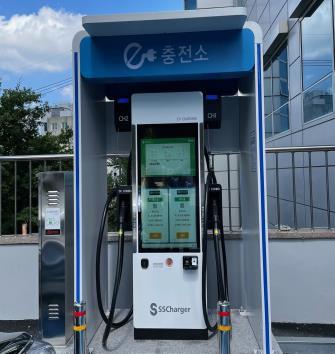
Yeongdeungpo-gu (Mayor Choi Ho-kwon) announced that it established an electric vehicle charging station inside the Singil 7-dong Community Service Center last month as the first ESG social contribution project in cooperation with KB Kookmin Bank & Pureun Asia.
In June, Yeongdeungpo-gu signed an ESG social contribution business memorandum of understanding (MOU) with KB Kookmin Bank & Pureun Asia and is actively promoting projects such as electric vehicle charging station construction, school forest creation, and urban forest campaign.
This electric vehicle charging station construction was carried out as part of the ESG social contribution project. Through public-private cooperation, a 100kW-Dual rapid charger capable of charging two electric vehicles simultaneously was installed in the attached parking lot of the Singil 7-dong Community Service Center. Through this, the district aims to proactively respond to the climate change crisis, resolve the imbalance of electric vehicle charging infrastructure in the area, and improve convenience for electric vehicle users.
The district anticipates rapid expansion of electric vehicle adoption and is actively working to build charging infrastructure in various ways. In particular, by participating in public contests with the Ministry of Environment and Seoul city and signing agreements with private charging operators, it plans to install more than 40 electric vehicle chargers in public parking lots and public cultural and sports facilities within the district by the end of this year.
Furthermore, the district is leading efforts to create an eco-friendly city by enhancing electric vehicle user convenience in line with the amended Eco-friendly Vehicle Act implemented this year. It plans to expand electric vehicle charging facilities annually and aims to supply more than 2,000 chargers in public and private sectors by 2025, building electric vehicle infrastructure throughout residents’ living areas.
Going forward, the district will closely cooperate with the government and Seoul city to discover sites for electric vehicle charger installation and sequentially replace rapid chargers to ensure residents experience no inconvenience in using electric vehicles, thereby fostering an eco-friendly city.
Shin Hee-soon, Director of the Environment Department, said, “We will continue to actively expand electric vehicle charging infrastructure to improve residents’ convenience and ask for residents’ interest and cooperation in the establishment of Yeongdeungpo-gu electric vehicle charging stations.”
© The Asia Business Daily(www.asiae.co.kr). All rights reserved.



















