[Asia Economy Reporter Kim Young-won] The provision of the 'Yoon Chang-ho Act' that imposes aggravated punishment on those who drive under the influence or refuse alcohol testing more than twice has completely lost its effect after receiving the Constitutional Court's third ruling of unconstitutionality.
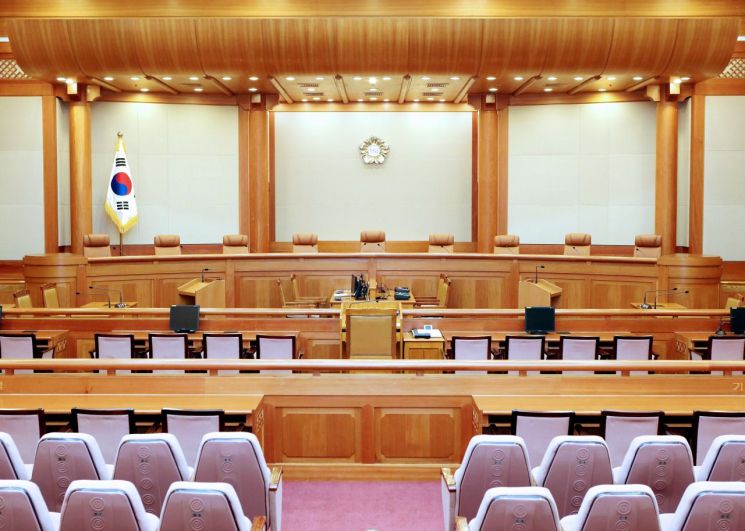
On the 31st, the Constitutional Court ruled unconstitutional by a 7 to 2 decision on the punishment target of Article 148-2, Paragraph 1 of the Road Traffic Act. This is the third decision following those in November last year and May this year.
This provision was created at the end of 2018 through an amendment to the Road Traffic Act, following the death of Yoon Chang-ho, who was hit by a drunk driver, which raised calls for stricter punishment for drunk driving. It is an aggravated punishment regulation that punishes those who violate the Road Traffic Act provision prohibiting 'drunk driving or refusal of alcohol testing' more than twice with imprisonment of 2 to 5 years or a fine of 10 million to 20 million won.
In November last year, the Constitutional Court ruled this provision unconstitutional, stating that "proportionality between responsibility and punishment cannot be recognized." The reason was that there is no time limit between past drunk driving acts that constitute the aggravated punishment condition and repeated drunk driving acts, and past violations do not need to be prior convictions with sentencing or confirmed guilty verdicts, which is unreasonable.
One of the majority opinion justices posed a question as an example: "If a person currently caught for drunk driving had drunk driven more than 10 years ago, can the current violation be considered an act with significantly lacking law-abiding spirit or an act repeatedly threatening the life and body of members of society?" Furthermore, even for the same drunk driving, the degree of danger may vary depending on past violation records, blood alcohol concentration levels, and the type of vehicle driven. They criticized the punishment under the Yoon Chang-ho Act as excessively harsh and added, "Strengthening punishment as a preventive measure against repeated drunk driving should be a last resort."
Although the logic behind the three rulings of unconstitutionality up to this day is the same, the reason multiple unconstitutional rulings have been made on the Yoon Chang-ho Act is because there are various cases subject to punishment under this law. The aggravated punishment situations under Article 148-2, Paragraph 1 of the Road Traffic Act include, depending on the case, ▲ drunk driving more than twice ▲ refusal of alcohol testing more than twice ▲ a mixture of drunk driving and refusal of alcohol testing.
In 2020, an amendment was made inserting the phrase '(personal mobility devices such as electric kickboards are excluded)' while keeping the content of this provision unchanged, dividing the law into the 'old law' (enacted in 2018 and before the 2020 amendment) and the 'new law' (after the 2020 amendment). At that time, the Constitutional Court limited the scope of review depending on when and for what charges the constitutional petitioners were punished. In November last year, the Constitutional Court reviewed the constitutional petitions of those punished under the 'old law' for 'drunk driving more than twice' and ruled it unconstitutional. Through the decisions in May this year and on this day, the unconstitutional scope was expanded to all punishment cases under both the 'old law' and the 'new law.'
The prosecution's position is to actively apply the general laws prohibiting drunk driving and other offenses and to reflect the reasons for aggravated punishment in investigations and trials to bring about punishment.
© The Asia Business Daily(www.asiae.co.kr). All rights reserved.
![Clutching a Stolen Dior Bag, Saying "I Hate Being Poor but Real"... The Grotesque Con of a "Human Knockoff" [Slate]](https://cwcontent.asiae.co.kr/asiaresize/183/2026021902243444107_1771435474.jpg)
















