[Asia Economy Reporter Seo Mideum] The National Folk Museum’s exhibition “A Midsummer Night, the Dreams of the Gods,” which vividly depicts stories of gods, begins at a remote bus stop (booth) connected to the village where the gods live. Visitors are greeted in turn by various gods?from the gods residing in the village entrance’s Jangseung (wooden totem poles) and Sotdae (wooden poles with birds), to those hiding throughout the house, the dragon curled up on a flag, the mountain god who grants peace, the household guardian gods, the rain-giving gods, and the gods who govern death.
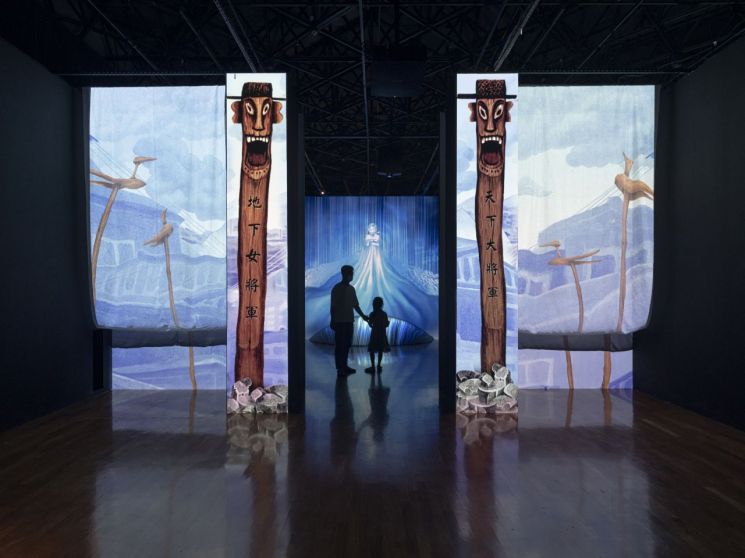
The first corner features Jangseung. These are guardian gods of the village, usually erected at the village entrance. What could have been a dull explanation with pictures is vividly enhanced using augmented reality (AR) and projection mapping technology. The video, created with hand-painted frames, increases immersion. The paintings were done by Korean artist Park So-eun, who breathed life into the faces of the gods.
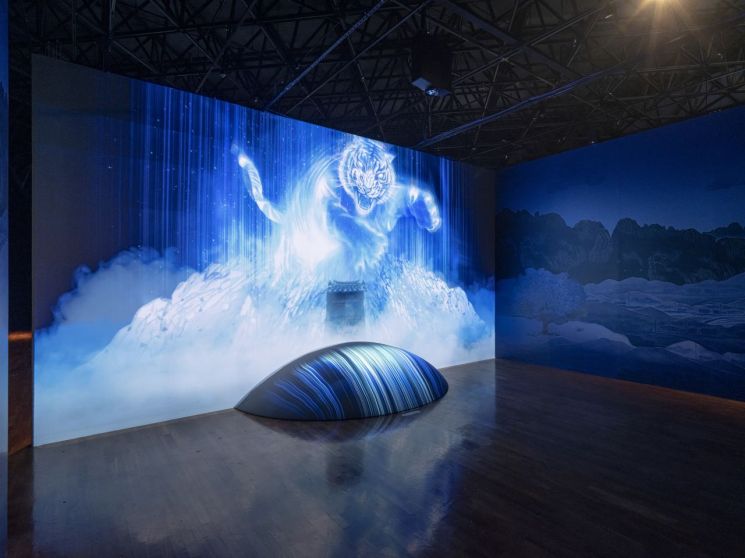
The second corner is dedicated to the Sanshin (Mountain God). The Sanshin is the highest god of the village, responsible for the village’s well-being and individuals’ fortunes. It is depicted in various forms such as a tiger, an old man, or an old woman. The mountain where they reside is considered sacred, and mountain god rituals have been held since ancient times. The colorful lights created by projection mapping catch the eye. Both children and adults are captivated by the mystical atmosphere created by the lights. Curator Oh Aran explained, “Originally, due to the influence of agrarian culture, there were many female mountain gods, but during the Goryeo Dynasty, under the influence of Taoism, they became male gods.”
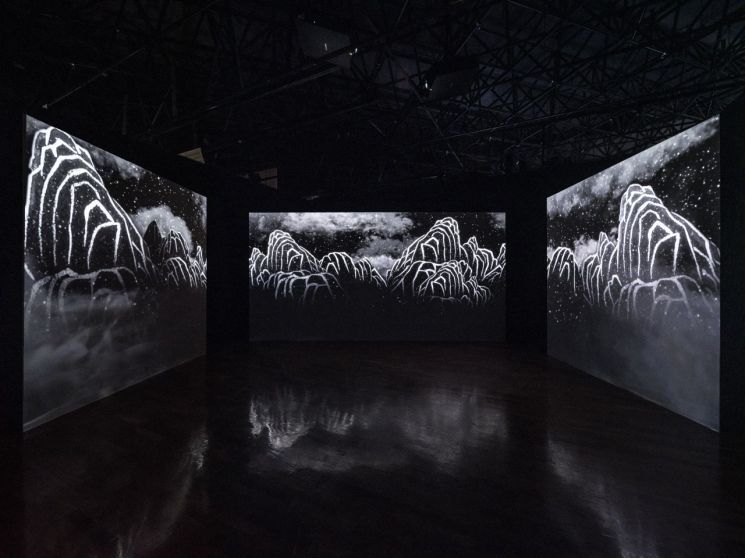
The third corner features the gods of the afterlife. The grim reaper who guides souls to the afterlife and the Ten Kings (Sipdaewang) who judge one’s deeds in life stimulate the unknown nature of the afterlife, which no one can truly understand. The dog in the video is said to lead those who mistakenly arrive in the afterlife back to the living world. Sometimes grand, sometimes charming, the videos seem to enhance children’s understanding. According to the museum, family visitors are common, and children’s visual experiences receive positive feedback.
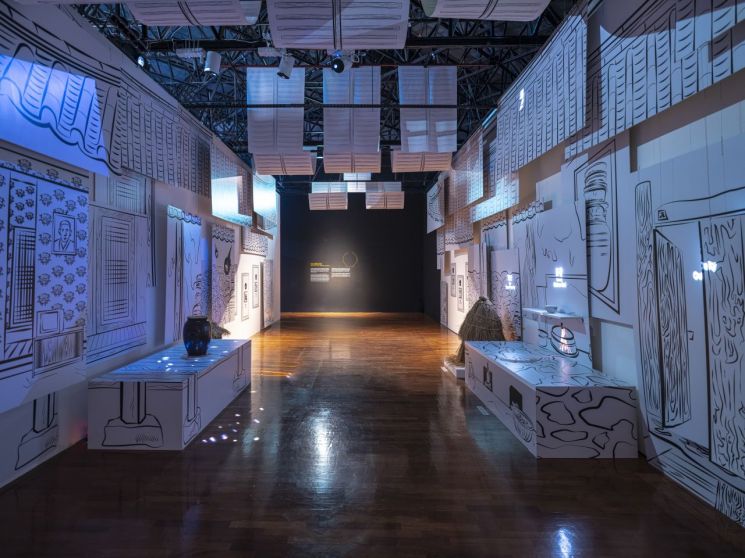
The fourth corner is dedicated to household gods (Gasin). The gods hidden throughout the traditional Korean house structure are expressed along with actual models. The Seongjusin (household guardian god) who stays at the end of the main hall, the Samsin who blesses children, and the Jowangsin who tends the kitchen hearth are visually represented. After installing an app on their smartphones, visitors can scan QR codes installed in the exhibition hall to receive explanations and verify their visit (with gifts given upon verification).
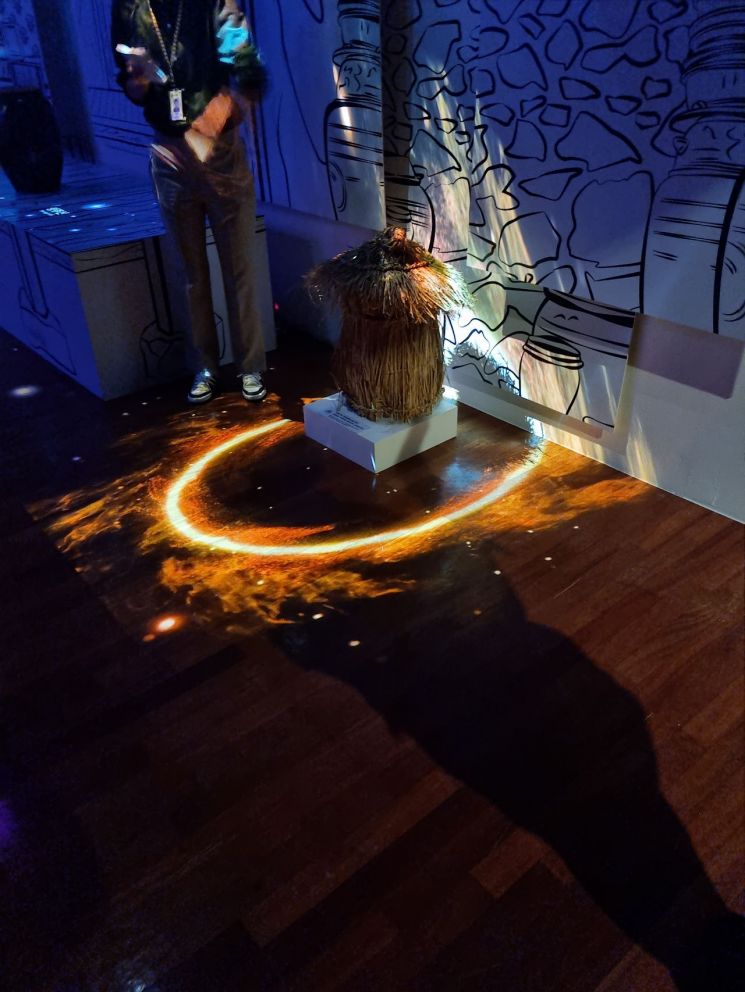
The Samsin, Teojusin (land god), and Seongjusin respond with interactive videos when touched, adding fun. The Cheoksin, who lives in the bathroom, is the only household god considered malevolent because it is said that if someone enters without making their presence known and startles the god, they will be killed.
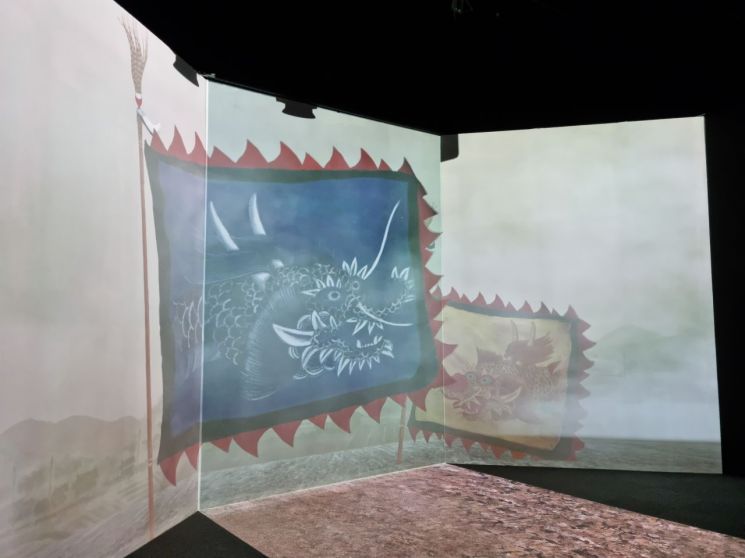
The fifth corner features dragons. Dragons are commonly regarded as water gods and were the focus of rain rituals in agrarian culture. It is said that large villages traditionally made Yongdaegi (large flags with dragon paintings) to awaken the Blue Dragon and Yellow Dragon. The three-dimensional depiction of the dragon’s ascension is one of the exhibition’s highlights.
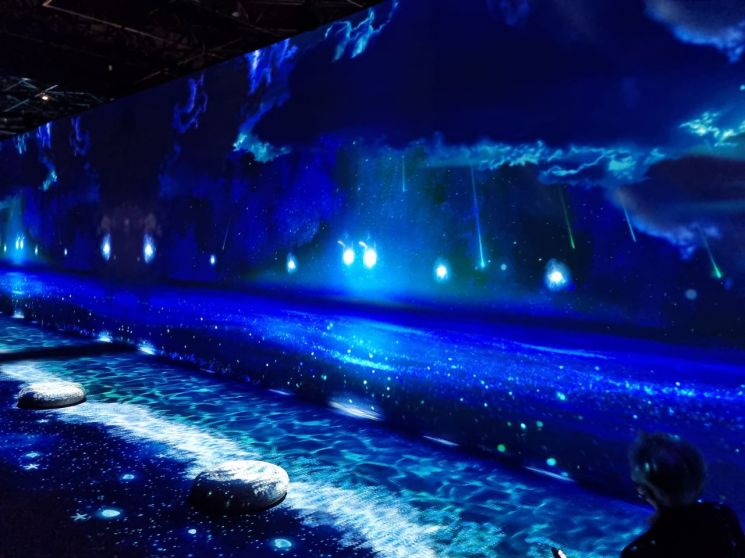
The sixth corner is dedicated to dokkaebi (Korean goblins). Ancestors believed that when dokkaebi fire appeared on mudflats, it signaled a good catch, so on New Year’s Eve, they would climb high hills to watch the dokkaebi fire and predict where fish would be caught. The mudflats sparkling with dokkaebi fire seem to bring a sense of abundance just by looking at them. The dokkaebi booth is the most popular spot among visitors and is perfect for taking atmospheric photos.
The exhibition runs until October 11 in Special Exhibition Hall I.
Meanwhile, this Chuseok (Korean Thanksgiving), visitors can explore traditional seasonal customs of Chuseok in Permanent Exhibition Hall 2 through the “A Year of Koreans” exhibition and enjoy the outdoor exhibition “Memory Lane,” which recreates a 1970s street. Programs such as “Ganggangsullae” (traditional circle dance), “Making Songpyeon” (rice cakes), “Setting the Charye Table” (ancestral rites table), and “Wishing to the Moon” are prepared.
© The Asia Business Daily(www.asiae.co.kr). All rights reserved.



















