Orion Russia Subsidiary's H1 Sales Up 56% YoY
Lotte Confectionery Also Turns Profitable... No Issues in Local Production and Sales
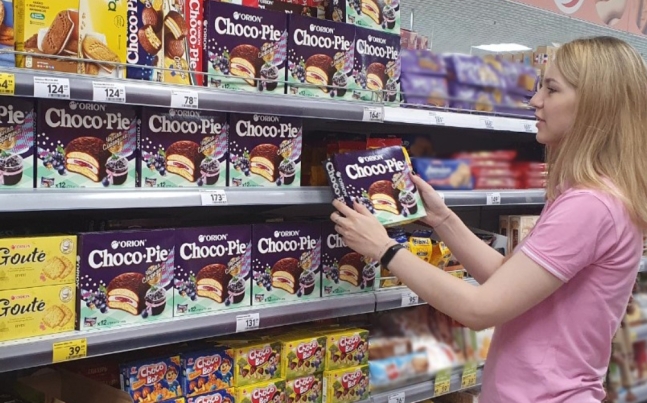
[Asia Economy Reporter Koo Eun-mo] Despite the prolonged Russia-Ukraine war and the ongoing high-intensity international economic sanctions against Russia, the domestic food industry’s business in Russia is reportedly sailing smoothly, contrary to concerns.
According to the food industry on the 30th, Orion achieved its highest-ever performance in the first half of this year. Orion Russia Corporation (Orion International Euro LLC) recorded sales of 77.8 billion KRW in the first half, a 55.7% increase compared to the same period last year, and operating profit rose 54.0% to 11.6 billion KRW. This is the highest growth rate among all Orion subsidiaries.
The company explained that the improvement in performance was due to the price increase implemented in April and the expansion of its portfolio. The new lineup of its flagship brand Choco Pie grew significantly, and new biscuit products such as ‘Crack It’ and ‘Mr. Bagetti’ gained popularity among local consumers, driving high growth. Orion is optimistic about the second half as the new Tver factory will be fully operational. An Orion official said, "In the second half, we plan to gradually increase Choco Pie production at the new factory and focus on expanding our scale by increasing the number of dealers and clients."
Lotte Confectionery is also navigating the Russian market smoothly, led by Choco Pie. Lotte Confectionery’s Russian subsidiary (Lotte Confectionery RUS LLC) sold products worth 31.2 billion KRW in the first half, nearly 40% growth from 22.3 billion KRW a year ago. Operating profit also turned positive, recording 5.9 billion KRW compared to a loss last year.
Despite external concerns about the Russian market, Lotte Confectionery maintains that there are no issues with business operations as production and sales are conducted locally. Particularly, the sustained popularity of pie products combined with the base effect from the reopening of economic activities in Russia contributed to the performance rebound.
However, the company plans to proactively secure funds to prepare for future uncertainties. In the second quarter, Lotte Confectionery injected 12 billion KRW into its Russian subsidiary through a paid-in capital increase. A Lotte Confectionery official emphasized, "Uncertainties about the future still exist, so this measure is to ensure there are no problems securing funds and raw materials. We plan to continue normal business activities such as local marketing and sales in the second half."
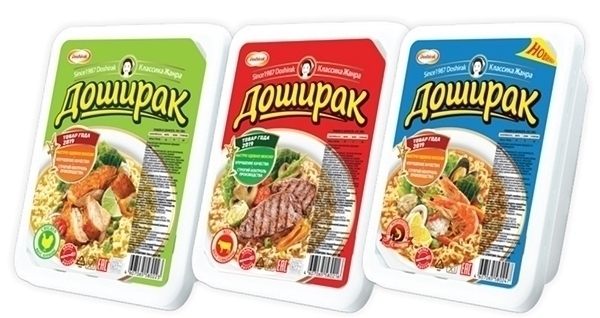
Paldo, which has local subsidiaries manufacturing and selling ramen such as Dosirakrus and Koya, also reported about a 30% increase in sales compared to the previous year in the first half. The ‘Dosirak’ brand holds over 60% market share in the Russian cup noodle market, and its localization strategy is steadily proving effective. A Paldo official explained, "We believe recent performance is due to the long-established product image and quality in Russia. We have also expanded production facilities to meet the growing demand, including local channel expansion."
Meanwhile, Lotte Chilsung Beverage, which conducts its Russian business through exports rather than local subsidiaries, saw a slight single-digit percentage decline in related performance in the first half compared to the same period last year. However, after difficulties in product exports in the first quarter, it has shown gradual recovery since the second quarter. A Lotte Chilsung Beverage official stated, "Food and pharmaceutical products are not included in the import ban, and due to the stabilization of the ruble and brand recognition of flagship products like Milkis, which has been exported since the 1990s, our first-half performance this year is similar to previous years."
© The Asia Business Daily(www.asiae.co.kr). All rights reserved.


















