The Highest in 5 Years Since 2017
Australia as an Indicator of Northern Hemisphere Influenza Trends
Experts: "High Possibility of Twin-demic at the End of October"
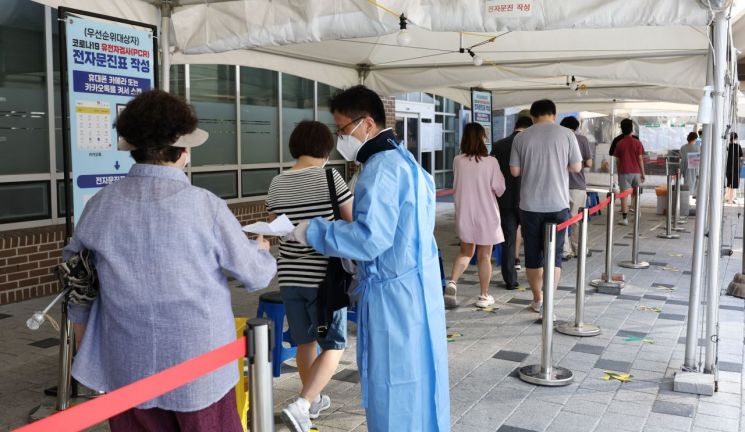 On the 26th of last month, citizens lined up to get tested at the COVID-19 screening clinic at Mapo-gu Public Health Center in Seoul. [Image source=Yonhap News]
[Asia Economy Intern Reporter Kim Gunchan] As the number of suspected influenza patients increases, the possibility of a 'twindemic'?the simultaneous outbreak of COVID-19's autumn resurgence and a surge in influenza (seasonal flu) cases?is being raised. A large-scale influenza outbreak has already been observed in Australia. Experts emphasize that vaccination is crucial to prepare for a twindemic.
According to the Korea Disease Control and Prevention Agency's 'Infectious Disease Sentinel Surveillance Weekly Report' on the 30th, the number of suspected influenza patients per 1,000 outpatients in the 34th week of this year (August 14?20) was 4.2. This is an increase of 0.5 from 3.7 in the previous 33rd week. The number of suspected patients, which rose to the 3-point range from the 29th week, exceeded 4 per 1,000 outpatients after five weeks. The 4.2 suspected patients per 1,000 outpatients in the 34th week is the highest figure in five years since 5.2 in 2017.
Influenza is an acute respiratory disease caused by a virus that typically spreads in early winter every year. It is highly contagious and accompanied by symptoms such as high fever, sore throat, muscle pain, and general weakness. Suspected influenza patients are defined as those who exhibit sudden fever over 38 degrees Celsius along with cough or sore throat.
Over the past two years, personal hygiene practices such as wearing masks and handwashing have become routine, leading to a sharp decline in the number of suspected influenza patients. The number of suspected patients, which is usually around 3 to 5 per 1,000 outpatients as of the 34th week, decreased to 2.1 in 2020 and 1.1 in 2021. However, this year, the number of suspected influenza patients appears to be rising back to normal levels. On the 26th, Jeong Gi-seok, head of the Central Disaster and Safety Countermeasures Headquarters' COVID-19 Special Response Team, stated in a briefing, "This year, there are more flu patients. Normally, it is not this many at this time, but it is slightly increasing."
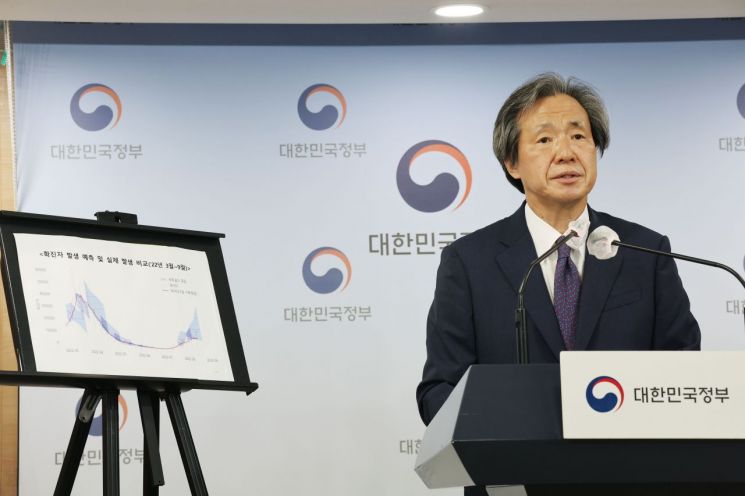 Jung Ki-seok, Chair of the National Infectious Disease Crisis Response Advisory Committee, is briefing on the current status of COVID-19 response at the Government Seoul Office briefing room on the 19th. [Image source=Yonhap News]
In the Southern Hemisphere, Australia has already observed a large-scale influenza outbreak. The Australian government announced on the 14th (local time) that 216,725 influenza cases have been reported this year, with 273 deaths. Australia, where the seasons are opposite, is considered an indicator country that can predict influenza trends in the Northern Hemisphere.
Dr. Jonathan Anderson of pharmaceutical company Seqirus said at the BioMelbourne Network Forum held in June, "Australia is in a unique position as the first country experiencing a twindemic with influenza and COVID-19 infections occurring simultaneously at pre-COVID levels." He added, "Other countries will closely watch Australia's flu season, and whether we succeed or fail, there will be lessons to learn."
Given this situation, concerns are emerging that a twindemic?overlapping the autumn resurgence of COVID-19 and a surge in influenza patients?may become a reality. The twindemic is likely to begin in autumn when temperatures drop sharply. The dominant analysis predicts that the 7th wave of COVID-19 will appear in October or November. On the 22nd, Jeong mentioned, "Between October and November, the immunity of the entire population will decrease simultaneously, leading to another large wave." If the current trend continues, influenza infections are also expected to surge.
If a twindemic occurs, with two respiratory infectious diseases showing similar symptoms such as cough and fever spreading simultaneously, confusion is likely to arise in medical institutions. It is impossible to know which disease a patient has until testing is done. Additionally, the risk of complications increases, which can be fatal to the elderly and patients with underlying conditions.
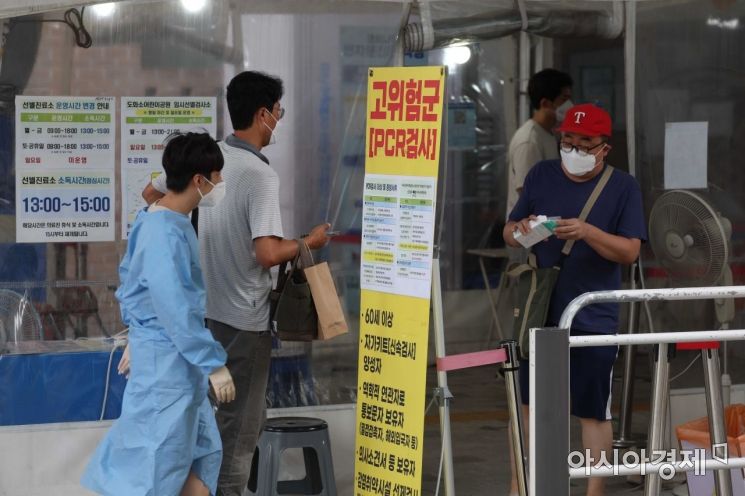 On the 24th, as the spread of COVID-19 continued, the screening clinic at Mapo-gu Public Health Center in Seoul was crowded with citizens. Photo by Mun Ho-nam munonam@
Jeong emphasized regarding the occurrence of a twindemic, "Since it has already been confirmed in Australia and other countries, the same logic and situation could unfold here as well," adding, "There needs to be a discussion to solve the problem of whether it is possible to differentiate between influenza, COVID-19, and other febrile diseases when a patient with a fever visits the emergency room."
Experts stress that the likelihood of a twindemic appearing from this autumn is high, and vaccination is important to prepare for it.
Professor Kim Woo-joo of the Department of Infectious Diseases at Korea University Guro Hospital said, "With social distancing lifted, the possibility of a twindemic is high," predicting, "The flu, which usually spreads from late November to early December, could start about a month earlier, beginning in late October." He continued, "Vaccination is important to prepare for a twindemic," emphasizing, "Since there is no possibility of strengthening social distancing now, damage from a twindemic is inevitable."
Regarding the nationwide 4th dose vaccination proposed by some, Professor Kim expressed a negative opinion. He said, "Even if a nationwide vaccination is conducted, young people probably will not get vaccinated," adding, "Especially since they have already been vaccinated through events like the 'Heumbok Show' or nationwide festivals, it may not be necessary for them."
© The Asia Business Daily(www.asiae.co.kr). All rights reserved.



















