Welfare and Recreation Facilities for Current and Former Police Officers
411 Billion KRW Invested in Gangneung, 20.5 Billion in Sinan
New Construction Project Also Underway in Namhae, Gyeongnam
"Excessive Use of Taxpayer Money" Criticism
"Inevitable Due to Aging Facilities" Supporters Respond
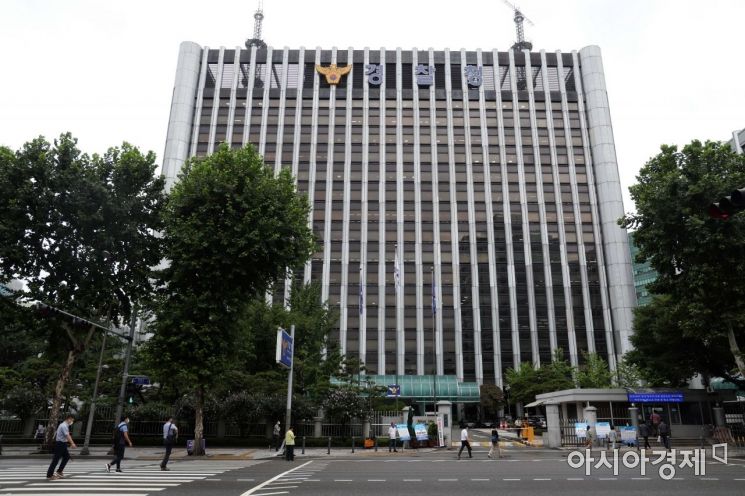
[Asia Economy Reporter Seongpil Jo] Controversy has erupted over the Police Agency's plan to build new facilities and expand its training centers. While some support the plan, arguing that it is necessary due to increased welfare demand and aging facilities, others oppose it, questioning whether it is appropriate to allocate taxpayers' money to welfare facilities that are not urgent.
On the 26th, the Police Agency announced that it had amicably negotiated with budget authorities regarding the increase in construction costs and the required budget for groundbreaking at the Gangneung Police Training Center, with expansion construction set to begin in September next year. The facility will be built on a 27,721㎡ site at 2580 Gyeonggang-ro, Gangneung City, with a total floor area of 13,056㎡. It is planned to have 8 floors above ground and 1 basement floor, including 122 guest rooms, an auditorium, and seminar rooms. The project cost is 41.1 billion KRW, and the police plan to complete and open the facility by 2025.
During the tenure of former Police Commissioner Min Gap-ryong in the first half of 2020, the Shinan Police Training Center project was also finalized, with design expected to be completed by 2024 and construction to commence thereafter. The current project site, a 60,000㎡ camping ground area at 407-32 Gwangsan-ri, Imja-myeon, Shinan-gun, is being converted for use as a training facility. With a total investment of 20.5 billion KRW, the building will have a total floor area of 8,216㎡, 4 floors above ground, and 1 basement floor. It will include 75 guest rooms and seminar rooms. The police plan to start construction as soon as the design is finalized and complete it by 2026.
Additionally, the police are currently proceeding with the construction project for the Namhae Police Training Center in Gyeongnam, which former Police Commissioner Kim Chang-ryong decided to build at the end of last year. Negotiations with budget authorities regarding the scale of the new building are ongoing. The goal is to open the facility by 2027. Police training centers are intended for hosting events such as workshops but are also used as welfare and recreational facilities providing lodging for current and former police officers during off-duty times. The cost per night is around 20,000 to 30,000 KRW. Since opening the first police training center in Gangneung in 1990, the police have established nine training centers nationwide, including in Daecheon, Byeonsan, Tongyeong, Jindo, Yeongdeok, Jeju, Ganghwa, and Jecheon.
Some critics argue that the police are excessively increasing the number of training centers. Since the adjustment of investigative authority between prosecutors and police, there are urgent tasks requiring budget for expanding investigative infrastructure, and there are voices criticizing the allocation of hundreds of billions of won in taxpayers' money to employee welfare facilities. In fact, since the expansion of police investigative authority last year, the field has been facing severe shortages of investigative personnel, and the police are repeatedly deliberating on ways to secure manpower and budget.
On the other hand, there is also the view that expansion and new construction are inevitable due to aging facilities. The only training center that can be used for multiple purposes, such as hosting workshops, is the Jecheon Training Center, established in 2019. Considering the approximately 140,000 police personnel, the welfare infrastructure is said to be severely insufficient. Police Commissioner Yoon Hee-geun has also expressed understanding of this issue and promised to expand welfare facilities. On the 19th, he inspected the operation of the Jecheon Police Training Center on its 3rd anniversary. At the event, he stated, "My long-held belief is that creating conditions where police officers can work enthusiastically ultimately benefits public safety," adding, "As commissioner, I will do my best to expand indirect capital for public security so that the police can work more energetically and the public can be safer."
© The Asia Business Daily(www.asiae.co.kr). All rights reserved.












