Rushed to Set Up Charging Stations Amid Surging Demand... Also Aiming for Economic Stimulus Effect
BYD to Launch High-End Brand Priced Over 1 Million Yuan per Vehicle, Surpassing Tesla
[Asia Economy Senior Reporter Cho Young-shin] The Chinese government has decided to install a total of 20 million electric vehicle chargers at highway rest stops and other locations by 2025. This policy is interpreted as a measure to cope with the rapidly increasing demand for electric vehicles and as part of economic stimulus efforts.
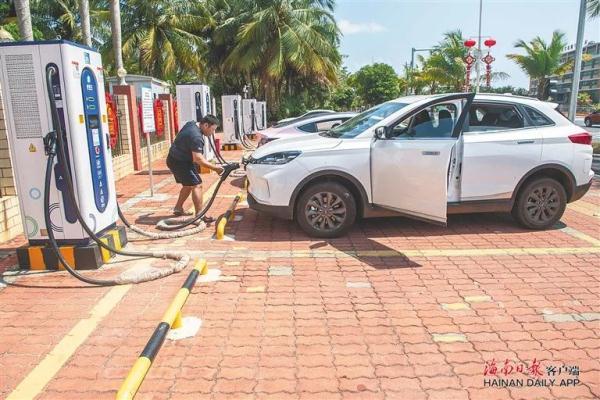
According to state-run Xinhua News Agency on the 26th, government departments and related agencies such as the Ministry of Transport, the National Energy Administration, and the State Grid Corporation of China have agreed to build 20 million electric vehicle charging infrastructures nationwide at highway rest stops and local roads by 2025.
The Chinese authorities announced that they will complete the construction of major highway charging infrastructure by the end of this year and finish building charging infrastructure on local roads next year. To this end, they will provide financial support for infrastructure construction such as chargers and offer various benefits to operators, including reductions in land use fees and electricity charges.
As of the end of July, sales of new energy vehicles, including electric vehicles, in China reached 3.194 million units, a 120% increase compared to the previous year. The share of new energy vehicles in new car sales reached 22.1%.
When China announced its 14th Five-Year Economic Plan (2021?2025) in 2020, the government estimated that annual electric vehicle sales would reach 5 million units by 2025. However, due to the surge in demand, it is expected to exceed 5 million units this year. Some forecasts within China suggest that sales of new energy vehicles, including electric vehicles, could approach 7 million units this year.
As of the end of July, there are 3.98 million public electric vehicle chargers installed in China. Although this is more than double compared to the same period last year, it is still not keeping pace with the speed of electric vehicle sales.
The rapid increase in electric vehicle sales in China is also confirmed by the production volume of batteries for electric vehicles. As of the end of July, China’s production of electric vehicle batteries reached 134.3 GWh (gigawatt-hours), a 110.6% increase compared to the same period last year.
The Chinese government’s support for electric vehicles has also contributed to the sales increase. The State Council has extended the exemption of registration tax on new energy vehicles, including electric vehicles, for one more year until the end of next year as part of efforts to stimulate domestic demand. Subsidies for electric vehicles are also expected to be extended further.
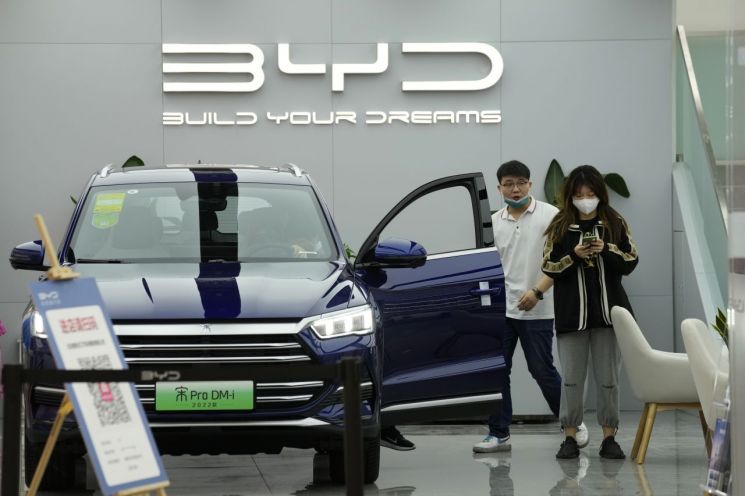
On the 17th, Chinese Premier Li Keqiang visited the headquarters of BYD, China’s largest electric vehicle manufacturer, and promised, "We will spare no policy support for the production and sales of electric vehicles."
As of the end of June this year, the cumulative registered electric vehicles in China reached 10.01 million units, and it is expected to exceed 25 million units by 2025. Furthermore, the size of China’s electric vehicle charging market is estimated to surpass 1 trillion yuan (approximately 194 trillion Korean won) over the next decade.
Meanwhile, BYD, China’s number one electric vehicle manufacturer, plans to launch a premium electric vehicle brand priced over 1 million yuan (approximately 190 million Korean won) per unit in the fourth quarter. As of the end of July, BYD sold 803,800 electric vehicles, surpassing Tesla to become the world’s number one.
Riding this momentum, BYD’s launch of a premium brand priced over 1 million yuan is interpreted as an attempt to enter the high-end electric vehicle market. BYD’s net profit for the first half of this year is estimated to be between 2.8 billion and 3.6 billion yuan. In March, BYD announced the complete cessation of production of conventional fossil fuel vehicles such as gasoline cars and declared its commitment to focus solely on the production of electric and other new energy vehicles.
© The Asia Business Daily(www.asiae.co.kr). All rights reserved.


















