Public-Led, Drifting Amid Resident Opposition and Conflicts
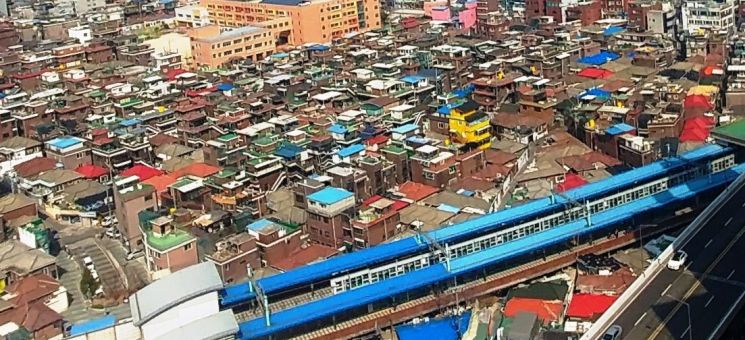
A bill allowing private enterprises to participate in urban development projects has been proposed.
In the past, the 'Urban Public Housing Complex Project' was introduced to quickly supply housing within the city, but the public-led housing supply approach faced opposition from residents, resulting in limited success and criticism that it was insufficient to meet the diverse demands within urban areas.
On the 22nd, Kim Jeong-jae, a member of the People Power Party, announced that he had taken the lead in proposing the "Act on Support for Urban Complex Development," which allows private entities to also promote urban complex projects previously driven by the public sector.
This bill designates 'Urban Complex Development Innovation Districts' where regulatory exceptions are applied to utilize the expertise and creativity of the private sector, enabling private-led creation of cultural, commercial, and other growth hubs within the city and rapid housing supply.
Additionally, it serves as the legal basis supporting the "Plan to Realize National Housing Stability" announced by the Ministry of Land, Infrastructure and Transport on the 16th, stipulating details on the △ project entities △ project types △ project procedures △ incentives △ public contributions of the new urban development model, the urban complex development project.
First, considering issues such as non-professionalism and prolonged project duration in the existing association-based redevelopment projects, the project entity is set so that landowners can implement projects in cooperation with private specialized institutions such as trusts and REITs without establishing associations.
Second, areas with convenient transportation and potential to become commercial and cultural hubs but still underdeveloped or underutilized will be developed as 'growth hub type' focused on advanced industries, while aging station areas and semi-industrial zones will be developed as 'residential-centered type' focusing on housing supply, with differentiated target areas and incentives.
Third, local governments will first present the project direction through preliminary review during project promotion, enabling project implementers to quickly establish plans, and various reviews stipulated by individual laws will be integrated and reviewed to shorten the administrative procedure period.
Fourth, for growth hub type projects, regulations such as floor area ratio and building coverage ratio are significantly relaxed by designating minimum regulation zones to maximize private sector creativity, and for residential-centered projects, urban and architectural regulations are eased to public standards to increase incentives for participation.
Along with this, development profits from relaxed regulations are to be donated for public purposes such as public housing, infrastructure, and living SOC, and to prevent privatization of development profits, the profits of private developers can be limited.
Representative Kim said, "Once this bill is enacted, stable housing supply will be possible through urban complex development projects, and it will also contribute to strengthening urban competitiveness," adding, "I hope the city becomes a more complex and innovative space, moving away from standardized development methods caused by excessive regulations."
© The Asia Business Daily(www.asiae.co.kr). All rights reserved.

![Clutching a Stolen Dior Bag, Saying "I Hate Being Poor but Real"... The Grotesque Con of a "Human Knockoff" [Slate]](https://cwcontent.asiae.co.kr/asiaresize/183/2026021902243444107_1771435474.jpg)















