Multiple Debtors Account for 31.9% of Loan Balances
Average Jeonse Price-to-Value Ratio of Nationwide Jeonse Houses at 90.9%
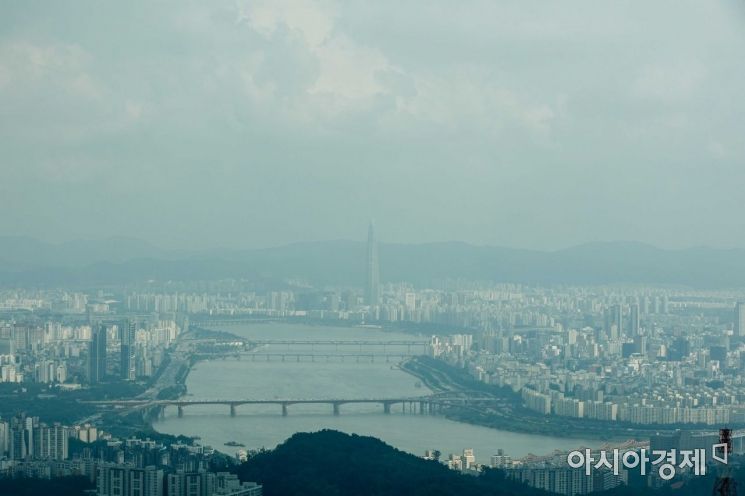
[Asia Economy Reporter Cha Wanyong] The real estate market atmosphere is unusual. Due to interest rate hikes and economic recession, home buying sentiment has cooled, and signals of falling house prices are being detected in various places.
Some express concerns that, based on various economic indicators, a period of sharp real estate price drops similar to the foreign exchange crisis (1998) or the financial crisis (2008) could return, with the emergence of 'house poor' households.
Household Debt Higher Than During the Financial Crisis
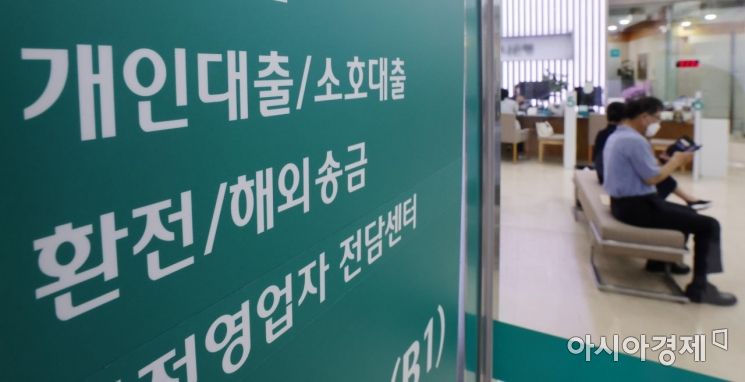
In fact, various economic indicators show an unstable situation. According to Statistics Korea's 'July Consumer Price Trends' on the 21st, the consumer price index last month rose 6.3% year-on-year, marking the highest increase since November 1998 (6.8%) during the foreign exchange crisis. On the 19th, the won-dollar exchange rate surpassed 1,328 won intraday, reaching the highest level in 13 years and 3 months since the global financial crisis.
The most serious issue is household debt. Analyses indicate that the level of household debt has already worsened compared to the 2008 global financial crisis.
According to Hyundai Research Institute's report 'Financial Instability Surpasses Long-term Equilibrium,' the average household financial imbalance during the COVID-19 crisis was 78.5 points. This is 3.1 points higher than the household imbalance level during the financial crisis (Q3 2007?Q3 2009) of 75.4 points, and 26.0 points higher than during the International Monetary Fund (IMF) foreign exchange crisis (Q2 1997?Q1 1999) at 52.5 points.
Financial imbalance refers to how excessively household and corporate debt levels have increased compared to the real economy level, including Gross Domestic Product (GDP).
In fact, the proportion of multiple debtors borrowing from three or more financial institutions has risen to the highest level since statistics began in 2012.
According to Bank of Korea data, as of the end of Q1 this year, 22.4% of household loan borrowers are multiple debtors. This is up 0.3 percentage points (P) from the end of last year (22.1%) and is the highest level since related statistics began in 2012. Based on loan balances rather than the number of borrowers, the proportion of multiple debtors is 31.9%.
Decline in Real Estate Prices in Major Cities Nationwide
The unstable economic situation is spilling over into the real estate market. Apartment buying sentiment has fallen for three consecutive months, hitting the lowest point in about 2 years and 9 months.
According to the Korea Real Estate Board, as of the 19th, the nationwide apartment sales demand-supply index was 89.3, down 0.8 points from last week (90.1). When the sales demand-supply index is below the baseline (100), it means there are more sellers than buyers in the housing market.
The decline in buying sentiment is pulling down house prices. Price drops are appearing in major cities nationwide, including Seoul.
According to the Korea Real Estate Board, in the third week of August (as of the 15th), Seoul apartment prices fell by 0.09%, widening the decline from the previous week (-0.08%). This is the largest drop in about 3 years and 4 months since the survey on March 25, 2019 (-0.09%).
Notably, among Seoul's 25 autonomous districts, there is not a single area with price increases. Seocho-gu (-0.01%), which had been holding out with increases or stable prices until the end, turned to a decline after 25 weeks.
As house prices fall, concerns about 'empty jeonse' (Kkangtong Jeonse) are also emerging. According to the Korea Urban Research Institute's recently released '2021?2022 Nationwide Apartment Complex Jeonse Price-to-Value Ratios,' the average jeonse price-to-value ratio of nationwide jeonse houses traded from January to May 10 this year was 90.9%. Complexes with a jeonse price-to-value ratio of 80% or higher accounted for nearly 37% of all transactions.
The jeonse price-to-value ratio is the ratio of the jeonse deposit to the sale price. In the real estate industry, a jeonse price-to-value ratio above 80% is considered to pose a high risk of 'empty jeonse,' where tenants find it difficult to get their deposit back at the end of the lease.
In fact, in Seoul, many transactions with a jeonse price-to-value ratio exceeding 90% were detected in villas (row houses and multi-family houses) excluding apartments. Based on actual transaction data from the Ministry of Land, Infrastructure and Transport, Dabang conducted a full survey of jeonse transactions in newly built villas in Seoul, finding that 21.1% (815 cases) of the total 3,858 jeonse transactions in the first half of this year exceeded a 90% jeonse price-to-value ratio.
Jeonse deposit return guarantee insurance claims are also surging. According to the Housing and Urban Guarantee Corporation (HUG), in July, the amount and number of jeonse deposit return guarantee insurance claims reached 87.2 billion won (421 cases), the highest monthly amount and number ever recorded.
In the first half of this year (January to June), the amount reached 340.7 billion won, surpassing both the first half of last year (251.2 billion won) and the second half (July to December) (327.8 billion won), marking the highest amount on a half-year basis. On a monthly basis, it also broke the record set in December last year with 74.2 billion won (326 cases).
© The Asia Business Daily(www.asiae.co.kr). All rights reserved.


















