Strengthening International Plastic Regulations
Increasing Demand for Eco-Friendly Materials
Competition in Waste Plastic Commercialization
Active Facility Investment and Cross-Industry Collaboration
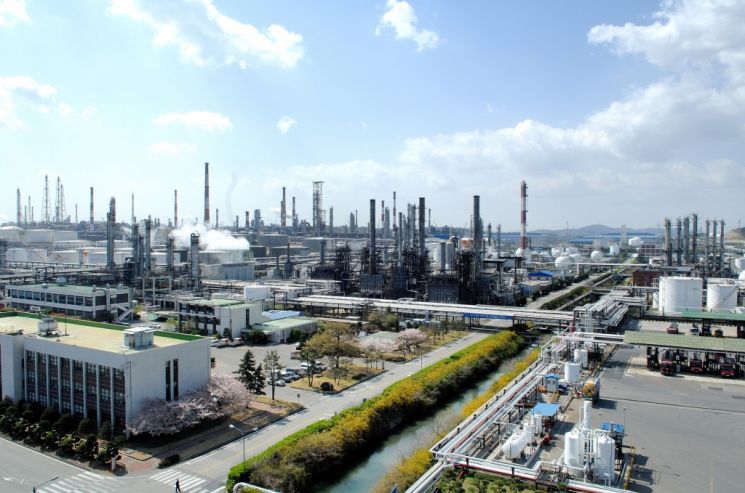
[Asia Economy Reporter Choi Seoyoon] Petrochemical companies are focusing on the plastic recycling market. With the international community strengthening plastic regulations and the demand for eco-friendly materials based on ESG (Environmental, Social, and Governance) increasing, the related market size is expected to expand rapidly.
According to global market research firm Fortune Business Insights on the 20th, the global recycled plastic market is projected to grow from $44 billion (approximately 59 trillion KRW) last year to $76.2 billion (approximately 102 trillion KRW) by 2028, at an average annual growth rate of 8.2%. This nearly doubles in seven years.
The international community, led by developed countries, is tightening regulations on plastic production and consumption. The EU (European Union) banned the sale of plastics within the EU region starting last year. In the same year, a plastic tax was introduced on non-recyclable plastic packaging waste. China banned the import of waste plastics since 2017, and the United States has implemented regulations on single-use plastic bags by state, while allocating a budget of $350 million (approximately 468 billion KRW) last year to establish plastic recycling infrastructure.
In February this year, 175 countries attending the United Nations Environment Assembly agreed to establish the world's first legally binding "International Plastic Regulation Agreement" by the end of 2024. Lee Seonghee, a senior researcher at the Korea Institute for International Economic Policy (KIEP), stated in the report "Current Status and Implications of International Plastic Regulations" that "the first legally binding international agreement on plastics will contribute to a fundamental transformation in the production, consumption, and disposal of plastics," and added, "As biodegradable plastics and bio-based plastics emerge as alternatives to conventional plastics, market conditions should be created to commercialize them according to raw materials, decomposition conditions, and purposes."
Accordingly, the petrochemical industry, which directly produces plastics, is actively attempting to commercialize recycled plastics. LG Chem plans to build a biodegradable bioplastic plant in the United States by 2025. To this end, it established two joint ventures with the U.S. food company ADM (Archer Daniels Midland). ADM produces high-purity lactic acid derived from corn, and LG Chem produces 75,000 tons per year of bioplastics based on this. Domestically, LG Chem will establish a 20,000-ton scale supercritical pyrolysis oil plant in Dangjin, Chungnam, by the first quarter of 2024.
SK Innovation’s petrochemical subsidiary, SK Geocentric, plans to build a plastic recycling cluster in Ulsan by 2025. Through this, it will secure pyrolysis facilities with an annual capacity of 100,000 tons, depolymerization facilities of 84,000 tons, and high-purity polypropylene (PP) extraction facilities of 50,000 tons. It has formed partnerships with overseas technology companies such as Brightmark and PureCycle Technology in the U.S. and Loop Industries in Canada, and last month signed a memorandum of understanding with a French environmental company to promote plastic recycling business. They are conducting joint studies on PET, PP, and pyrolysis raw material plastics generated in the Asian region.
Lotte Chemical plans to invest 100 billion KRW by 2024 to establish a 110,000-ton chemical recycling PET plant at its Ulsan Plant 2. With a cumulative investment of 1 trillion KRW, it aims to expand the recycled and bio-plastic material business to over 1 million tons in total. By 2030, in the short term, it plans to expand sales of PCR products through existing physical recycling to 440,000 tons, focusing on customers in electronics, automotive, and home appliances, and in the mid-to-long term, to produce 410,000 tons through chemical recycling such as recycled PET (r-PET) and 150,000 tons of PE and PP products through commercialization of pyrolysis technology. The sales volume of Bio-PET produced at the Yeosu plant is expected to increase from the current 14,000 tons to 70,000 tons annually by 2030.
Refining companies are also actively entering the waste plastic recycling business. GS Caltex started a pilot project in December last year to input pyrolysis oil derived from chemically recycled waste plastics into petroleum refining processes. It plans to seek investment to establish a pyrolysis oil production facility with an annual capacity of 50,000 tons, targeting operation in 2024. It has also partnered with coffee company Nestl? Korea to process and produce plastic coffee capsules into eco-friendly composite resins. Collected plastic capsules are pre-processed by partner company Dowon and processed into recyclable raw materials. GS Caltex produces eco-friendly composite resins through this process.
Hyundai Oilbank is also promoting a waste plastic pyrolysis oil business. Last year, it applied for a regulatory sandbox with the Ministry of Trade, Industry and Energy and the Korea Institute for Advancement of Technology to allow petroleum refiners to use waste plastic pyrolysis oil as a process raw material and received approval for "regulatory exemptions for demonstration." Accordingly, from November last year to October this year, 900 tons of waste plastic pyrolysis oil will be input into the process to produce eco-friendly naphtha. The produced naphtha will be purchased by Hanwha Total near the Daesan plant and used as raw material to develop recycled plastic materials. Earlier this year, Hyundai Oilbank became the first domestic refining company to obtain the ISCC PLUS certification, an international eco-friendly product certification system, for the process producing eco-friendly naphtha from waste plastic pyrolysis oil.
© The Asia Business Daily(www.asiae.co.kr). All rights reserved.

















