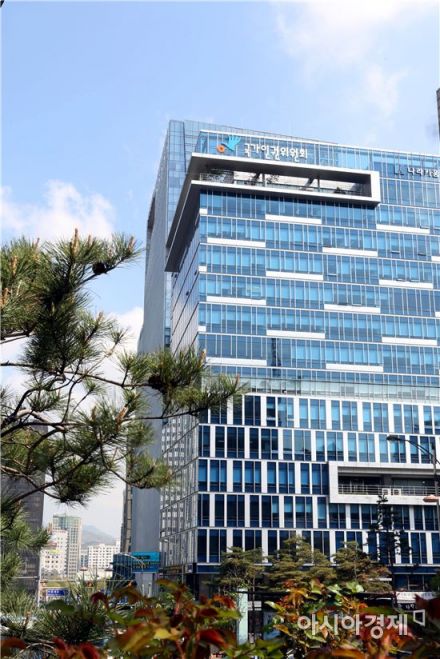
[Asia Economy Reporter Seongpil Cho] The National Human Rights Commission has recommended organizational culture improvements to public institutions where workplace harassment has occurred.
On the 19th, the Human Rights Commission announced that it advised the head of Institution A to have affiliated executives and employees attend special human rights education aimed at preventing workplace power abuse, and to improve the organization through diagnosis to foster a human rights-friendly organizational culture. It also ordered written warnings to B, C, and D, who were identified as perpetrators of workplace harassment. The Commission added, "Since it was confirmed that there is an organizational atmosphere in which superiors within the institution disregard subordinates, organizational diagnosis and human rights education are necessary to prevent recurrence of workplace power abuse."
Previously, the Commission received a complaint from a mother stating that her son was subjected to violations of personal rights at the institution, including humiliating remarks in front of others and being assigned personal errands, due to his work inexperience and mistakes by a superior. The respondents claimed, "We have advised the victim kindly but have never verbally abused him in front of others, and the errands were done as a favor."
However, the Commission's investigation confirmed that respondent B shouted at the victim in front of other employees due to work inexperience, ordered the victim to buy coffee, kimbap, etc., about 5 to 6 times a month as errands, and referred to the victim as a "secretary." Additionally, C failed to take appropriate protective measures by reporting the victim's complaint about another employee's power abuse to the internal grievance handler. D also used approval authority to harass the victim and other employees by delaying the processing of approval documents.
The Commission judged, "Even if all incidents claimed by the victim cannot be definitively classified as workplace harassment, the respondents' actions involved using their superior workplace status or relationships to exceed appropriate limits of work-related reprimands." It further stated, "They repeatedly used abusive language that demeaned and humiliated the victim beyond the minimum necessary scope of work-related reprimands or education," and considering that the victim suffered physical and mental distress, resigned, and is currently receiving psychiatric treatment at a hospital, the respondents infringed upon the victim's personal rights and human dignity and value.
© The Asia Business Daily(www.asiae.co.kr). All rights reserved.

















