Only 18% of Pre-War Export Volume Just Two Weeks After Black Sea Port Blockade Lifted
Many Restrictions Including Limited Port Use
Food Crisis and Grain Price Stabilization Still Far Off
South Korea Is the Second Largest Importer
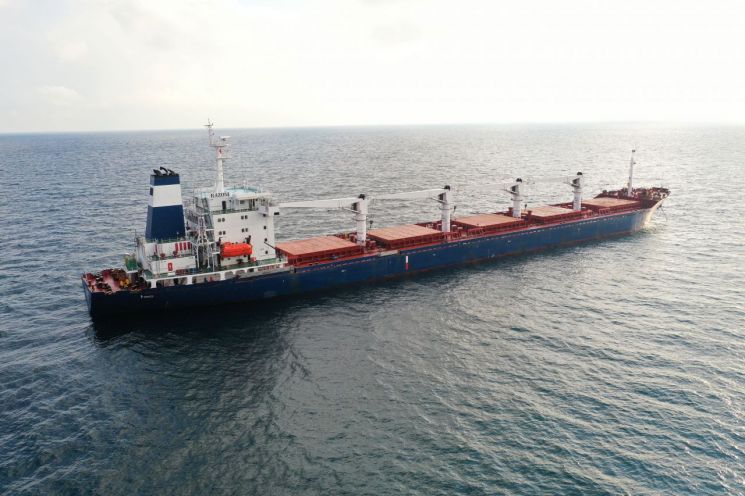
[Asia Economy Reporter Lee Ji-eun] It has been half a month since Ukraine resumed grain exports through the Black Sea, but the export volume is only about one-fifth of the level before the outbreak of the Russia-Ukraine war. Expectations had risen that the global food crisis, which had escalated due to the resumption of Black Sea grain exports, would ease and soaring grain prices would stabilize, but it is pointed out that this is still insufficient.
On the 19th, the Nihon Keizai Shimbun cited statistics from the Joint Coordination Center (JCC), the overall management organization for grain exports, reporting that since the resumption of exports, Ukraine has exported about 560,000 tons of grain through the Black Sea coast.
The initially estimated export volume by the Joint Coordination Center was 2 to 5 million tons per month. Before Russia's invasion, Ukraine exported a total of 6 million tons of grain per month during peak shipping seasons. The grain export volume over the past 15 days is only 18% of the peak level.
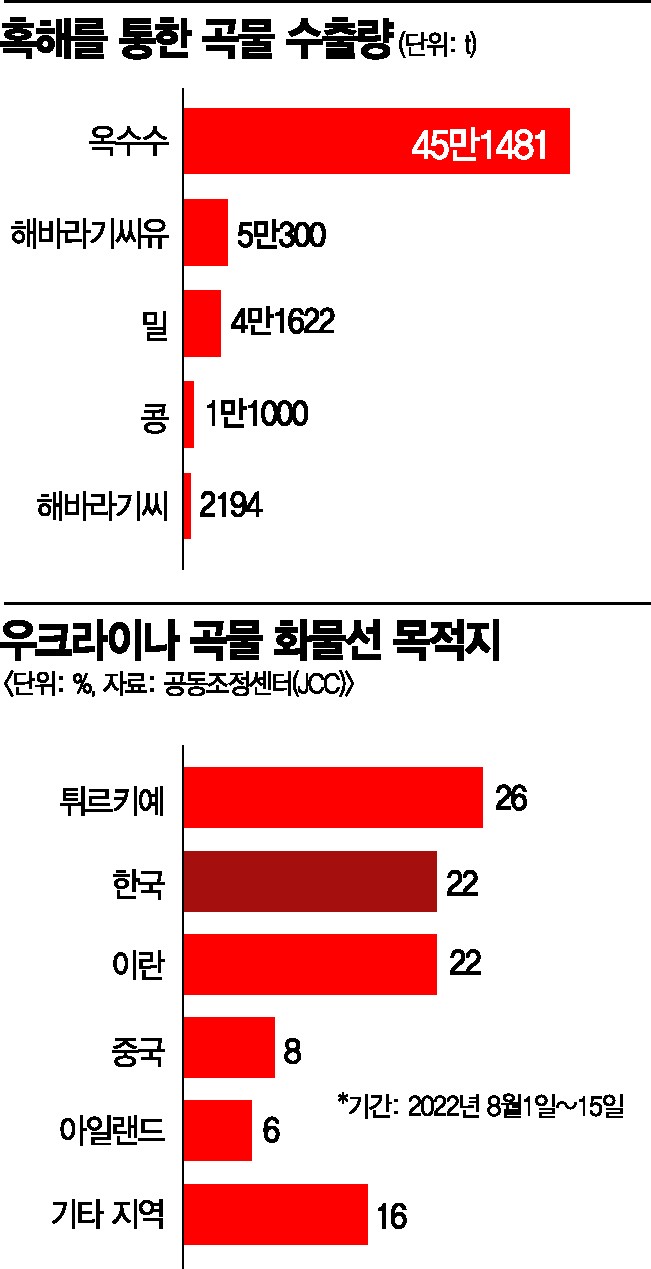
By type of exported grain, corn accounted for about 451,481 tons, making up 80% of the total. Sunflower seed oil (53,000 tons), wheat (41,622 tons), and soybeans (11,000 tons) followed.
The total global corn export volume in 2020 and 2021 was about 183 million tons. Ukraine has been responsible for about 10% of the world's corn exports, but this export volume accounts for only 6% of the total.
Despite the resumption of exports from Black Sea ports, there are still many restrictions on actual transportation. Since the agreement reached last month among representatives of Russia, Ukraine, the United Nations, and T?rkiye, Ukraine can only export through three designated ports (Odesa, Chornomorsk, Yuzhny) via the Black Sea. Additionally, due to the war, the labor force available for farming has decreased, making it difficult to increase production to pre-invasion levels.
The food crisis in developing countries is expected to worsen further. According to statistics from the Joint Coordination Center, 26% of Ukrainian cargo ships carrying grain head to T?rkiye, 22% each to South Korea and Iran, 8% to China, and 6% to Ireland. Only 16% head to other regions, which is insufficient to alleviate food shortages in developing countries.
Africa is currently suffering from extreme food shortages due to the worst drought in 40 years. Low-income countries such as those in Africa and the Middle East have relied on relatively inexpensive Ukrainian grain, but with grain prices rising due to the war, they are facing financial difficulties.
Bloomberg reported, "Across West Africa, 38.3 million people are starving, but only $1.3 billion of the $3.8 billion needed for food shortages has been secured," adding, "Since harvests in the Sahel region are likely to decrease next year, the food crisis in Africa is expected to worsen further."
AP News reported, "On the 16th, 23,000 tons of wheat supported by the World Food Programme (WFP) left Ukraine bound for Ethiopia," but noted, "This is only a tiny fraction of the 20 million tons of grain produced in Ukraine, and currently 15 million people require food aid."
© The Asia Business Daily(www.asiae.co.kr). All rights reserved.
![From Bar Hostess to Organ Seller to High Society... The Grotesque Con of a "Human Counterfeit" [Slate]](https://cwcontent.asiae.co.kr/asiaresize/183/2026021902243444107_1771435474.jpg)

















