633 Daily Imported COVID-19 Cases
Superficial Testing Only for Profit
Pre-Entry Testing Questioned
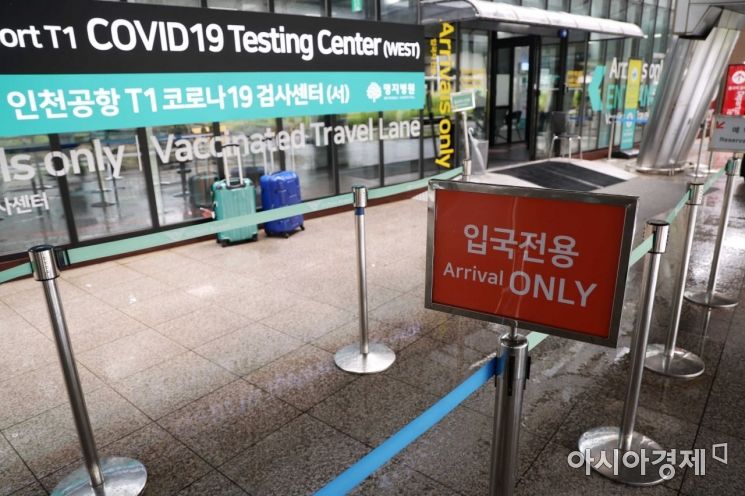 On the 11th, the COVID-19 testing center exclusively for arrivals at Terminal 1 of Incheon International Airport is quiet. Photo by Moon Honam munonam@
Earlier this month, Mr. A (32), who went on a summer vacation to Guam with his family, visited a local PCR testing site before returning home. Although he tilted his head back to allow the swab to reach deep into his nose, as is done in Korea, the doctor only lightly inserted the swab into his nose and swirled it once or twice before declaring the test complete. Worried that he might have contracted COVID-19 during his trip and be unable to return home, Mr. A was relieved to receive a negative result the next day, but he also felt uneasy about whether the test had been conducted properly. He only felt reassured after receiving a negative PCR result at a domestic public health center the day after his return.
Mr. B (50), who returned from a trip to Turkey last week through a travel agency, also found the PCR testing method he underwent locally before returning to Korea questionable. At a restaurant where a group of Korean tourists were having dinner, testing staff came and collected samples by swabbing the front of the mouth once, then notified them of a negative result the next morning. Mr. B said, "When I took a PCR test in Korea, the swab was inserted deeply into my nose or throat, which was uncomfortable, so I wondered if this method was acceptable." He questioned, "Is it really effective for quarantine to pay 50 euros (about 67,000 won) per person for a formal PCR test abroad and then have to visit a screening clinic again after entering Korea?"
Since the social distancing measures were lifted in April, the number of people traveling abroad for business and leisure has increased, leading to ongoing debates about the effectiveness of PCR tests required locally before boarding return flights. Because the tests are conducted loosely, they fail to prevent infected passengers from boarding planes, and there are many cases where tests are done superficially just to obtain negative results from Koreans while collecting testing fees.
According to the Central Disease Control Headquarters on the 19th, as of midnight the previous day, there were 633 imported COVID-19 cases among new infections, the highest number since the outbreak began in Korea. Until May 21, the number of imported cases was only 12 per day. However, since June, imported cases have steadily increased, surpassing 600 on the 10th of this month (605 cases). The positivity rate among arrivals this month has risen to 1.3%.
Passengers must present a negative PCR test result taken within 48 hours or a negative rapid antigen test (RAT) result within 24 hours before boarding a flight from abroad. If tested positive, they can only enter Korea after 10 days have passed locally and within 40 days.
From the travelers’ perspective, if they unknowingly test positive, their return schedule is delayed, and they must bear additional accommodation costs. Travel agencies must endure customer inconvenience and complaints, and the destination countries bear the burden of confirmed cases remaining in their territory. Ultimately, everyone needs a negative certificate. This is why various tricks, such as pretending to test to produce negative results, are rampant. On internet travel forums, information about testing sites with lax procedures is shared, and there are even reports of forged negative certificates being traded.
Mr. C, who recently traveled to Da Nang, Vietnam, said, "I saw them using kits without diagnostic reagents to test for COVID-19 locally," adding, "It felt like a mere formality."
Some argue that pre-entry testing is pointless. In the U.S. and Canada, fully vaccinated travelers are exempt from PCR testing or only need to test once after entry. Since March this year, the UK no longer requires COVID-19 related documents upon entry, and other European countries like the Netherlands and Sweden also do not require tests.
The government maintains that the current system must be upheld to manage the quarantine situation steadily, as the resurgence is ongoing and imported cases are increasing. They also emphasized that submitting false negative certificates is punishable under the Quarantine Act. A quarantine official stated, "We will inform the travel industry through cooperation with relevant ministries that proxy testing is illegal in response to inappropriate issuance of negative certificates abroad," and added, "We will strengthen guidance to departing travelers via text messages to comply with negative certificate submission standards and to refrain from submitting false documents."
© The Asia Business Daily(www.asiae.co.kr). All rights reserved.
![User Who Sold Erroneously Deposited Bitcoins to Repay Debt and Fund Entertainment... What Did the Supreme Court Decide in 2021? [Legal Issue Check]](https://cwcontent.asiae.co.kr/asiaresize/183/2026020910431234020_1770601391.png)