[Asia Economy Yeongnam Reporting Headquarters Reporter Lee Seryeong] Hong Taeyong, mayor of Gimhae City, Gyeongnam, is expected to be reported to the police in connection with the maintenance project of the Gusan-dong dolmen.
The Cultural Heritage Administration announced on the 17th that it would file a complaint against the mayor of Gimhae, the entity responsible for the project, for violating Article 31, Paragraph 2 of the Act on the Protection and Investigation of Buried Cultural Properties.
The Gusan-dong dolmen was discovered during the 2006 development project of the Gusan-dong residential district in Gimhae and is registered as Gyeongsangnam-do Monument No. 280.
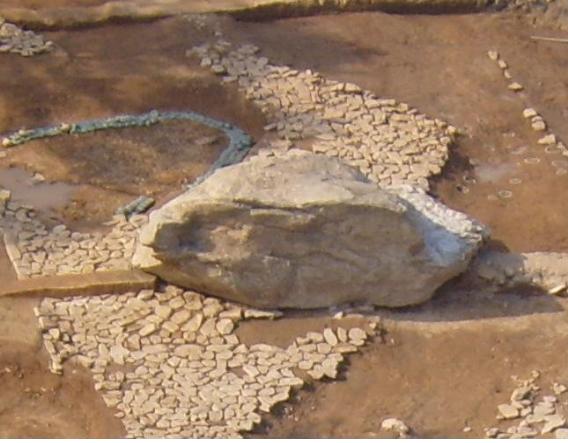
The capstone weighs 350 tons, and the burial site facilities centered around the dolmen cover 1,615㎡, which academia estimates to be the largest scale in the world.
At the time of excavation, Gimhae City filled the area with road soil to preserve it due to the large size of the dolmen and difficulties in securing the budget.
Subsequently, after promoting the designation of the Gusan-dong dolmen as a national historic site, a cultural heritage restoration company was selected as the contractor, and the dolmen restoration and maintenance project began in December 2020.
On the 17th, the Cultural Heritage Administration stated, “A complaint was raised that alteration activities were occurring during the maintenance project, so on the 5th, cultural heritage staff and related experts conducted an on-site inspection,” adding, “The National Gaya Cultural Heritage Research Institute conducted an emergency investigation to determine the scope and extent of the alterations.”
The investigation confirmed ▲loss of cultural layers around the dolmen capstone ▲destruction of cultural layers at the sites of reservoir tanks, pipeline facilities, and boundary wall installations within the maintenance project area.
Cultural layers are strata that reveal cultural aspects of a specific era; about 20 cm of the cultural layer around the capstone was lost, and most of the cultural layers were destroyed due to excavation during the construction of reservoir tanks, pipeline facilities, and boundary walls.
The city was previously embroiled in controversy for removing the thin and flat stones called bakseok, which mark the burial site, without consulting on cultural heritage preservation measures during the Gusan-dong dolmen maintenance project, causing damage.
At that time, the city explained, “We manually removed the bakseok stones, which had been damaged by long-term exposure to sunlight and rain, performed high-pressure washing and surface strengthening treatment, and then reinstalled them in their original positions without using heavy machinery.”
The Cultural Heritage Administration explained, “Alterations resulting from the Gusan-dong dolmen maintenance project, designated as a city/provincial cultural property, require permission from the city/provincial governor under Article 35, Paragraph 1 and Article 74, Paragraph 1 of the Cultural Heritage Protection Act.”
It added that confirming whether ▲Gimhae City obtained permission from the governor of Gyeongnam Province ▲Gimhae City complied with the scope and content of the provincial permission ▲cultural heritage repair contractors and technicians adhered to the design documents during restoration and taking appropriate measures are matters under the jurisdiction of Gyeongnam Province.
A Cultural Heritage Administration official said, “We will closely cooperate with local governments and related experts to prevent recurrence of similar cases in the protection and maintenance of the Gusan-dong dolmen.”
© The Asia Business Daily(www.asiae.co.kr). All rights reserved.

















