Issuing 'Fake Hole-in-One' Certificates by Colluding or Deceiving with Caddies Increases
Many Places Lack CCTV, Making Detection Difficult
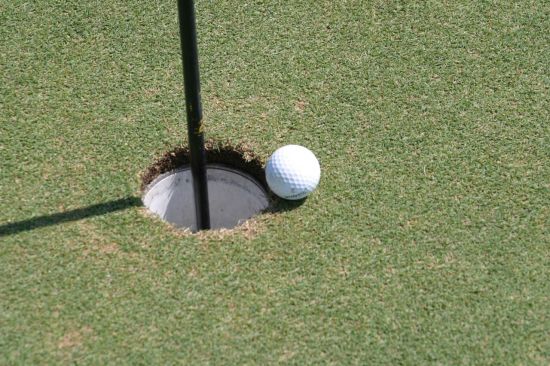
[Asia Economy Reporter Lee Seo-hee] Choi (35), who works as a caddie at a golf course in Incheon, received a ridiculous proposal from a customer during a round last month. The customer offered to share 1 million KRW out of the 5 million KRW insurance payout if Choi issued a fake ‘Hole In One certificate.’ At the time, the customer’s hole-in-one insurance was only one month away from expiration. Choi said, "I refused the offer, but the customer persistently insisted, saying 'If we just keep it between us, we might not get caught.' I was worried because the insurance payout process seemed surprisingly lax, making it possible to commit fraud if someone wanted to."
Recently, cases of falsely claiming ‘Hole In One’ insurance payouts have been increasing. Hole In One insurance is a special policy that compensates golfers for various celebratory expenses incurred when they achieve a hole-in-one. However, since the only proof of a golfer’s hole-in-one is the ‘Hole In One certificate’ issued by the caddie and the golf course, concerns have been raised about its vulnerability to fraud.
“I made a hole in one”… Insurance companies troubled by repeated fraud
A ‘hole in one’?sinking the ball in one shot on a par-3 hole?is every golfer’s dream. The odds are very low. For amateur golfers, it is about 1 in 12,000. Most golfers have never experienced it even after decades of playing. Even highly skilled single-digit handicappers have odds of only about 1 in 5,000, and professional players face odds of about 1 in 3,500, according to some analyses.
For domestic golfers, a hole-in-one comes with costs. It is customary to host a lavish celebration with fellow players and cover expenses for commemorative rounds. These costs can easily reach several million KRW.
Hole In One insurance was created to meet the needs arising from these ‘low odds’ and golfers’ ‘concerns about cost burdens.’ When a golfer who records a hole-in-one submits receipts proving expenses for dinners, commemorative items, and other celebrations, the insurer pays out accordingly.
The problem is that fraud targeting hole-in-one insurance payouts has been rampant recently. The industry explains that as the golf population surged due to COVID-19, the number of detected fraud cases also sharply increased. Byung Ki-chun, Public Relations Officer at Samsung Fire & Marine Insurance, told Asia Economy, "There are no specific statistics, but as golf’s popularity soars, hole-in-one insurance fraud is also on the rise. Since detection is difficult without reports, the actual number is likely much higher than what is visible." He added, "Hole-in-one insurance fraud is a frustrating product for insurers because many golf courses lack CCTV, so even if reported, investigations are often insufficient."
Pretending to retrieve the ball to fake a hole-in-one... Fraud often targets novice caddies
Hole-in-one insurance fraud spreads by exploiting loopholes in insurance policies and the closed structure of golf courses. The only proof of a player’s hole-in-one is the caddie’s hole-in-one certificate, which allows customers and caddies to collude or players to deceive caddies to falsely claim insurance payouts.
Novice caddies, who have low work experience and are sensitive to customer evaluations, are especially vulnerable to deception.
Kim Gil-man (29), who has worked as a caddie at a golf course in Gyeonggi Province, testified, "Novice caddies have low work proficiency, so customers can easily pretend to retrieve the ball and quickly place it in the hole to fake a hole-in-one."
Industry insiders also say that even when a real hole-in-one is achieved, some submit receipts for related expenses to the insurer and then immediately cancel the card payment as a fraudulent method.
The structural characteristics of golf courses also encourage hole-in-one insurance fraud. Because courses are so large, many areas lack CCTV, so even if fraud is suspected, insurers have no effective way to detect it. Even if insurers request CCTV footage, golf courses are not obligated to comply. Among golfers, there is talk that "if you just recruit a caddie, a perfect crime is possible."
Kim Dae-jung, CEO of Golf & Partner, said, “Depending on the product, hole-in-one insurance premiums are only about 30,000 to 70,000 KRW annually, making it popular among golfers. Statistically, the chance of an average golfer making a hole-in-one is only 1 in 12,000, so the insurer does not lose money on the product structure, but I understand that various insurance frauds cause significant deficits.”
© The Asia Business Daily(www.asiae.co.kr). All rights reserved.
![Clutching a Stolen Dior Bag, Saying "I Hate Being Poor but Real"... The Grotesque Con of a "Human Knockoff" [Slate]](https://cwcontent.asiae.co.kr/asiaresize/183/2026021902243444107_1771435474.jpg)
















