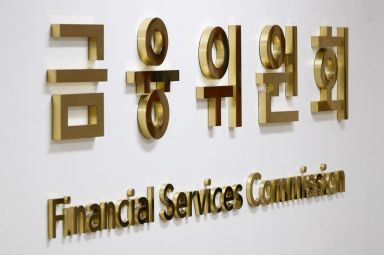
[Asia Economy Reporter Song Hwajeong] The Financial Services Commission will hold a briefing session on the New Start Fund for the financial sector on the 18th. To dispel controversies such as moral hazard, it is expected to actively explain the operational policy of the New Start Fund, including not providing principal reductions to borrowers with sufficient income or assets.
According to the financial sector on the 18th, the Financial Services Commission will hold a briefing session at 2 p.m. at the Korea Chamber of Commerce and Industry to gather opinions and communicate with the financial sector.
In particular, at this briefing session, the Financial Services Commission is expected to emphasize that principal reductions through the New Start Fund will be made only in very limited cases. According to the Financial Services Commission, borrowers with sufficient income and assets cannot receive principal reductions. Debt adjustment can only be made on net debt, which is debt minus assets, not on total debt. A Financial Services Commission official explained, "Principal reductions of 60-80% are limited to the excess debt that exceeds the assets held by the borrower," adding, "The higher the income compared to the excess debt, the lower the reduction rate applied." For example, a borrower with 100 million KRW in debt and 1.5 billion KRW in assets such as real estate cannot receive principal reductions because the excess debt is zero.
The principal reduction rate is expected to be maintained between 60% and 90%. Initially, some in the banking sector suggested lowering the reduction rate to 10-50% due to concerns about moral hazard. In response, the Financial Services Commission stated that considering the current debt adjustment programs such as the Credit Recovery Committee's workout or court personal rehabilitation (with principal reduction limits of 0-70% for the Credit Recovery Committee and no separate limit for court personal rehabilitation), and average reduction rates (44-61% for the Credit Recovery Committee and 60-66% for court personal rehabilitation), it is difficult to see the reduction as excessive enough to cause moral hazard. They also firmly rejected the idea of reducing the rate to 10-50% as proposed by the banking sector, saying it would mean reducing principal reductions compared to existing systems. The 90% principal reduction rate is effectively applied only to vulnerable groups with no ability to repay the principal and is the same as the program operated under the current Credit Recovery Committee workout system.
The debt subject to principal reduction is expected to be limited to unsecured non-performing debt. Secured debt will be given a grace period and encouraged to be repaid in long-term installments. The debt purchase limit of the New Start Fund is expected to be somewhat adjusted, likely in response to criticism that the debt purchase limit in the financial sector is somewhat high. Initially, the debt adjustment limit was set at 2.5 billion KRW for individual self-employed persons and 3 billion KRW for corporate small business owners, which sparked controversy.
Also, unlike the basic debt adjustment program, it is expected to be emphasized that the New Start Fund will bear the loss from principal reductions through government funds. In existing debt adjustment programs, banks bore the entire loss from principal reductions, but the New Start Fund will cover these losses from funds allocated through supplementary budgets.
The Financial Services Commission is expected to finalize and announce detailed plans for the New Start Fund soon after sufficient opinion gathering and communication through this briefing session. It plans to sign agreements with the financial sector and complete system construction by next month, aiming to implement the program in late next month.
© The Asia Business Daily(www.asiae.co.kr). All rights reserved.
![User Who Sold Erroneously Deposited Bitcoins to Repay Debt and Fund Entertainment... What Did the Supreme Court Decide in 2021? [Legal Issue Check]](https://cwcontent.asiae.co.kr/asiaresize/183/2026020910431234020_1770601391.png)
















