Interview with CEO Gwak Byung-joo
Started Developing Brain Disease Treatments After Teaching Pharmacology at University
Beyond Traditional Alzheimer's Pathogenesis Theory
Targeting Reactive Oxygen Species and Inflammation
Safety Confirmed in Clinical Trials for Chrisdesalazine
Ultimate Goal: Developing an Anti-Inflammatory Drug
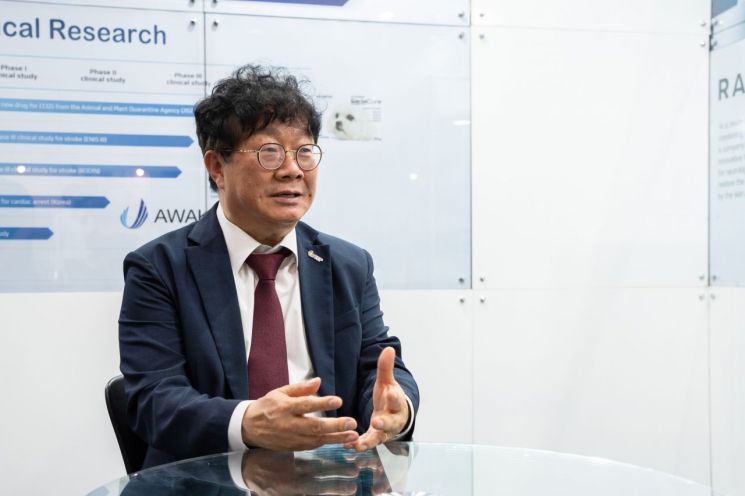
[Asia Economy Reporter Lee Chun-hee] "The definite cause of dementia is aging, and its root causes are reactive oxygen species and inflammation. Since these are all related to the pathogenesis of Alzheimer's dementia, including amyloid beta (Aβ), tau (Tau) pathology, and neuronal cell death, the target is to suppress reactive oxygen species and inflammation."
On the 17th, Gwak Byung-joo, CEO of GNT Pharma, recalled the time of founding the company 24 years ago in an interview with Asia Economy, saying, "While teaching pharmacology at university, I realized there were no drugs to treat stroke and dementia." CEO Gwak said, "Because of this, I jumped into developing treatments for brain diseases, and I never thought it wouldn't be developed." GNT Pharma, focusing on developing treatments for brain diseases, currently has pipelines including the new drug for degenerative brain diseases such as Alzheimer's, 'Chrisdesalazine,' and the stroke treatment 'Nellonemdaz.'
Reducing Reactive Oxygen Species and Inflammation to Slow Dementia Progression
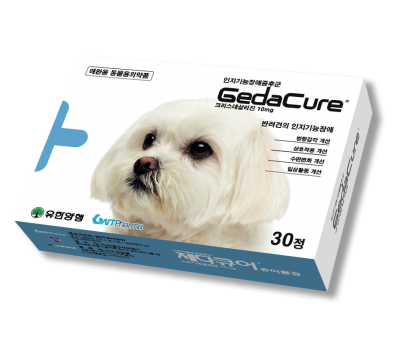 Yuhan Corporation distributes GNT Pharma's treatment for canine cognitive dysfunction syndrome (CDS), 'Zedacure'
He emphasized that Chrisdesalazine targets reactive oxygen species and inflammation beyond the existing Alzheimer's pathogenesis theories such as Aβ, tau, and neuronal cell death. CEO Gwak explained, "After the Aβ theory emerged, various attempts were made to eliminate Aβ, but problems remain such as neuronal death occurring even without Aβ. When reactive oxygen species and inflammation occur, they increase Aβ and cause tau pathology and neuronal cell death, so we developed a mechanism to reduce these."
Chrisdesalazine is a commercialized ingredient. It was approved as a synthetic new animal drug in February last year for treating canine cognitive dysfunction syndrome (CDS) under the name 'Zedacure,' supplied by Yuhan Corporation. He said, "It was a coincidence that Chrisdesalazine, originally being developed for humans, was first introduced to the market as a treatment for canine CDS." The development of Zedacure was initiated after meeting Professor Lee Woong-jong, a pet behavior correction expert at Yeonam University, who pointed out that dogs also suffer from CDS similar to dementia.
CEO Gwak said, "Unlike mice, which only develop Aβ and allow only proof of that, dogs experience Aβ, tau, and neuronal cell death simultaneously, which facilitated demonstrating the efficacy of Chrisdesalazine." According to clinical results in dogs, Aβ and neuronal cell death were significantly reduced, and cognitive function improved. He said, "In the first clinical trial with six dogs, a dog that could not recognize its owner began to recognize the owner again."
Regarding criticism that the canine cognitive dysfunction rating (CCDR) remained in the risk group and did not return to normal in the clinical trial, he argued, "Dementia treatments do not alleviate symptoms but slow disease progression," adding, "Improvement is difficult." CEO Gwak added, "Once nerve cells die, that's the end. The hope is to prevent full progression of dementia and to reduce suffering or death caused by dementia by slowing deterioration."
"The ultimate goal is an anti-inflammatory drug... Will transfer sales rights without technology licensing"
They are also accelerating clinical trials for humans. Dosing has been completed for 72 adults including elderly subjects in Phase 1a and 1b trials. He said, "Through Phase 1, we confirmed safety and no side effects," and added, "We are preparing to apply for Phase 2 clinical trial plans (IND) within this year."
The ultimate goal of Chrisdesalazine is to become a general anti-inflammatory drug like aspirin. CEO Gwak said, "It is an anti-inflammatory drug that eliminates inflammation," and explained, "Since inflammation and reactive oxygen species are connected to all aging-related diseases, the goal is for Chrisdesalazine to be used for pain or aging-related diseases."
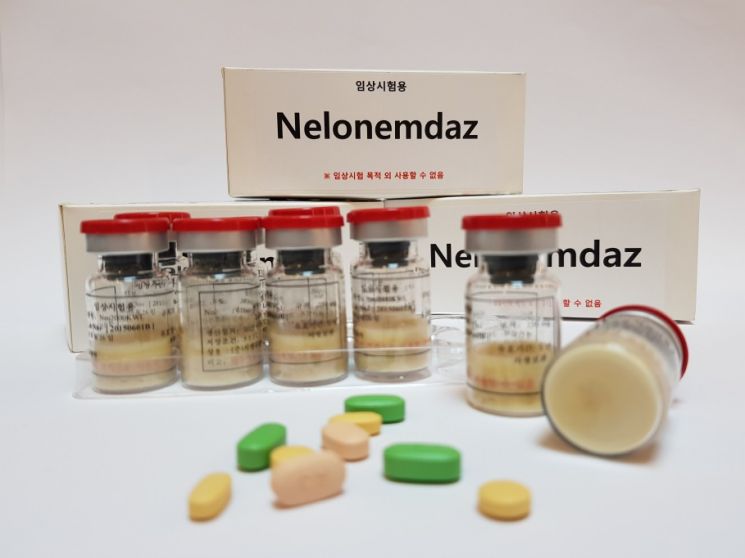
Among the company's pipelines, Nellonemdaz is also continuing clinical trials. Phase 3 trials are underway in Korea and China. Nellonemdaz is also a multi-target new drug that inhibits N-methyl-D-aspartate (NMDA) receptor activity and removes reactive oxygen species to prevent brain cell death. He said, "Patient enrollment is gradually accelerating, and we expect domestic Phase 3 patient enrollment to be completed around June next year."
Regarding technology export (license-out), he drew a line, saying, "We have no intention to license out Chrisdesalazine technology," and "We will only transfer sales rights after development is complete." CEO Gwak emphasized, "It is a drug that did not exist anywhere in the world and has already shown effects in dogs," adding, "The goal is to proceed slowly and thoroughly." However, he said, "Nellonemdaz has already been licensed out in China," and "It is possible to license to other domestic and overseas regions under appropriate conditions."
© The Asia Business Daily(www.asiae.co.kr). All rights reserved.














