Season, Immune Decline, Vacation Season, and Other Influences
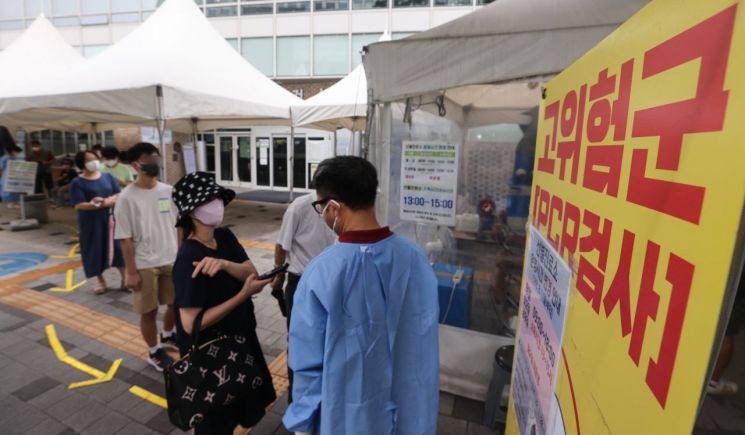
[Asia Economy Reporter Kim Young-won] The quarantine authorities have forecasted that the peak of the COVID-19 resurgence will form at a level within 200,000 cases by the end of this month, followed by a slow decline.
Lee Sang-won, head of the Epidemiological Investigation and Analysis Team at the Central Disease Control Headquarters, said on the 16th, "The peak of the outbreak is expected around the end of August, and it is likely to decrease slowly thereafter," adding, "It is more likely to decline at a slow pace rather than rapidly."
According to the announcement by the Central Disease Control Headquarters on the same day, eight research teams predicted that based on the quarantine situation as of the 11th, the peak of the resurgence will occur in August with approximately 135,000 to 240,000 cases. Lee explained, "When forecasting the outbreak, 7 to 8 institutions provide situational analysis data, and conclusions are drawn based on the most common consensus," adding, "As I mentioned last week, we judge it to be within about 200,000 cases."
However, he added that several factors such as the season could affect the outbreak prediction. Lee said, "The first factor is how frequently people come into contact with each other, and the second is how much immunity from vaccines and natural infections decreases," adding, "The last is a seasonal factor, which is thought to influence the outbreak forecast because people tend to stay indoors for longer periods."
Baek Kyung-ran, Commissioner of the Korea Disease Control and Prevention Agency, also emphasized that while the outbreak trend will be maintained, various factors must be considered. Commissioner Baek said, "Although the infection reproduction number slightly increased compared to last week, the overall outbreak trend has not changed significantly yet," adding, "I believe there is a high possibility of fluctuation due to vacation season travel and recent adverse weather conditions, so continuous monitoring is necessary."
Meanwhile, on the afternoon of the same day, the Vaccine Injury Compensation Expert Committee will decide whether abnormal uterine bleeding, such as frequent menstruation with shortened menstrual cycles, qualifies for compensation and support. The Disease Control Agency stated that it plans to immediately inform the results of the Vaccine Injury Compensation Expert Committee and proceed with follow-up procedures.
On the 11th, the Korean Academy of Medical Sciences COVID-19 Vaccine Safety Committee announced that the risk of frequent menstruation, bleeding, and abnormal uterine bleeding is statistically significantly higher after COVID-19 vaccination and that the level of evidence is sufficient to accept a causal relationship.
© The Asia Business Daily(www.asiae.co.kr). All rights reserved.

















