Less than 100 Days Since Yoon Seok-yeol Government Inauguration, Welfare Minister in Charge of Pension Reform Still Vacant
National Assembly Pension Special Committee Launched, but No Sign of Government's Reform Will
Special Committee Chairman Joo Ho-young Also Serving as Ruling Party Emergency Committee Chair
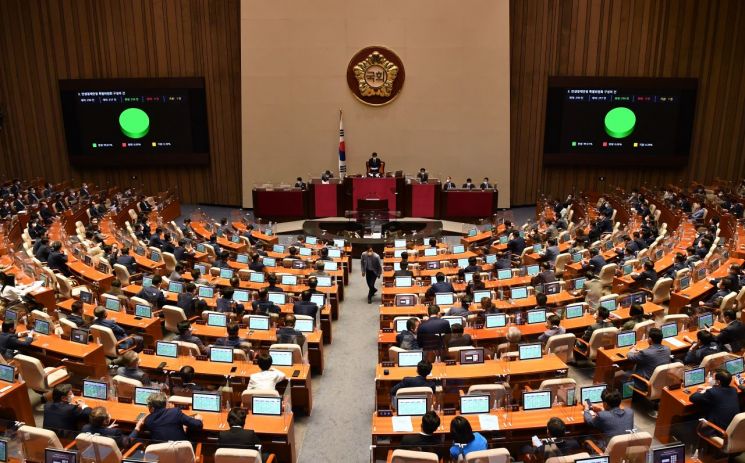
[Asia Economy Reporter Naju-seok] Although the National Assembly resolved to form a ‘Special Committee on Pension Reform’ last July, the first meeting has yet to be held, and discussions have been slow to gain momentum. Despite a national consensus on the necessity of pension reform emerging through the presidential election and the establishment of a discussion body at the National Assembly level, related discussions have not gained traction.
According to political circles on the 15th, the ruling and opposition parties have completed the appointments for the Pension Reform Special Committee, but have not scheduled the first meeting. The biggest issue is that the government officials who are supposed to lead the pension reform remain vacant. With the repeated failure of candidates for the Minister of Health and Welfare, the person responsible for leading pension reform has not been decided even after 100 days since the inauguration of the Yoon Seok-yeol administration. The National Pension Service is also without a chairman.
Kang Ki-yoon, a member of the ruling People Power Party and the secretary of the Pension Special Committee, stated, "No specific schedule has been set regarding the special committee." A People Power Party official said, "Since the government said it would carry out reform, the government’s direction will come out," adding, "The legislature should then proceed with discussions based on that, but for this, appointments such as the minister must first be made." Kim Sung-joo, a Democratic Party member and secretary of the special committee, criticized, "There is no talk from the ruling party about convening a meeting," and said, "It seems they lack both will and courage."
However, there is considerable skepticism about the extent of the government’s role. Typically, the government proposes pension reform first, followed by discussions at the National Assembly level, but it is more likely that the special committee formed at the National Assembly will prompt the government to present its position. Considering the explosive nature of the pension reform issue, it is expected that it will be difficult for the political circles to take the lead.
Concerns have also grown about whether Joo Ho-young, a People Power Party member appointed as the chairman of the Pension Special Committee, can focus on the committee after being appointed as the emergency response committee chairman, a role akin to party leader, due to the recent emergency situation within the party. However, there is also hope within the opposition that having a powerful emergency committee chairman as the special committee chairman could strengthen the push for reform.
There is considerable puzzlement in political circles over the absence of Ahn Cheol-soo, a former presidential candidate of the People’s Party (now a member of the People Power Party), from the Pension Special Committee. During the presidential election, Ahn asked other candidates in TV debates, "Don’t you intend to carry out pension reform?" confirming that all major candidates intended to pursue pension reform. Yet, his name was not included in the Pension Special Committee.
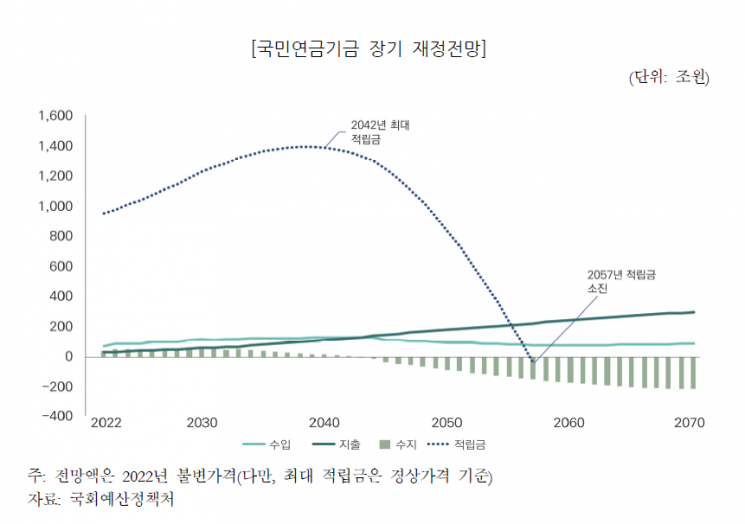
There are also criticisms that even if pension reform is promoted, there is still a long way to go. President Yoon Seok-yeol’s focus regarding pension reform is on fiscal reform centered on the principle of ‘pay more, receive more.’ In fact, on the 11th, the National Assembly Budget Office (NABO) released a long-term fiscal outlook analysis predicting that the National Pension will enter a deficit in 2043 and be completely depleted by 2057. The government and ruling party appear to be focusing on the financial stability of the National Pension and other funds in various ways.
However, the opposition’s perception differs. Representative Kim said, "It needs to be fundamentally changed," adding, "While solving fiscal problems, it should be done in a way that strengthens old-age income security." He said, "We are already a country with insecure old age and elderly poverty, and if the government weakens this further and pushes people to fend for themselves, the situation could become even more serious."
© The Asia Business Daily(www.asiae.co.kr). All rights reserved.


















