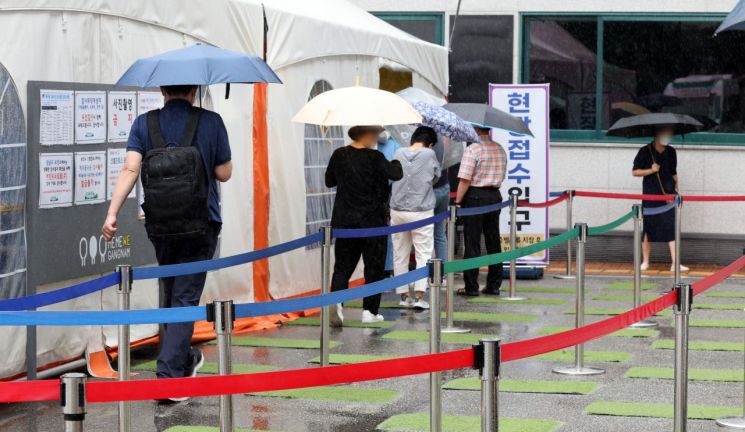
[Asia Economy Reporter Kim Young-won] As the resurgence of COVID-19, which had been slowing down, continues, the number of critically ill patients and deaths has surged, and the period between initial infection and reinfection has also shortened. Health authorities emphasized that deaths, severe cases, and reinfections can all be prevented through 'vaccination.'
According to the Central Disease Control Headquarters, on the 12th, there were 128,714 new confirmed cases, bringing the total confirmed cases to 21,111,840. This marks an increase of 1 million cases just nine days after the cumulative confirmed cases surpassed 20 million on the 3rd. Since the resurgence began at the end of June, this is the fastest increase by increments of 1 million. The weekly multiplier of COVID-19 cases decreased from 1.30 in the last week of July to 1.22 in the first week of August, then rebounded to 1.25 the following week.
Accordingly, the number of critically ill patients and deaths, which had shown a decline last week, is rising again. The number of critically ill patients dropped below 300 (297) on the 7th but increased to the 400s within three days. Increasing by about 20 patients per day, the number of critically ill patients reached 453 on the 12th. The number of deaths on the 11th was 59, the highest in three months since May 12th (63 deaths).
The increase is also influenced by cluster infections in nursing facilities and hospitals, where the risk of severe illness and death is high, as well as a rise in the proportion of confirmed cases aged 60 and above. From the 9th to the 12th, the proportion of confirmed cases aged 60 or older was over 20% each day. Cluster infection cases in nursing hospitals and facilities increased sixfold, from an average of 6 cases per week in June to an average of 36 cases over the past three weeks.
During the same period, the time from initial infection to reinfection shortened. In July, the average duration for estimated reinfection cases was about five months (154?165 days), approximately 60 days shorter than the reinfection duration until June (229 days). The proportion of reinfected individuals among weekly confirmed cases also increased. It was 6.59% in the third week of July and 5.43% in the fourth week, about twice the 2.86% recorded in the last week of June.
Health authorities emphasized 'vaccines' as a countermeasure against the increase in severe cases, deaths, and reinfections. At a regular briefing on the 11th, Baek Kyung-ran, Commissioner of the Korea Disease Control and Prevention Agency (KDCA), stated, "Vaccination is effective not only in preventing infection and severe illness but also in preventing reinfection and reducing the risk of death caused by reinfection." The KDCA announced research results showing that the risk of reinfection is 48% lower in those who completed the second dose and 74% lower in those who completed the third dose compared to the unvaccinated group.
Additionally, Commissioner Baek explained the safety of vaccines, saying, "Looking at the domestic and international adverse reaction reporting rates, the rates have gradually decreased from the first to the fourth doses." According to the KDCA, the adverse reaction reporting rates relative to domestic vaccine recipients are 5.16% for the first dose, 3.55% for the second, 1.49% for the third, and 0.61% for the fourth. However, concerns about vaccine safety are expected to persist, as the Korean Academy of Medical Sciences' COVID-19 Vaccine Safety Committee has recognized a causal relationship between COVID-19 vaccines and abnormal uterine bleeding.
© The Asia Business Daily(www.asiae.co.kr). All rights reserved.
![User Who Sold Erroneously Deposited Bitcoins to Repay Debt and Fund Entertainment... What Did the Supreme Court Decide in 2021? [Legal Issue Check]](https://cwcontent.asiae.co.kr/asiaresize/183/2026020910431234020_1770601391.png)
















