KAIST Unveils Independently Developed Advanced Technologies at November 11 Commemoration Event
Equipment Leading Space Development, Including Synthetic Aperture Radar (SAR), Developed One After Another
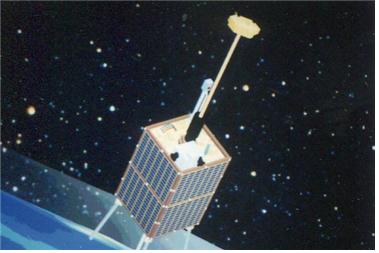
[Asia Economy Reporter Kim Bong-su] On the 11th, to commemorate the 30th anniversary of the launch of UriByul 1, KAIST held a commemorative event where cutting-edge technologies leading Korea's future space development were showcased, attracting attention.
KAIST held an event at the main auditorium of its Daejeon campus to celebrate the 30th anniversary of the launch of UriByul 1, Korea's first domestically launched satellite.
On this day, KAIST Satellite Research Center unveiled advanced space technologies applied to the next-generation small satellite 2, which will be launched using the 2023 Nuri rocket (KSLV-II). The next-generation small satellite 2, the 10th satellite developed by the research center, is equipped with an independently developed Synthetic Aperture Radar (SAR). Scheduled to be launched into a 550 km orbit via the third Nuri rocket launch at Naro Space Center in early 2023, the next-generation small satellite 2 will perform missions including Earth observation using SAR, space environment monitoring using a space radiation detector, and space verification of domestically developed core technologies.
Jang Tae-sung, head of the KAIST Satellite Research Center, explained, "Synthetic Aperture Radar (SAR) is a strategic technology that obtains surface images by transmitting radio waves from space to the ground and collecting the reflected signals. Unlike optical cameras, it has the advantage of acquiring images regardless of weather conditions. Both the satellite bus and SAR have been domestically developed, and the flight model to be sent to space has completed manufacturing and comprehensive environmental testing."
Additionally, Professor Lee Jun-gu of the Department of Electrical and Electronic Engineering and Professor Kim Young-jin of the Department of Mechanical Engineering, who collaborate with the KAIST Satellite Research Center, introduced future space technologies: the 'Low Earth Orbit Satellite Quantum Cryptography Communication System' and the 'Next-Generation Satellite Laser Payload,' respectively.
An exhibition was also organized where research from leading companies and institutions in the space sector could be viewed at a glance. Various space technology achievements were introduced, including active components applied to satellite payloads, composite receivers, X-band transmitters, and thermal control devices.
Kwon Se-jin, director of the Satellite Research Center, stated, "The 30th anniversary ceremony of UriByul's launch was prepared as a festival to honor the efforts of early space development researchers and to boost the morale of researchers leading the future. It also served as an opportunity for cooperation and technology information exchange to foster and develop the space industry in the new space era."
President Lee Kwang-hyung said in his welcoming address, "Korea, once a barren land for aerospace science, achieved the great success of satellite launch thanks to the protagonists here who had the dream and challenge to send Korea's star into space. We now stand at a point where we must have new dreams to open the future space era for the next 30 years."
© The Asia Business Daily(www.asiae.co.kr). All rights reserved.

















