[Asia Economy Yeongnam Reporting Headquarters Reporter Hwang Du-yeol] Due to the government's carbon neutrality policy and the EU's mandatory ESG due diligence legislation for supply chains, as well as the influence of global eco-friendly trends, the issue of 'eco-friendly transition' is spreading in the domestic manufacturing industry. However, the movement in local manufacturing sites related to this is still slow.
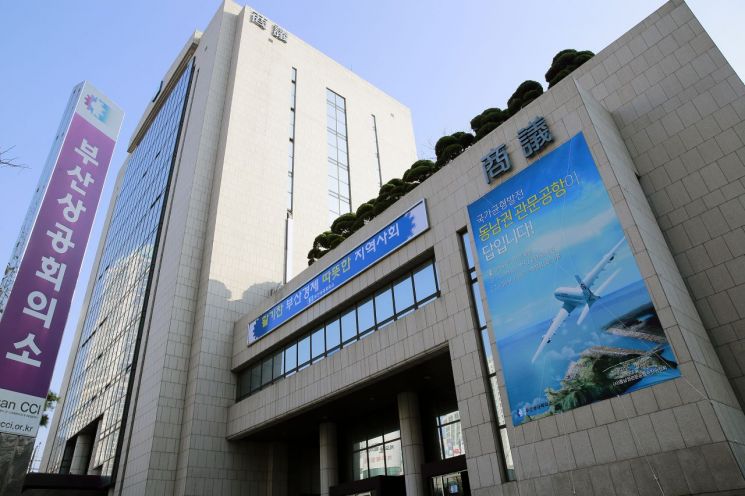
On the 10th, the Busan Chamber of Commerce and Industry announced the "Survey Report on the Promotion Status of Eco-friendly Businesses by Busan Manufacturing Companies," which contains such content.
The report analyzed the responses of 250 companies out of the top 600 manufacturing companies by sales in the region.
According to the data, only 3 out of 10 surveyed companies were promoting or considering eco-friendly businesses, and most of these were passive facility investments in response to environmental regulations, which are difficult to regard as actual business initiatives.
The proportion of companies responding that they are promoting eco-friendly businesses was 20.0%, and only 10.8% were considering it.
These results suggest that the majority of local manufacturing companies have no plans to promote eco-friendly businesses, which aligns with last year's "Busan Companies ESG Management Awareness Survey" conducted by the Busan Chamber of Commerce, where most companies showed low awareness of ESG management.
The main reason for not promoting eco-friendly businesses was that 69.9% responded that they were focusing on their existing core businesses, confirming that despite strong demands for eco-friendly transitions such as carbon neutrality, ESG, and RE100, most companies lack the practical capacity to pursue them.
Under the current 'three-high economic conditions' of high inflation, high interest rates, and high exchange rates, eco-friendly businesses of local companies are expected to be deprioritized for the time being.
When asked about the reasons for promoting or planning eco-friendly businesses, responses showed a high proportion of passive responses: 32.7% for responding to strengthened environmental regulations, 20.9% for participating in the government's carbon neutrality policy, and 5.2% for stakeholder demands.
The response rates for practicing ESG management and securing new growth engines were 26.8% and 14.4%, respectively, indicating that relatively few companies approach eco-friendly businesses as innovation and business opportunities.
The eco-friendly business areas of local manufacturing companies also showed a high proportion of facility investment types such as greenhouse gas reduction at 31.2%, resource circulation and recycling at 28.6%, and reduction of environmental pollutants at 19.5%.
In contrast, there were not many companies engaged in business-type projects such as eco-friendly material development at 13.0% and energy efficiency improvement at 7.8%.
From the companies' perspective, eco-friendly businesses still seem to act more as a burden than an opportunity.
Regarding policy preferences necessary for promoting eco-friendly businesses, the proportions of companies requesting support for technology development and labor costs for research and development personnel were high at 24.0% and 18.8%, respectively.
Other preferences appeared in the order of unreasonable regulation improvement at 15.6%, facility fund support at 15.6%, tax support at 14.3%, and working capital support at 11.7%.
A representative from the Busan Chamber of Commerce and Industry's Corporate Trend Analysis Center said, "Since eco-friendly transition has become an important criterion for selecting partners in the recent global supply chain restructuring process, local companies also need to actively pay attention to related trends."
He added, "Currently, environment policies focused solely on regulations have limitations in spreading eco-friendly businesses in industrial sites, so incentives for companies promoting eco-friendly businesses, including compliance with environmental regulations, should be significantly strengthened."
© The Asia Business Daily(www.asiae.co.kr). All rights reserved.
![User Who Sold Erroneously Deposited Bitcoins to Repay Debt and Fund Entertainment... What Did the Supreme Court Decide in 2021? [Legal Issue Check]](https://cwcontent.asiae.co.kr/asiaresize/183/2026020910431234020_1770601391.png)















