Union Begins Strike Discussions After Failed Labor Negotiation
Strike Becomes Realistic with Securing Right to Dispute
Management Struggles to Find Solutions Amid Concerns Over Poor Performance
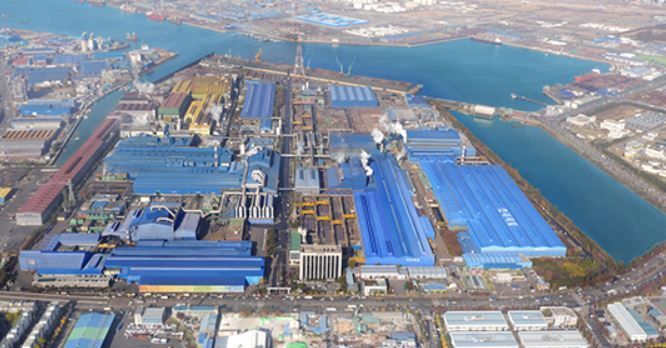
[Asia Economy Reporter Oh Hyung-gil] The labor union of Hyundai Steel, which has been occupying the president’s office without permission for 100 days, is warning of a “guerrilla strike,” deepening the conflict between labor and management. The gap that began over the payment of special incentive bonuses has extended into wage negotiations, with no clear resolution in sight.
According to industry sources on the 9th, Hyundai Steel’s five branches under the Korean Metal Workers’ Union (Dangjin, Incheon, Pohang, Suncheon, Dangjin Hysco) and management plan to hold the 10th round of wage collective bargaining negotiations on the 11th. However, the 8th and 9th rounds of negotiations held on the 28th of last month and the 4th of this month were canceled due to management’s absence, pushing the situation toward an imminent strike.
The five branches stated in their propaganda message “Negotiation Bulletin” that “Although we strongly desire to stop the steelworks immediately, we will endure for an efficient and impactful struggle,” adding, “The guerrilla strike will be cautious and sudden.” It is reported that internal discussions on the timing and targets of the strike have begun within the union.
Since May 2, the Hyundai Steel union has been occupying the president’s office at the Dangjin Steelworks without permission, continuing their sit-in protest. From May 3, union members at the Incheon, Pohang, and Suncheon plants have also occupied the plant managers’ offices.
The labor-management conflict at Hyundai Steel was triggered by special incentive bonuses within the group. While employees of other group affiliates such as Hyundai Motor received a special incentive bonus of 4 million KRW last year based on business performance, Hyundai Steel’s internal demand arose, arguing that not only did they achieve record-high performance last year, but also that the affiliates’ performance was due to Hyundai Steel’s sacrifice in suppressing cost increases, thus demanding equal payment of the incentive bonus.
However, management has taken a stance that negotiations are impossible, stating that they have already raised the base salary by 75,000 KRW and paid performance bonuses (200% of base salary + 7.7 million KRW) through wage negotiations. With this year’s wage and collective bargaining negotiations underway, the conflict shows signs of prolongation.
Last month, the five branches conducted a strike authorization vote among their members, receiving overwhelming support with 94.18% in favor. Subsequently, on the 25th, they secured the right to strike by obtaining a decision to suspend mediation from the Central Labor Relations Commission. This means they can legally initiate a strike at any time.
The intensity of the struggle is expected to escalate gradually, but management has yet to find a viable solution. Although normal operations are disrupted due to the occupation of the president’s and plant managers’ offices, no substantial damage has occurred.
The union has been reported to the police for special trespassing, obstruction of business, and special property damage, but only investigations are underway, and the likelihood of law enforcement intervention remains low. Unlike the strike situation at Daewoo Shipbuilding & Marine Engineering’s subcontractor branch, there are no signs of government or political efforts to mediate, suggesting a difficult road ahead.
As the labor-management conflict drags on, Hyundai Steel’s concerns deepen. According to financial information provider FnGuide, Hyundai Steel’s operating profit consensus for the third quarter has dropped 11.2% from 619.7 billion KRW two months ago to 550.2 billion KRW, a 33.4% decrease compared to the same period last year.
An industry insider said, “The union will likely raise the performance bonus issue first during the wage negotiations, and there seems to be no room for normal progress in the talks,” adding, “The government should intervene or deploy law enforcement to prevent the situation from escalating into a strike.”
© The Asia Business Daily(www.asiae.co.kr). All rights reserved.


















