Transportation costs and oil prices surge double digits for 5 consecutive months... First time since the foreign exchange crisis
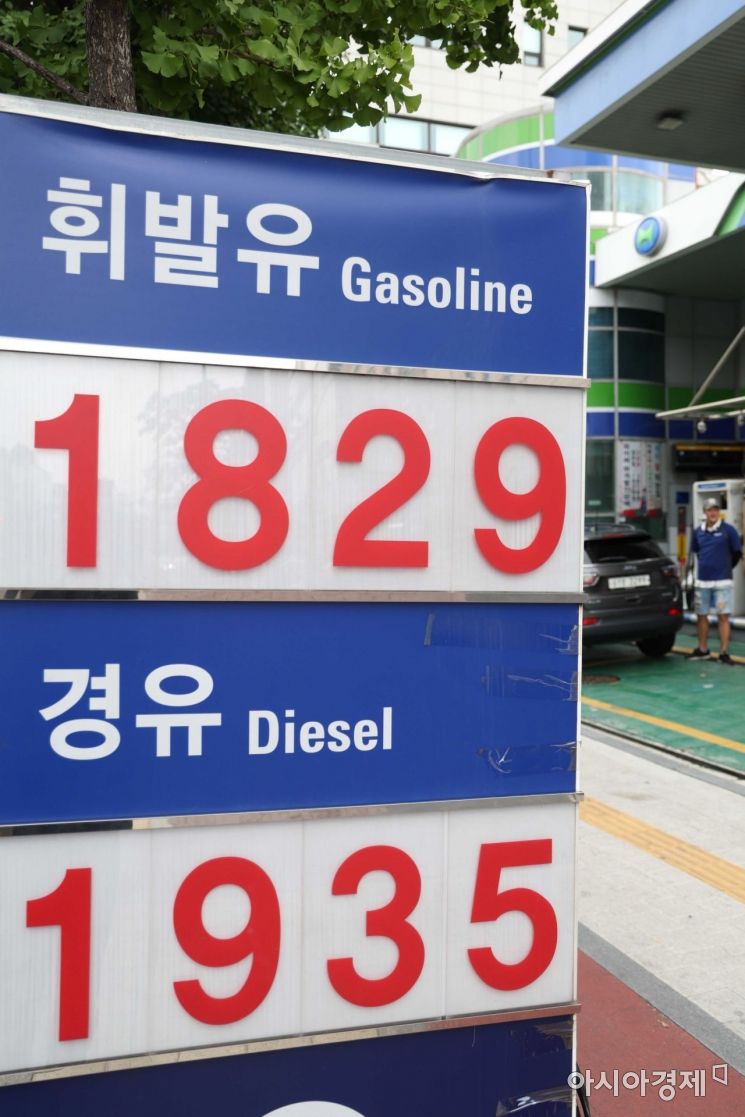 Domestic gasoline prices at gas stations have fallen for five consecutive weeks due to the expanded reduction rate of the fuel tax and the decline in international oil prices. According to Opinet, the oil price information service of the Korea National Oil Corporation, the average retail price of gasoline nationwide in the first week of August was 1,881.9 KRW per liter, down 55.8 KRW from the previous week. This is the first time in five months since the second week of March that the average gasoline price has dropped to the 1,800 KRW per liter range. Photo by Mun Ho-nam munonam@
[Asia Economy Sejong=Reporter Kwon Haeyoung] Transportation costs have risen by double digits for five consecutive months due to the sharp increase in oil prices. Costs related to passenger car operation, including oil prices, car accessories, repair costs, parking fees, and designated driver service fees, have all increased.
According to Statistics Korea on the 9th, transportation costs in July this year rose 15.3% compared to the same period last year. Following increases of 12.7% in March, 13.8% in April, 14.5% in May, and 16.8% in June, the rate of increase remained in double digits for five consecutive months through last month. This is the first time transportation costs have surged by double digits for five months since the International Monetary Fund (IMF) foreign exchange crisis period from December 1997 to November 1998.
The sharp rise in transportation costs was largely influenced by high oil prices. Transportation costs consist of prices for transport equipment such as passenger cars, operating costs for personal transport equipment including fuel and repair costs, and prices for transport services such as rail, road, and air transportation.
Among these, operating costs for personal transport equipment led the increase in transportation costs by rising 26.0% in July. This was due to significant price hikes in fuel and lubricants such as diesel (47.0%), gasoline (25.5%), and automotive liquefied petroleum gas (21.4%). The combined effects of supply chain instability, rising raw material and parts prices, and increased labor costs caused all other components of personal transport equipment operating costs to rise simultaneously. Car accessories such as car seats and wipers (18.1%), car tires (9.9%), engine oil replacement costs (10.5%), car repair costs (4.3%), car wash fees (8.9%), parking fees (4.7%), passenger car rental fees (24.7%), and designated driver service fees (13.0%) all increased.
Not only did the operating costs for personal transport equipment rise, but transport service prices also increased by 2.8%. The rise in oil prices and increased passenger demand following the easing of social distancing measures led to significant increases in international airfares (23.0%) and domestic airfares (16.3%). Moving service fees (7.3%) and parcel delivery fees (4.7%) also rose.
However, due to the government's policy to suppress public utility fee increases, train fares and urban railway fares remained at the same level as a year ago, and city bus fares decreased by 0.6%.
© The Asia Business Daily(www.asiae.co.kr). All rights reserved.
![User Who Sold Erroneously Deposited Bitcoins to Repay Debt and Fund Entertainment... What Did the Supreme Court Decide in 2021? [Legal Issue Check]](https://cwcontent.asiae.co.kr/asiaresize/183/2026020910431234020_1770601391.png)
















