Price Adjusted from 7,000 KRW to 8,000 KRW per Meal Starting August 10
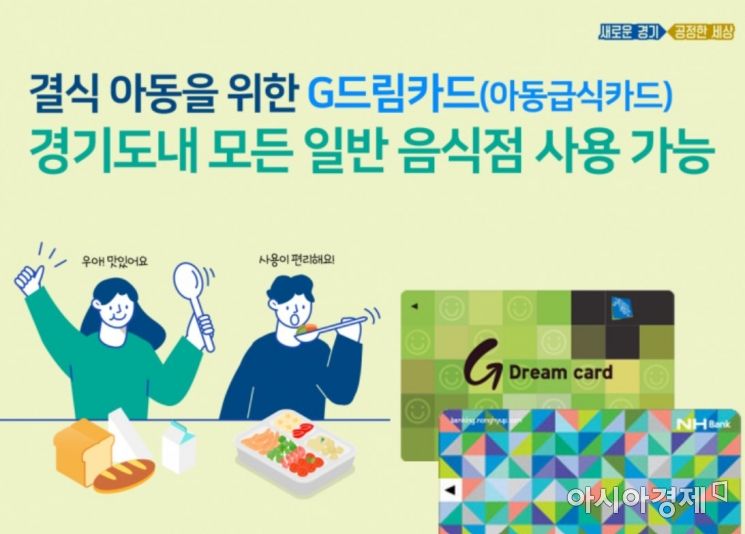
[Asia Economy Reporter Ra Youngcheol] Gyeonggi Province announced that "starting from the 10th, the meal allowance for children at risk of food insecurity will be increased by 14.3%, from 7,000 KRW to 8,000 KRW per meal." This is the first increase in 1 year and 3 months since the last raise in May of last year.
The province explained, "Initially, during prior consultations with the provincial Office of Education and city/county governments, the timing of the meal allowance increase was discussed to be around September. However, following Governor Kim Dong-yeon's directive to 'advance the timing of the increase considering inflation,' additional consultations were held and the increase date was set to the 10th."
According to the province on the 9th, as of June this year, the consumer price inflation rate in Gyeonggi Province (compared to the same month last year) is 5.9%. The average price of five dining-out items (naengmyeon, bibimbap, kalguksu, kimchi jjigae, jajangmyeon) in the province is 7,772 KRW, leading to many criticisms that the current meal allowance of 7,000 KRW does not reflect reality.
With this increase, approximately 72,000 vulnerable children under the age of 18 in the province will receive 8,000 KRW per meal. The payment methods include child meal cards (G-Dream Card), lunchbox delivery, and group meals at local children's centers, with cities and counties choosing the support method.
The necessary budget for supporting meals for children at risk of food insecurity in the province, including the meal allowance increase and lunch support during remote classes due to COVID-19, is 103.8 billion KRW (27.8 billion KRW from the province, 64.8 billion KRW from city/county governments, and 11.2 billion KRW from the provincial Office of Education). Among these, the provincial share has been secured through this year's budget surplus.
Meanwhile, since the end of August 2020, the province has expanded the number of general restaurant merchants (excluding pubs, pojangmacha, cafes, etc.) affiliated with BC Card that are automatically linked to the child meal card from about 11,000 to 206,000.
Since March this year, the single-use limit for the child meal card has been raised from 14,000 KRW to 20,000 KRW. The design of the child meal card was also completely changed from magnetic to a card embedded with an integrated circuit (IC) chip, similar to a regular check card, to prevent children from being discriminated against.
Kim Miseong, Director of the Women and Family Bureau, said, "This decision on the meal allowance by Gyeonggi Province is meaningful as a proactive measure considering recent price increases," adding, "We hope that through the increase in the allowance, children at risk of food insecurity will be able to have nutritious and balanced meals without any worries."
© The Asia Business Daily(www.asiae.co.kr). All rights reserved.
![Clutching a Stolen Dior Bag, Saying "I Hate Being Poor but Real"... The Grotesque Con of a "Human Knockoff" [Slate]](https://cwcontent.asiae.co.kr/asiaresize/183/2026021902243444107_1771435474.jpg)
















