Chairman Jeong Gi-seok: "Taking medication on the first day of symptoms and taking it the next day have very different treatment effects"
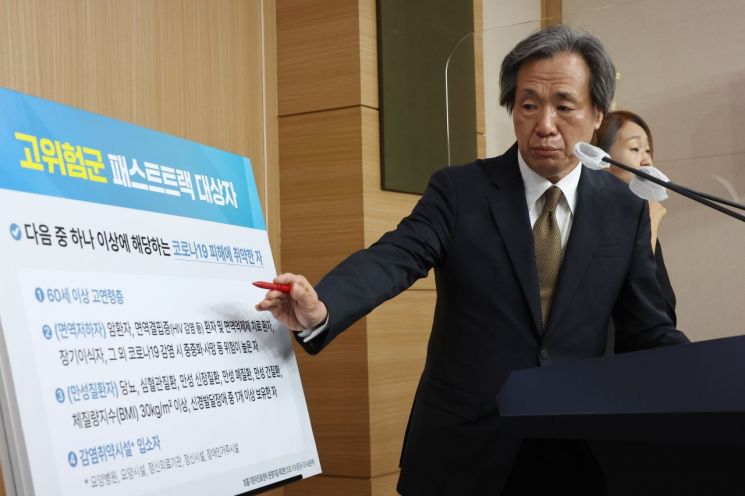
[Asia Economy Reporter Kim Young-won] The National Infectious Disease Crisis Response Advisory Committee emphasized the importance of rapid diagnosis and prescription of therapeutics for high-risk groups of COVID-19, such as the elderly. They also outlined the roles of patients, doctors, and the government in increasing the prescription rate of therapeutics.
On the 8th, at a briefing on the results of the 3rd National Infectious Disease Crisis Response Advisory Committee meeting, Jeong Ki-seok, chairman of the committee, stated, "For high-risk groups, if they have the most common symptoms of COVID-19 such as coughing or nasal congestion, we recommend immediate testing," adding, "there is a significant difference in treatment effectiveness between taking medication on the first day of symptoms and the following day."
The high-risk groups for COVID-19 include the elderly aged 60 and above, immunocompromised individuals such as organ transplant recipients, patients with chronic diseases, and residents of infection-vulnerable facilities such as mental health and nursing care institutions.
Chairman Jeong said that rapid diagnosis and treatment through a fast track for high-risk groups can maintain or reduce the current fatality rate. He explained, "If rapid diagnosis and treatment are provided to high-risk groups, we can maintain or even lower the current fatality rate of 0.06%. This would bring us closer to the fatality rate of the flu, which many of you are familiar with."
He positively evaluated the expansion of one-stop clinics that provide COVID-19 testing, diagnosis, and prescription all at once. Chairman Jeong said, "As of the afternoon of the previous day, there are 9,594 one-stop clinics," adding, "One out of every three local clinics is providing one-stop care."
He advised actively using medical consultation centers during holidays and nighttime when clinics are closed. Chairman Jeong said, "You can call the medical consultation center at night," but also urged, "Local governments need to thoroughly inspect and continuously improve to ensure calls are not delayed or unanswered."
Chairman Jeong emphasized that both doctors and patients have roles in increasing the prescription rate of therapeutics. He said, "First, each high-risk individual must have the mindset that they should take medication once diagnosed," and added, "If the medication is not prescribed, patients should be able to ask their doctors why."
He also explained from the perspective of prescribing doctors. Chairman Jeong said, "In neighboring Japan, Lagevrio is prescribed 70% of the time and Paxlovid 30%, and Hong Kong shows similar trends," adding, "While doctors may prefer to prescribe the more effective drug, it is much better to use a drug, even if less effective, than not to use any at all."
However, he also argued that improving the medical system is necessary to increase the prescription rate of COVID-19 therapeutics. He stated that high-risk patients with chronic diseases who contract COVID-19 should be able to receive treatment at the general hospitals they usually visit.
Chairman Jeong explained, "The committee and I personally request the government to allow patients to receive prescriptions at their usual hospitals," adding, "Many patients visit general and university hospitals, but when they contract COVID-19, they are treated elsewhere, causing confusion for doctors seeing the patients for the first time and preventing patients from being fully informed about their medications."
He continued, "Apart from the existing one-stop clinics, if patients managed for chronic diseases contract COVID-19, they should be able to continue treatment at their usual hospitals. Achieving this would greatly reduce patient risk and increase prescription rates," he added.
© The Asia Business Daily(www.asiae.co.kr). All rights reserved.

















