China Tightens Origin Labeling Regulations in Retaliation for Pelosi's Taiwan Visit
Korean Companies with Factories in China Temporarily Replace Labels
[Asia Economy Senior Reporter Cho Young-shin, Reporter Kim Bo-kyung] As an economic retaliation measure against Nancy Pelosi, Speaker of the U.S. House of Representatives, visiting Taiwan, Chinese authorities are tightening regulations on the indication of origin (production location) for Taiwan. Although Chinese authorities are targeting Taiwanese companies, concerns are rising as the repercussions are inevitably spreading to global companies including those in Korea.
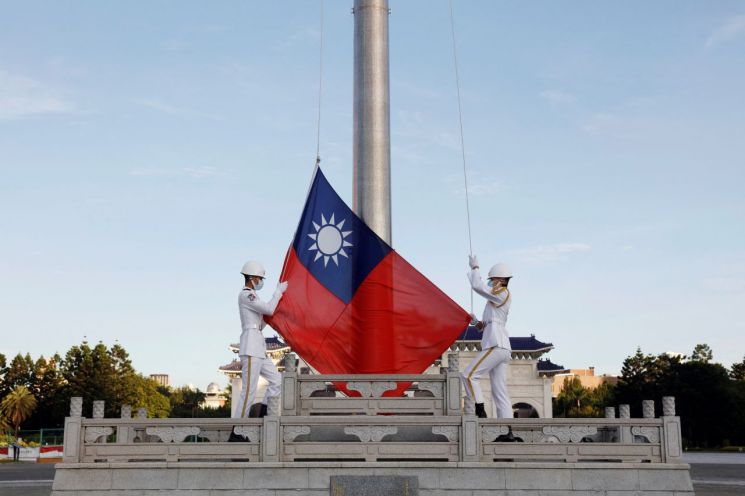
◆China: "Taiwanese companies will face a crossroads"=On the 8th, the Chinese state-run Global Times published an article titled "Following Nancy Pelosi's provocative visit to Taiwan, global companies must strictly adhere to origin labeling." The media reported that the General Administration of Customs notified the American company Apple to strictly comply with mainland China's tariff regulations.
According to the Global Times, origin labeling regulations were introduced in 1999, but Chinese authorities had not applied strict standards until now. Some Taiwanese companies have used the loophole of replacing product packaging during the unloading process after passing shipping documents. Mainland Chinese authorities had tolerated this "label switching." However, Chinese customs authorities now plan to strictly enforce this previously loosely managed system.
The Global Times emphasized that this measure applies not only to Apple but to all Taiwanese companies trading with mainland China. Gao Lingyun, a researcher at the Chinese Academy of Social Sciences, said, "Products labeled as Taiwan or Republic of China are highly likely to be seized by Chinese customs," adding, "This measure will apply to all Taiwanese companies."
Mei Xinyu, a researcher at the China International Trade and Economic Cooperation Group, stated, "With the strengthening of origin labeling regulations, Taiwanese companies will face a crossroads," and confidently said, "This measure will pressure the Taiwanese economy."
Accordingly, products produced in Taiwan and imported into mainland China cannot use the label "Made in Taiwan." Instead, they must be labeled "Made in Chinese Taipei," the Global Times stressed. It added that if Taiwan or Republic of China is indicated on import declarations or packaging, sanctions such as import suspension, seizure, and fines will be imposed.
In fact, on the 5th, Apple requested its Taiwanese partners to label products as "Made in Taiwan, China" or "Made in Chinese Taipei" instead of "Made in Taiwan."
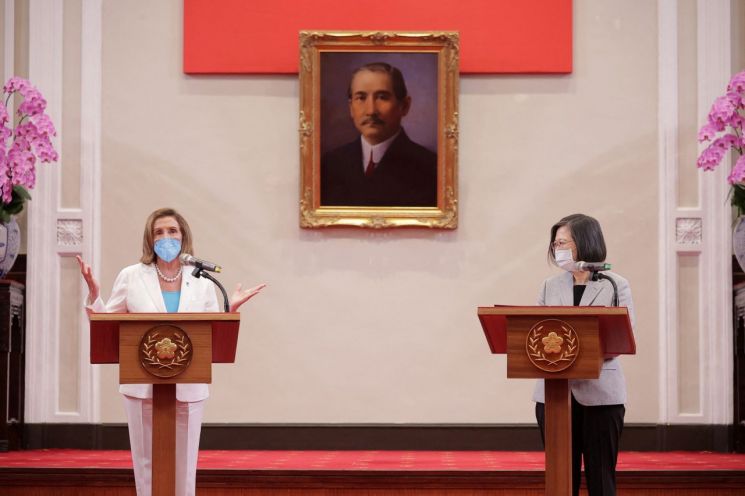
◆Confusion among Korean companies trading with Taiwanese parts manufacturers=This measure by Chinese authorities is expected to adversely affect Korean companies that import Taiwanese parts and produce finished products locally in China.
Chinese customs has notified Korean companies that parts made or imported from Taiwan labeled as "Taiwan" or "Republic of China" will be seized. For companies importing Taiwanese parts within mainland China, they must recognize the "One Country, Two Systems" principle in origin labeling to allow parts imports.
Korean companies with factories in China are currently experiencing significant confusion in the process of bringing in Taiwanese parts. Since the 4th, all cargo arriving in mainland China has been sent to Hong Kong, where the origin labeled as Taiwan is changed to "Chinese Taiwan" or similar, and then re-imported, but the handling procedures and costs are considerable.
A company official operating a factory in China said, "For parts already certified as Taiwanese products, in principle, re-certification is required due to changes in origin labeling," adding, "Currently, we are temporarily removing and replacing labels before bringing goods into China."
© The Asia Business Daily(www.asiae.co.kr). All rights reserved.
!["The Woman Who Threw Herself into the Water Clutching a Stolen Dior Bag"...A Grotesque Success Story That Shakes the Korean Psyche [Slate]](https://cwcontent.asiae.co.kr/asiaresize/183/2026021902243444107_1771435474.jpg)

















