Seongdong-gu's Strategy to Focus on Developing Four Core Future Spaces
① Wangsimni Current District Office Site as ‘Business-Town’ → Attract Large Corporations to Strengthen Business, Commercial, and Distribution Functions
② Haengdang-dong Sowol Art Hall Site as ‘New Administrative-Town’ → Relocation of Seongdong-gu Office, District Council, Police Station, and Other Administrative Agencies
③ Deoksu High School Site, Haengdang Urban Development Area, Hanyang University as ‘Education-Town’ → Establishment of Northeast Area’s Representative Complex Education and Cultural Facility
④ Sampyo Remicon Factory Site as ‘Culture and Tourism-Town’ → Opera House-like Development
[Asia Economy Reporter Jong-il Park] A business town similar to Yeouido will be established near Wangsimni Station in Seongdong-gu, on the sites of Seongdong-gu Office, the district council, and Seongdong Police Station.
Additionally, the site of Sowol Art Hall will be transformed into an administrative town housing Seongdong-gu Office, Seongdong District Council, and Seongdong Police Station.
Along with this, the former site of Deoksu High School and the Haengdang urban development area will be newly developed as an education town.
This is part of the '2040 Seongdong Urban Development Basic Plan Implementation Plan,' which outlines the future vision and development direction of Seongdong-gu (Mayor Jung Won-oh) for the next 20 years.
If realized, Seongdong-gu is expected to undergo a dramatic transformation not only in the Hangang riverside area including Seongsu-dong but also around Wangsimni Station, creating a core commercial district comparable to Seoul's downtown and Yeouido area.
Seongdong-gu has entered into consultations with Seoul City and the Ministry of Strategy and Finance to relocate the Seongdong Police Station currently built on Seoul City land.
This basic plan is a follow-up to the '2040 Seongdong Urban Development Basic Plan (Dec. 2019)' and was conceived at the start of the 7th local government term. To maintain and preserve the unique characteristics of each area in Seongdong-gu while reflecting the rapidly changing urban structure, the plan was refined over about four years through professional consulting, expert advice, and dozens of discussions and deliberations based on comprehensive policy reviews.
The core of this basic plan is the selection and focused development of four key core spaces that will lead Seongdong-gu's future. Reflecting the characteristics of each area, the current district office site will be developed as a ‘Business-Town,’ the Sowol Art Hall site as a ‘New Administrative-Town,’ the former Deoksu High School site, Haengdang urban development area, and Hanyang University area as an ‘Education-Town,’ and the Sampyo Remicon factory site as a ‘Culture & Tourism-Town.’
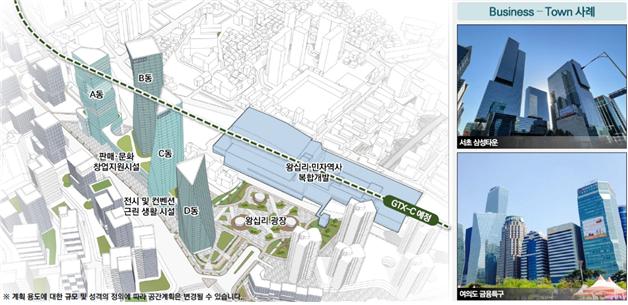
Wangsimni Current District Office Site ‘Business-Town’: Attracting Large Corporations, Strengthening Business, Commercial, and Distribution Functions
First, the plan is to develop the Wangsimni Station area district office site, where Seongdong-gu Office, Seongdong District Council, and Seongdong Police Station are currently concentrated, into a business and commercial-centered ‘Business-Town.’
Although the Wangsimni area is a station-area general commercial zone where 50-story buildings are permitted, it currently shows inefficient land use focused on public administrative functions and faces limitations as a metropolitan center due to the absence of related plans and development projects.
Especially with the recent addition of GTX-C line stopping at Wangsimni Station and the establishment of the Dongbuk Line light rail, the metropolitan transportation functions of the Wangsimni area are expanding, increasing the need for complex development in the region.
Accordingly, Seongdong-gu plans to relocate all administrative institutions such as Seongdong-gu Office, Seongdong District Council, and Seongdong Police Station and expand commercial and business spaces on the site to attract companies.
The plan includes specific measures to strengthen Wangsimni’s metropolitan center functions by attracting companies in the 4th industrial sector, large corporate headquarters, and facilities supporting sales and cultural startups.
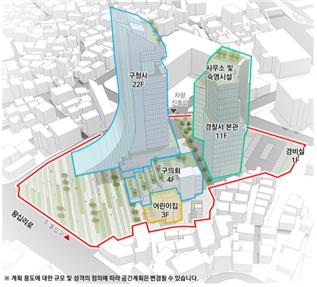
Haengdang-dong Sowol Art Hall Site ‘New Administrative-Town’: Relocation of District Office, District Council, Seongdong Police Station, and Other Administrative Institutions
Second, the Sowol Art Hall site in Haengdang-dong will be developed as a ‘New Administrative-Town’ to promote the complexification of administrative functions and strengthen public services.
Seongdong-gu plans to relocate Seongdong-gu Office, Seongdong District Council, and Seongdong Police Station to the current Sowol Art Hall site, creating a ‘New Administrative-Town’ with concentrated administrative functions to improve the quality of public services and expand convenience functions.
Notably, no additional land acquisition costs will be incurred for the creation of the ‘New Administrative-Town.’ Although ownership of the land differs among the administrative institutions to be relocated, land exchanges between national and public lands make this possible. Construction costs are also expected to be covered by proceeds from the sale of the administrative town site land, with feasibility analysis confirming sufficient surplus.
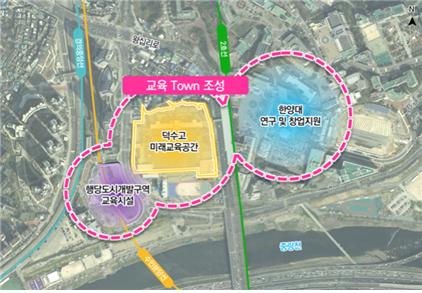
Deoksu High School, Haengdang Urban Development Area, Hanyang University ‘Education-Town’: Establishing a Representative Complex Education and Cultural Facility in the Northeast Area
Third, the plan is to link the Haengdang urban development area, Hanyang University, and the former Deoksu High School site to develop an ‘Education-Town’ symbolizing the education special zone of Seongdong.
First, Seongdong-gu will concentrate educational functions by relocating the Seongdong Public Library, Sowol Art Hall, Seongdong-Gwangjin Education Support Office, and Youth Training Center to the Haengdang urban development area, where the Seongdong 4th Industrial Revolution Experience Center is located.
Deoksu High School, located in Haengdang-dong in front of Hanyang University, relocated its general academic department to the Bukwirye housing development area this year. The specialized department will continue to operate until the 2023 academic year and is scheduled to be fully integrated by 2024, after which it will be used as a future education space.
Accordingly, Seongdong-gu plans to develop the former Deoksu High School site and the nearby Hanyang University and Haengdang urban development area into an ‘Education-Town,’ exploring utilization plans linked with existing educational infrastructure. By providing education, culture, and experiential opportunities for various age groups, the plan envisions developing this area into a representative complex education and cultural facility in the northeast region and a future educational hub of Seoul.
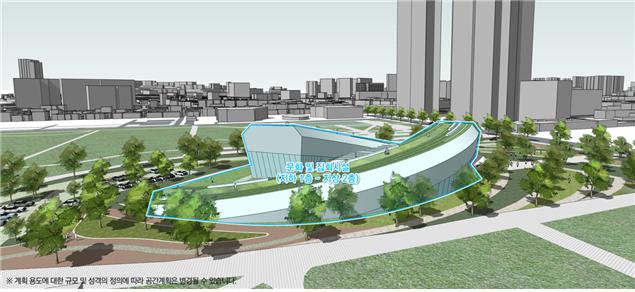 Culture & Tourism-Town (Creation of Landmarks such as Seoul Forest and Waterfront-Linked Complex Cultural Facilities)
Sampyo Remicon Factory Site ‘Culture & Tourism-Town’: Landmark Development with Complex Cultural Facilities like an Opera House
Fourth, the area around the Sampyo Remicon Seongsu factory site will be developed as a ‘Culture & Tourism-Town’ by creating complex cultural facilities such as an opera house, linked with Seoul Forest and waterfront areas.
The demolition of the Sampyo Remicon Seongsu factory, located at the confluence of Jungnangcheon Stream and the Han River, has been the biggest local wish in Seongdong-gu. After years of effort, the demolition groundbreaking ceremony was held on March 28, and the factory demolition is expected to be completed by the 16th.
This site is adjacent to Seongsu-dong, one of Seoul’s most vibrant commercial districts, Seoul Forest, and the Han River, making it an optimal location with high development expectations. Accordingly, Seongdong-gu has devised plans to utilize underused idle sites such as the Sampyo Remicon factory site, the Seoul Forest equestrian training center, and the visitor center, linking them with local resources like the Han River and Jungnangcheon Stream.
Specifically, the plan includes establishing complex cultural facilities like an opera house, a science future center for young people, various cultural facilities, global entertainment companies, and tourism landmarks to transform the area into a world-class destination.
Seongdong-gu explained that once preliminary urban planning negotiations for the factory site development proceed, public contributions from development profits will sufficiently fund the necessary local facilities.
In addition, the district has selected five major hubs?Wangsimni metropolitan center, Seongsu regional center, Seoul Forest area, Water Recycling Center area, and Geumho-Oksu district center?and presented development directions for each to secure future growth engines for Seongdong-gu and promote balanced development across regions.
Jung Won-oh, Mayor of Seongdong-gu, emphasized, “The establishment of this basic plan creates a springboard for Seongdong-gu to soar beyond ‘Mayongseong’ and ‘Top 5’ to become the best autonomous district in Seoul. Just as Seongdong-gu has achieved remarkable urban growth over the past few years, we will do our utmost to build even stronger growth engines, lead balanced development between Gangnam and Gangbuk areas, and become the most livable and sustainable city.”
© The Asia Business Daily(www.asiae.co.kr). All rights reserved.
![User Who Sold Erroneously Deposited Bitcoins to Repay Debt and Fund Entertainment... What Did the Supreme Court Decide in 2021? [Legal Issue Check]](https://cwcontent.asiae.co.kr/asiaresize/183/2026020910431234020_1770601391.png)

















