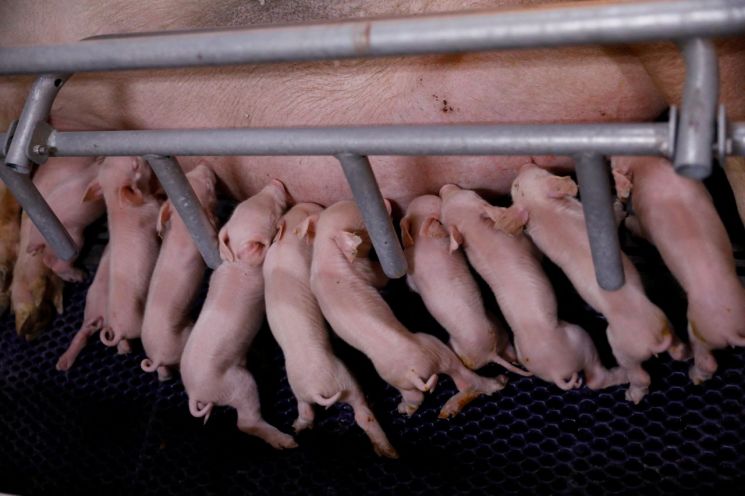
[Asia Economy Reporter Jeong Hyunjin] A research team in the United States has succeeded in reviving organs such as the heart and liver of pigs one hour after death. Although the study aims to preserve organs longer for transplantation after human death, experts predict it will take a long time before it can be applied to humans. At the same time, the study has been said to blur the existing definitions of the boundary between life and death, drawing comparisons to the situation when the mechanical ventilator was first developed.
◆ Cells revived after injecting solution one hour post-mortem
According to the New York Times (NYT) and others on the 3rd (local time), researchers at Yale University announced in the international journal Nature that they revived vital organs of dead pigs. The team developed a special solution called OrganEX, which was administered into the blood vessels of dead pigs to revive dead cells. This solution was made by mixing nutrients, anti-inflammatory agents, apoptosis inhibitors, nerve blockers, artificial hemoglobin, and pig blood.
One hour after the pig’s heart stopped in the laboratory, the researchers used equipment similar to an artificial heart-lung machine to administer OrganEX into the pig’s blood vessels. The dead cells began to revive. After circulating through veins and arteries, the heart started beating again, and cells in vital organs such as the liver, kidneys, and brain began to function. The pig’s body did not become stiff like a corpse, the research team reported.
David Andrijevic, a Yale professor and one of the co-authors of the paper, said, "We did not even know what to expect. Everything we revived was unbelievable."
However, since the nerve blockers included in OrganEX prevented brain nerve activation, the researchers considered that the pig’s consciousness did not return. Although individual brain cells revived, there were no signs of organized neural activity in the brain overall. When iodine contrast agent was injected for imaging, the pig moved its head, surprising the researchers, but they could not determine the cause and presumed it was unrelated to the brain.
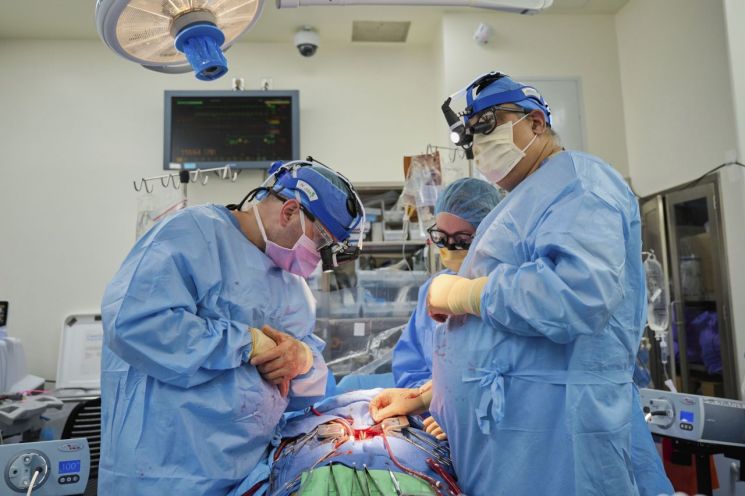
The research team was led by Professor Nenad Sestan, a neuroscientist who gained attention in 2019 for reviving some brain functions in isolated brains of dead pigs. This time, the experiment was conducted on the whole body, not just the brain. At that time, a special blood-mimicking solution called BrainEX was supplied to restore some brain cell functions. Professor Sestan said the next research step will be to examine whether the revived organs function properly and whether they can be successfully transplanted. He also stated plans to test whether this technology can be used to repair damaged hearts or brains.
◆ "Revolutionary for organ transplantation"… Will the meaning of death change?
This study was conducted with the goal of preserving organs longer for transplantation after human death. Robert Forte, an organ transplantation expert at the University of Groningen in the Netherlands, explained in a phone interview with the NYT that many countries have a policy of waiting five minutes without touching the body after turning off the mechanical ventilator before performing organ donation surgery, during which time organs can become damaged and less usable.
Dr. Forte said, "In many countries, the organ transplant team waits about two hours until the patient is declared dead," and as a result, even if life support is removed and the patient dies, and the family wishes to donate organs, 50-60% of the time donation cannot proceed. He evaluated that if OrganEX can preserve organs, the number of organs available for transplantation will increase significantly, producing tremendous effects.
However, Steven Latham, director of Yale’s Interdisciplinary Center for Bioethics, said, "It will still be a long time before this can be used in humans."
Foreign media have evaluated that this research raises new questions about the existing definitions of the boundary between life and death. Since the criteria and timing of death may change, discussions similar to those when mechanical ventilators were first developed may arise.
Brendan Parent, a forensic scientist and director of the Transplant Ethics Policy Research at NYU Grossman School of Medicine, told the NYT, "According to the widely accepted medical and legal definitions of death, this pig is dead," adding, "The important question is what functions could change that definition."
The UK Financial Times (FT) reported on the news, stating, "Scientists have blurred the boundary between life and death by reviving dead pigs’ organs."
Arthur Caplan, head of medical ethics at NYU Grossman School of Medicine, emphasized in Nature that death is a process rather than a specific moment. This makes it difficult to propose a uniform way to declare human death and means that legal definitions of death may continue to change with medical advances. He added, "People mainly focus on brain death, but there is less consensus about cardiac death, where the heart stops beating and breathing ceases."
© The Asia Business Daily(www.asiae.co.kr). All rights reserved.


















