Increased Subscription Costs for Services like Netflix and Melon
OTT Users Subscribe to an Average of 2.7 Services

[Asia Economy Reporter Heo Midam] # Yoon Ji-young (26, pseudonym), a first-year office worker, was recently surprised while organizing her credit card statements. The monthly subscription fees were not insignificant. Yoon uses online video streaming services (OTT) such as Netflix and Watcha, as well as the ad-free 'YouTube Premium' service. Additionally, she subscribed to Coupang's 'Rocket Wow' membership for shopping benefits. She said, "Watching movies is my hobby, so I subscribed to several OTT services, but I am often too busy to watch even one or two movies a month," adding, "The monthly expenses are burdensome, so I am considering canceling some subscriptions."
In this era of high inflation, more customers are canceling subscription services to save on living expenses. Recently, OTT and streaming service platforms have raised their monthly subscription fees, and subscribing to multiple OTT services simultaneously has become a significant financial burden. Some users have resorted to sharing one account with family or friends or using subscription-sharing platforms to reduce costs.
In recent months, domestic music platforms have raised subscription fees one after another due to Google's in-app payment (app market's own payment system) impact. Melon, the largest domestic music site, increased its monthly plans of 6,900 won, 7,900 won, and 10,900 won to 7,600 won, 8,700 won, and 12,000 won respectively from the end of June, about a 10% increase. Earlier, Flo and Vibe also raised their monthly fees by 15% and 16%, respectively.
Meanwhile, Coupang changed its Wow membership fee from 2,900 won to 4,990 won starting in June, a roughly 72% increase. Netflix also raised its OTT service fees last November, increasing the standard plan from 12,000 won to 13,500 won per month and the premium plan from 14,500 won to 17,000 won.
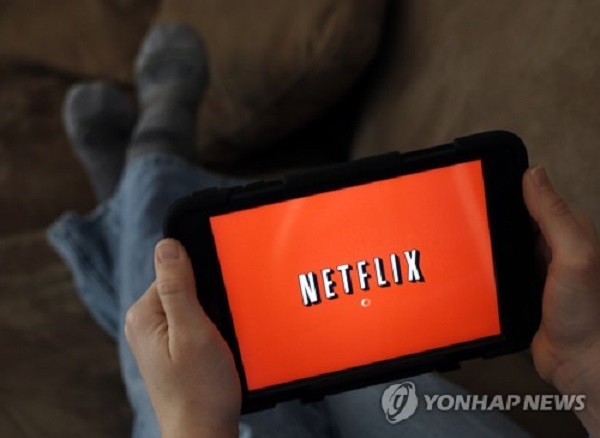
Subscription services were initially highlighted as 'frugal consumption' because they allow unlimited access to desired content at any time for a fixed fee. It was considered more reasonable to pay around 10,000 won monthly to watch multiple pieces of content than to watch a single movie at a theater.
However, with subscription fees rising rapidly over a few months and overall prices, including dining out, increasing, more people are feeling the financial burden. Especially considering that most users subscribe to two or more OTT services, the burden is even greater. According to the 'Content Usage Trend Research in the Digital Transformation Era' report published by the Korea Creative Content Agency in January, domestic OTT users subscribe to an average of 2.7 OTT services. Among the inconveniences experienced by users, 'economic burden' was cited by 42.5% as the most significant issue.
As the monthly spending burden grows, OTT account-sharing platforms have emerged. These allow individuals who use OTT services alone to share accounts with third parties and split subscription fees. To use major domestic OTT services, users must pay from the low 4,000 won range up to the high teens in thousands of won. However, sharing accounts with others reduces the cost to a fraction, easing the financial burden to some extent. The representative subscription-sharing platform 'Pickle Plus' has surpassed 200,000 users.
However, there are criticisms that such sharing platforms violate OTT service terms of use. Netflix's terms explicitly state that "(the service) must not be shared with individuals outside the household."
Meanwhile, experts analyze that more people are preparing for an uncertain future due to soaring prices. Professor Lee Eun-hee of Inha University's Department of Consumer Studies said, "There was a time when consumption focused on the present, such as 'YOLO' and 'flexing,' but due to overall price increases, more consumers are thinking about preparing for future situations."
© The Asia Business Daily(www.asiae.co.kr). All rights reserved.
![Clutching a Stolen Dior Bag, Saying "I Hate Being Poor but Real"... The Grotesque Con of a "Human Knockoff" [Slate]](https://cwcontent.asiae.co.kr/asiaresize/183/2026021902243444107_1771435474.jpg)

















