COVID-19 New Cases Expected to Reach 110,000
Severe Cases Consistently Doubling
High-Risk Groups Anxious as 'Home Treatment Monitoring' Suspended
"Advisory Measures Essentially Mean 'Be Careful on Your Own'"
Self-Employed and Others Oppose 'Business Restriction Measures'
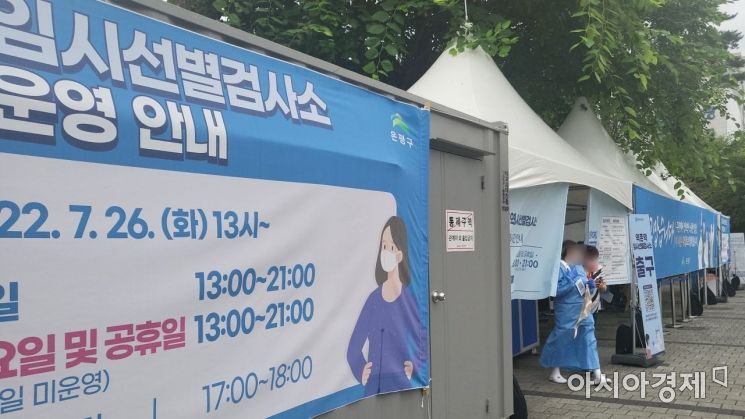 Concerns are emerging regarding the "voluntary quarantine" promoted by the health authorities. The scene of a temporary screening clinic located in Eunpyeong-gu, Seoul, on the afternoon of the 2nd. Photo by Kim Jeongwan kjw106@
[Asia Economy Reporter Kim Jung-wan] The quarantine authorities' 'voluntary quarantine' and 'daily quarantine' have been put to the test. Recently, as the daily number of new confirmed cases exceeded 100,000 and the number of critically ill patients surged, concerns have arisen that the 'recommendation'-level guidelines are unstable. Among those who suffered economic damage due to business restrictions, such as self-employed individuals, there are arguments that social distancing is ineffective and that quarantine focusing on testing or treatment is necessary.
According to Seoul City and other local governments on the 2nd, from midnight to 9 p.m. the previous day, 106,367 people nationwide in 17 cities and provinces were confirmed as new COVID-19 cases. Considering that the count closes at midnight, it is expected to reach the 110,000 range, a figure not seen for over 100 days since last April.
However, recently the increase in new confirmed cases has shown signs of slowing, yet the number of critically ill patients is doubling weekly, raising concerns. According to the Central Quarantine Countermeasures Headquarters, as of midnight on the 1st, the number of critically ill patients was 287, which is 1.99 times higher than 144 on the 25th of last month, increasing nearly twofold in one week. Compared to 81 on the 18th of last month, it has increased 3.54 times in two weeks.
There are also forecasts that the number of critically ill patients will increase further after the summer vacation season. Since the number of critically ill patients tends to follow changes in confirmed cases with a 1-2 week lag, it is interpreted that the impact of increased nationwide mobility during the vacation season will appear around the end of August. In fact, last August, after the summer vacation season, the daily domestic confirmed cases exceeded 2,000 for the first time, and the number of critically ill patients also increased, showing a similar impact.
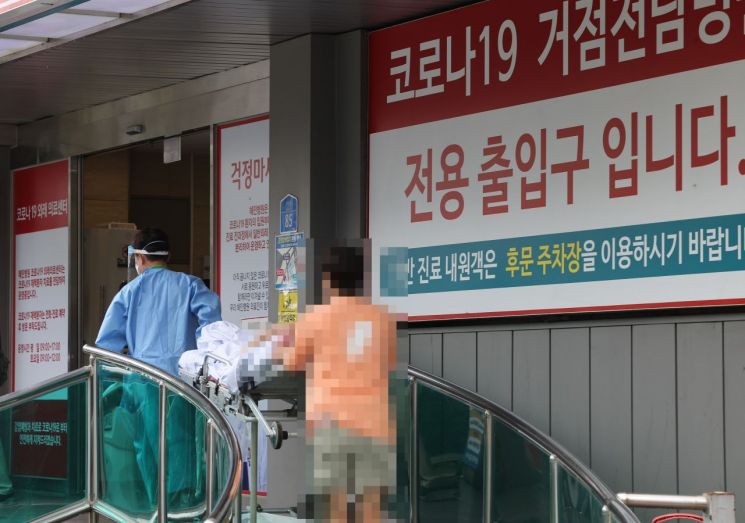 The number of critically ill patients on the 1st increased by 3 from the previous day to 287, marking the highest count in 75 days since May 18 (313 patients). On this day, an official is transferring a patient at Hyemin Hospital in Gwangjin-gu, Seoul.
 [Photo by Yonhap News]
Due to this situation, voices of concern are emerging among high-risk groups such as the elderly. On the afternoon of the 2nd, Mr. Somo (in his 70s), a single-person household, met in front of a temporary screening clinic in Eunpyeong-gu, Seoul, and expressed deep worries recently. He said, "It feels like a cold or flu, but I came to get tested because I was worried about it worsening if I just stayed still," adding, "Even if you catch it, you have to manage everything yourself from visiting the hospital, which worries me." He continued, "It's a dangerous disease for older people, so does it make sense to tell us to manage it ourselves?"
Such concerns arise because the 'home treatment monitoring' conducted for high-risk groups was discontinued as of the 1st. Initially, elderly single-person households like Mr. Somo were classified as intensive management groups upon confirmation, and the responsible medical staff checked their health status daily by phone, allowing immediate hospitalization if their condition worsened. However, as the quarantine authorities applied a reorganized home treatment system and stopped the 'health monitoring' for home-treated patients, now the elderly must visit hospitals on their own. However, since it may be difficult for high-risk groups to timely assess their health status and find available medical facilities, there could be blind spots in the medical system.
On the 27th of last month, Baek Kyung-ran, Commissioner of the Korea Disease Control and Prevention Agency, reaffirmed the intention to maintain voluntary quarantine policies at a regular briefing of the Central Disaster and Safety Countermeasures Headquarters, stating, "We will actively promote that daily life can be sustained when social distancing is carried out by citizens' voluntary participation, not regulatory distancing."
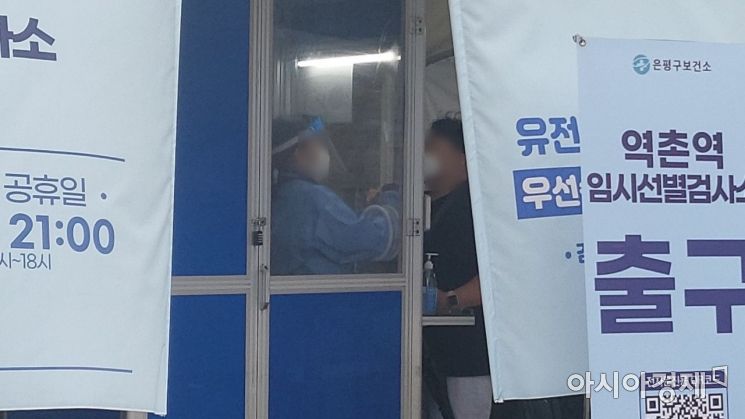 While some express concerns that the policy remains at the level of a 'recommendation,' there are also calls for measures focused on testing and treatment. Photo by Kim Jeongwan kjw106@
As the resurgence approaches, with the government’s policy limited to 'recommendations,' some citizens express unease. Kim (in his 20s), an office worker, said, "In a situation where confirmed cases exceed 100,000, quarantine rules such as work methods are only recommendations, so it feels like 'be careful on your own,'" adding, "They say work from home or take leave if you are sick, but the company does not really reflect the recommendations." He sighed, saying, "I wonder if I just have to get infected once and be done with it."
Meanwhile, among those who suffered economic losses from the previous 'social distancing,' there are voices arguing that distancing in the form of business restrictions is not a solution, and that measures focusing on testing or treatment are needed. On the self-employed online community 'Apeunikka Sajangida' (Because It Hurts, I'm the Boss), complaints such as "Social distancing talks are coming up again. I will never participate," and "Don't you feel now that social distancing is no longer a solution?" are heard.
Mr. Lee (in his 50s), who runs a restaurant in Seodaemun-gu, said, "Waiting for distancing to be lifted and thinking about the period of damage feels like a nightmare," adding, "I hope they focus on testing and treatment and stop quarantine measures that impose restrictions." He lamented, "I have taken on quite a bit of debt during the COVID period, so the burden is huge. If distancing is implemented again, I might end up homeless on the streets."
© The Asia Business Daily(www.asiae.co.kr). All rights reserved.
![From Bar Hostess to Organ Seller to High Society... The Grotesque Con of a "Human Counterfeit" [Slate]](https://cwcontent.asiae.co.kr/asiaresize/183/2026021902243444107_1771435474.jpg)


















