July Inflation Rate Highest in 23 Years and 8 Months
BOK: "Sharp Rise in Prices of Dining Out, Processed Foods, and Vegetables"
Expected Inflation Also Rises to 4.7%
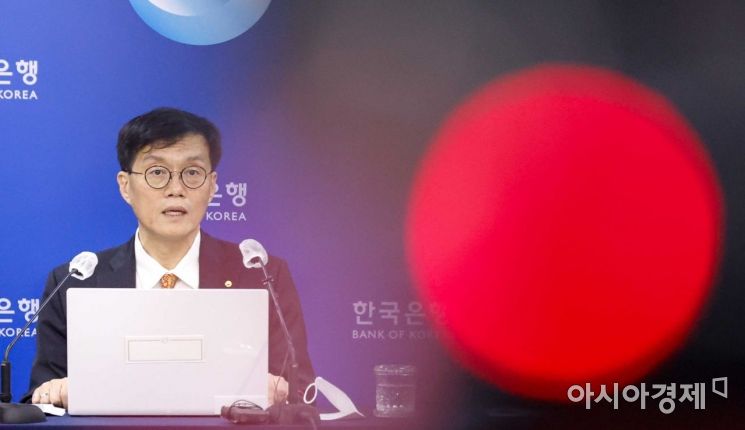 Bank of Korea Governor Lee Chang-yong is answering questions from the press at the Monetary Policy Direction press conference held at the Bank of Korea in Jung-gu, Seoul on July 13. Photo by Kang Jin-hyung aymsdream@
The Bank of Korea explained that the July consumer price inflation rate, which recorded the highest level in 23 years and 8 months, was "in line with expectations" and "is expected to continue rising above 6% for the time being."
On the 2nd, the Bank of Korea held a 'Price Situation Review Meeting' chaired by Deputy Governor Lee Hwan-seok at the Bank's headquarters in Jung-gu, Seoul, to review the recent price situation and future trends.
Deputy Governor Lee said at the meeting, "The July consumer price inflation rate showed a 6% level following June, which is consistent with the forecast made at the Monetary Policy Committee meeting on the 13th of last month."
The consumer price inflation rate has been soaring monthly, recording 4.1% in March, 4.8% in April, 5.4% in May, and 6.0% in June. In particular, last month it rose to 6.3%, marking the largest increase in 23 years and 8 months since November 1998 (6.8%) during the foreign exchange crisis.
Deputy Governor Lee explained, "Consumer prices are expected to continue rising above 6% for the time being due to higher inflation expectations, sustained high oil prices, and increased demand-side price pressures."
The Bank of Korea cited significant increases in prices of dining out, processed foods, and agricultural products such as vegetables as reasons for the high inflation rate in July. In the case of vegetables, poor harvests caused by spring droughts, monsoons, and heatwaves led to sharp price increases in lettuce, cabbage, radish, and onions compared to average years.
Additionally, the Bank explained that sustained high international oil prices, the lifting of COVID-19 social distancing measures, and increases in electricity and city gas rates significantly contributed to the inflationary pressures.
The Bank of Korea analyzed, "As the inflationary trend expands, inflation expectations have also risen to the mid-to-high 4% range (4.7%). The upward trend above 6% is expected to continue for the time being." The Bank expects the inflation rate to peak and stabilize around October.
However, the Bank noted that the volatility of prices could increase depending on developments in the Ukraine situation, trends in international raw material prices such as oil, and summer weather conditions including typhoons and heatwaves.
The Bank stated, "Although recent volatility in international oil and grain prices has highlighted downside risks, upside risks on the supply side remain. On the demand side, price increases in personal services such as dining out, travel, and accommodation are expected to continue for a considerable period."
© The Asia Business Daily(www.asiae.co.kr). All rights reserved.

















