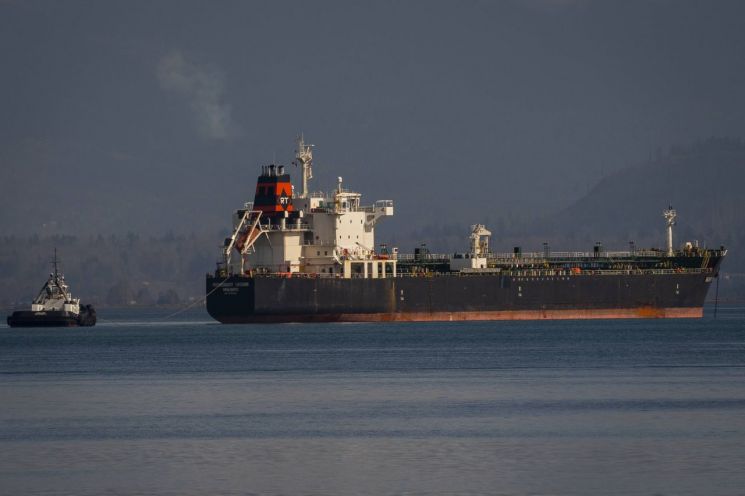
[Asia Economy Reporter Park Byung-hee] Doubts are growing about the effectiveness of sanctions on Russia as Western measures to restrict Russian crude oil continue to be out of sync.
According to major foreign media on the 31st of last month (local time), it has been nearly two months since the EU took preliminary measures to ban new marine insurance contracts for vessels transporting Russian crude oil, but the UK postponed the ban on marine insurance contracts until next year, contrary to the EU's initial expectations.
The simultaneous ban by the UK and the EU on marine insurance for vessels transporting Russian crude oil was expected to be the most comprehensive sanction measure against Russian crude oil. Under international maritime law, insurance is mandatory for transporting crude oil and other goods, and if both the UK and the EU prohibit insurance contracts simultaneously, it was anticipated to deal a significant blow to Russian crude oil exports.
The EU has banned new marine insurance contracts for vessels transporting Russian crude oil since June 4. The law stipulates that no company within the EU can enter into new insurance contracts for vessels carrying Russian crude oil. Existing contracts are valid only until December 5, after which marine insurance services will be completely prohibited.
The EU expected the UK to take similar measures. According to officials, the UK had agreed with the EU in May to ban marine insurance contracts. Since the UK, centered around Lloyd's, the world's largest marine insurer, plays a central role in the marine insurance industry, the UK's cooperation was essential for the sanctions on Russian crude oil via insurance bans to be effective.
However, the Russian sanctions law passed by the UK Parliament last month only bans insurance contracts for vessels transporting Russian crude oil to the UK, and the enforcement date was postponed to next year. No insurance ban sanctions were imposed on Russian crude oil exports to regions other than the UK.
As the UK did not impose sanctions on Russian crude oil transported outside its territory, the EU also eased some of its Russian crude oil sanctions at the end of last month. The EU amended some provisions to allow EU companies to transport crude oil with Russian state-owned companies like Rosneft to countries outside the EU.
The reason the EU and the UK excluded insurance ban sanctions on Russian crude oil exports to third countries appears to be the judgment that a reduction in Russian energy supply would increase global inflation risks, and that neither the UK nor the EU is free from inflation risks.
The US reportedly expressed concerns that if the UK and the EU banned insurance contracts, the supply of millions of barrels of Russian crude oil would decrease, increasing inflationary pressures. The EU explained that the reason for easing the sanctions was to reduce inflationary pressures.
© The Asia Business Daily(www.asiae.co.kr). All rights reserved.

















