Korea Ranks 5th in Global Used Clothing Exports
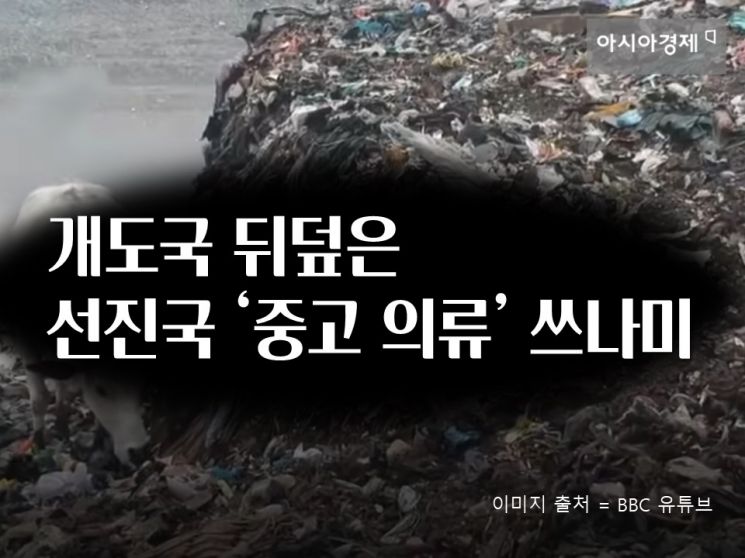 Used clothing exported or donated by developed countries is causing environmental damage in major importing countries such as Ghana. / Photo by Song Hyundo, Asia Economy intern reporter
[Asia Economy Reporter Lim Juhyung, Intern Reporter Song Hyundo] #A beach in Africa. Thousands of piles of used clothes are stacked like a mountain on the sandy shore. Local residents walk barefoot over the decaying piles of clothes.
This is part of a video that recently shocked netizens after being shared on domestic social networking services (SNS) and online communities. The location shown in the video is a beach in Accra, the capital of Ghana, a country suffering from the influx of secondhand clothing waste imported from around the world. There are criticisms that South Korea also bears responsibility for the 'clothing waste crisis' faced by some developing countries. South Korea is also among the top five exporters of used clothes worldwide.
The video was first released on the 27th (local time) by the British media outlet 'Daily Mail.' It shows a 'mountain of used clothing waste' filmed from above the Accra beach. Ghana, along with Indonesia and Cambodia, is one of the world's largest importers of used clothes. Traders in these countries purchase large quantities of used clothes cheaply or receive them as 'donations' from developed countries, then sort out wearable clothes to resell in their domestic markets.
The problem lies with the remaining clothes that even these countries cannot process. Such clothing is essentially treated as waste and discarded into waterways, riverbanks, and beaches. The discarded clothes accumulate into mountains of waste, causing pollution of the sea and surrounding environment due to foul odors and toxic chemical components.
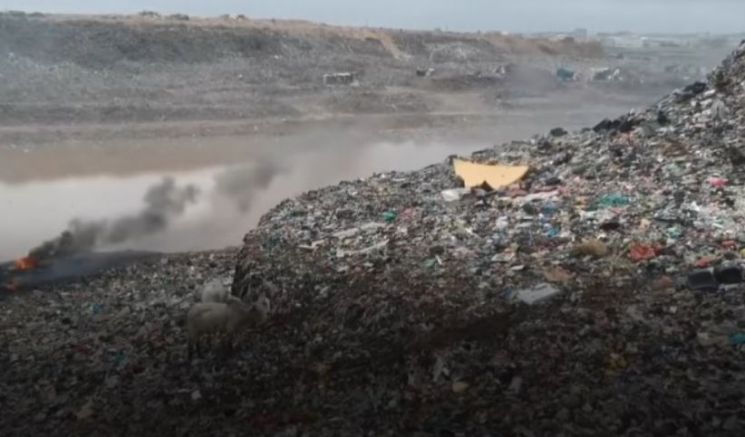
The clothing waste flowing into Ghana is reported to come from the world's largest exporters of used clothes, such as the United States and the United Kingdom. According to 'OEC,' which compiles trade data, as of 2020, South Korea ranked fifth in the world for used clothing exports, following the United States, China, the United Kingdom, and Germany.
◆ Used Clothing Exports: A Key Part of Domestic 'Clothing Waste' Disposal Process
Used clothing exports hold a very important position in South Korea's clothing waste disposal process. Domestically, used clothes are collected through clothing collection boxes installed by individual businesses for profit. Among these, items in good condition are recycled, while the rest undergo washing, repair, and modification by collection companies before being exported.
Currently, there are no statistical data on the recycling rate of clothing waste in South Korea. However, it is known that there is a high possibility that waste disposal relies more on exports than recycling. When the global COVID-19 pandemic in 2020 closed borders worldwide, blocking the export routes for used clothes, domestic collection companies' waste disposal capabilities were paralyzed.
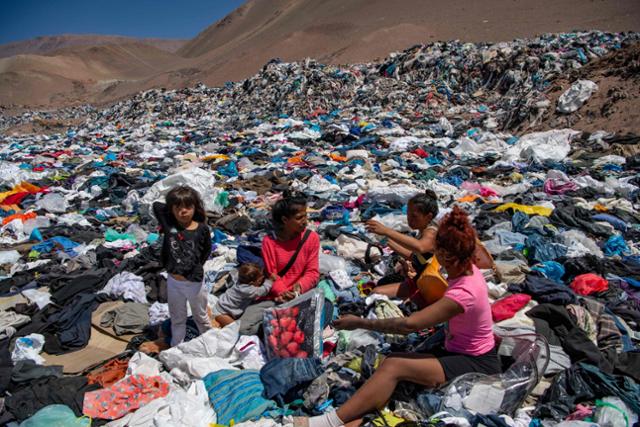 Last November, people were sorting recyclable clothes from a pile of used clothing waste in a desert in Chile. / Photo by Yonhap News
According to statistics from the Ministry of Environment, the daily average amount of clothing waste generated domestically was 259 tons in 2016 but increased to 880 tons in 2020. This is more than a threefold surge in four years. To handle the increased used clothing waste, more waste fibers inevitably need to be exported overseas.
◆ Environmental Pollution in Developing Countries Also Harms Developed Countries... "Efforts to Reduce Waste Are Necessary"
Clothing waste harms not only importing countries but eventually developed countries as well. Most modern clothing materials are synthetic fibers that take a long time to decompose, and when exposed to water, harmful substances leach out, causing water pollution.
Contaminated water seriously affects the health of local residents as well as livestock. Later, the damage extends to citizens of developed countries who import and consume such contaminated meat.
Experts emphasize the need for manufacturers to reduce waste during the clothing production process. Professor Eunhee Lee of Inha University's Department of Consumer Studies said, "Since the rise of fast fashion, consumers' clothing purchase cycles have accelerated, leading to a rapid increase in clothing waste. To reduce waste fibers and used clothing waste, efforts at the corporate level are ultimately required. Fundamental solutions such as developing clothing materials that decompose well are necessary."
© The Asia Business Daily(www.asiae.co.kr). All rights reserved.



















