Amore·LG Saenggeon Operating Profit Plummets... Down 46.9% and 35.5% Respectively
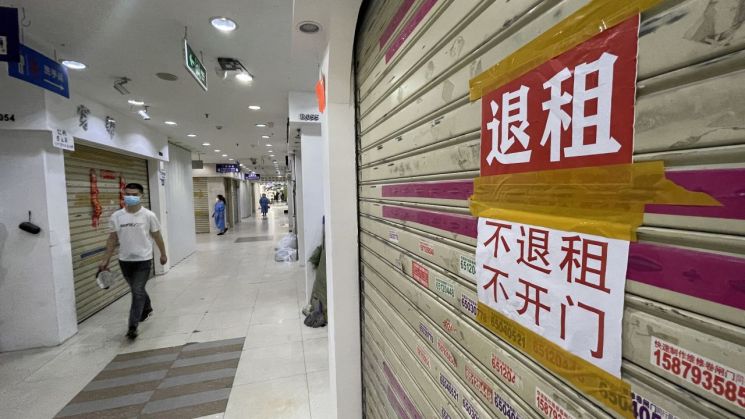
[Asia Economy Reporter Moon Hyewon] Amorepacific and LG Household & Health Care, the two giants of the domestic cosmetics industry, both posted disappointing results in the second quarter of this year. Both companies, heavily reliant on the Chinese market, were directly hit by the impact of China’s strengthened lockdown policies in major cities due to COVID-19 and rising raw material prices.
On the 28th, Amorepacific Group announced through its earnings disclosure that its sales for the first half of this year reached 2.2892 trillion KRW, with an operating profit of 160.3 billion KRW. Compared to the same period last year, sales decreased by 14.9%, and operating profit dropped by 46.9%.
On a consolidated basis, the operating loss for the second quarter of this year was 10.9 billion KRW, turning to a deficit compared to the same period last year. Second-quarter sales were 1.0264 trillion KRW, down 21.3%. During the same period, a net loss of 26 billion KRW was recorded, turning net profit into a loss.
The major subsidiary Amorepacific also posted losses in the second quarter. Amorepacific recorded operating and net losses of 19.5 billion KRW and 37.2 billion KRW respectively in Q2, turning both operating and net profits into deficits. Sales were preliminarily estimated at 945.7 billion KRW, down 19.6%.
Domestic business in the second quarter posted sales of 627.8 billion KRW, down 15.4% year-on-year. While the online channel continued its growth trend, overall performance declined due to sluggish duty-free channels caused by the Chinese lockdown.
Overseas business also struggled in the Asia region, which accounts for a large portion, due to the Chinese lockdown, recording sales of 297.2 billion KRW, down 33.2%. However, in the North American market, where Laneige and Sulwhasoo expanded their brand power following the first quarter, sales surged by 66%, maintaining a steep growth trajectory. In particular, Laneige contributed to sales expansion by launching the Water Bank campaign in collaboration with Sydney Sweeney, and Sulwhasoo entered new e-commerce channels such as Amazon. In Europe, Laneige showed strong sales through Sephora and e-commerce channels, and Guerlain Paris’s domestic sales recovered growth, resulting in an overall sales increase of 15%.
Major subsidiaries showed overall sales growth and profit improvement through growth in online channels and strengthening of product portfolios. Etude, which performed well in online and MBS channels, Espoir, which saw growth in the face makeup category, and Amos Professional, which reorganized its portfolio focusing on Ayunchae treatments, all achieved growth in both sales and operating profit.
On the other hand, Innisfree’s overall sales declined due to sluggish duty-free channels despite growth in online channels.
On the same day, LG Household & Health Care announced that its second-quarter sales were 1.8627 trillion KRW, down 7.9% from the same period last year, and operating profit was 216.6 billion KRW, down 35.5%. Net profit was also recorded at 126 billion KRW, down 44.3%.
An LG Household & Health Care official explained, "The strengthened lockdown policy in China, which began at the end of March, had a significant impact on local business throughout the second quarter, and the ongoing Ukraine crisis led to rising raw material prices, making it difficult to achieve growth in sales and operating profit."
The beauty (cosmetics) business posted second-quarter sales of 853 billion KRW, down 23.6% year-on-year, and operating profit of 93.3 billion KRW, down 57.4%. Compared to the previous quarter, sales improved by 21.9% and operating profit by 35.2%. LG Household & Health Care explained that the resurgence of COVID-19 in China led to lockdowns in major cities such as Shanghai and Beijing, with most cities imposing lockdown orders, resulting in restrictions on going out, store closures, and logistics shipment limitations, which dealt a heavy blow to the Chinese business in the second quarter.
However, in a depressed consumption environment in China, the ‘Whoo’ brand achieved first place in beauty sales on Douyin and Kuaishou, rapidly growing platforms, during China’s largest mid-year shopping festival, the 6.18 Shopping Festival.
HDB (Home & Daily Beauty) and Refreshment (beverages) businesses achieved growth in both sales and operating profit despite sharply rising cost burdens. The HDB business posted second-quarter sales of 543.4 billion KRW, up 9.5% year-on-year, and operating profit of 59.6 billion KRW, up 1.4%. They launched ‘Rien Muldeulim’ and ‘Dr. Groot Black Recover’ in the gray hair cover market, receiving positive responses.
The Refreshment (beverages) business posted second-quarter sales of 466.4 billion KRW, up 13.9% year-on-year, and operating profit of 63.7 billion KRW, up 10.0%. Growing interest in health and dieting drove sales growth of zero-calorie beverages such as ‘Coca-Cola Zero’, ‘Sprite Zero’, and low-calorie drinks like ‘Monster Energy Ultra’.
© The Asia Business Daily(www.asiae.co.kr). All rights reserved.
![Clutching a Stolen Dior Bag, Saying "I Hate Being Poor but Real"... The Grotesque Con of a "Human Knockoff" [Slate]](https://cwcontent.asiae.co.kr/asiaresize/183/2026021902243444107_1771435474.jpg)
















