[Seoul District News] Guro-gu Recognized for Achievements in 'Guro Development Project Spatial Information System' Utilizing Seoul IT Convergence Technology and Basic National Land Information... Seodaemun-gu Bukahyeon-dong Donggeurami Shelter Transformed into Resident-Friendly Living Garden... 31st Dongdaemun-gu Citizen Award Candidate Nominations Open... Eunpyeong-gu Promotes Fair Building Culture through Illegal Building Maintenance
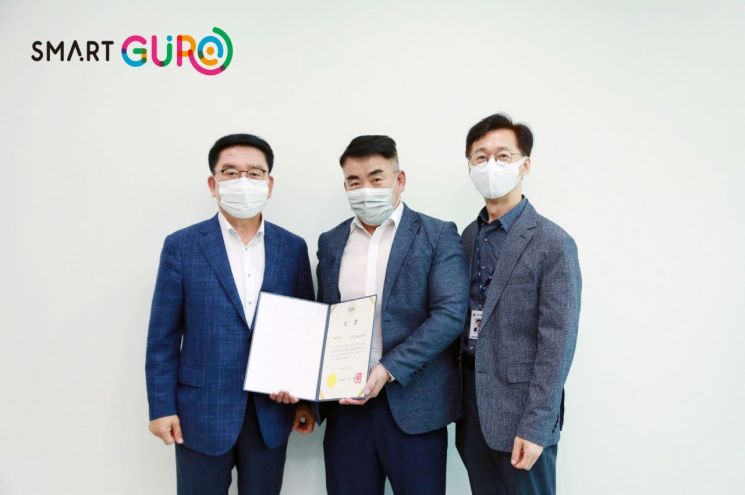
[Asia Economy Reporter Park Jong-il] Guro-gu (Mayor Moon Heon-il) won the Grand Prize at the ‘2022 Land and Spatial Seoul Conference.’
The ‘2022 Land and Spatial Seoul Conference’ is an event hosted by Seoul City to enhance the capabilities of officials by establishing a land and spatial work system using IT convergence technology and the basic national land information map, thereby improving the quality of public services.
The conference, held on the 5th at Seoul City Hall, was conducted under the theme ‘The Future of Space through IT Convergence.’
Focusing on land and spatial information, the first part consisted of a forum with experts, and the second part featured lectures by job-related experts and presentations of best practices by autonomous districts.
On this day, Guro-gu attended the conference with the theme ‘Establishment of Spatial Information System for Guro Development Projects.’
The ‘Guro Development Project Spatial Information System’ is a program established in the first half of this year, accessible through the district office’s website, allowing users to view the status of development projects by project type and administrative dong within the area.
The projects are classified into six categories: ▲Housing Redevelopment Projects ▲Housing Reconstruction Projects ▲Housing Construction Projects ▲Street Housing Maintenance Projects ▲Small-scale Reconstruction Projects ▲Other Projects.
By selecting a project, users can check the project’s name, location, area, floor area ratio/building coverage ratio, number of households, an overview of the project, progress status indicating the stage of advancement, and related departments.
The district was highly recognized for integrating local development projects into a single program built with spatial information, enabling various projects managed by different departments to be viewed at a glance.
A Guro-gu official said, “The efforts to develop this program have led to the great achievement of winning the Grand Prize. We will continue to do our best to provide high-quality public data to residents.”
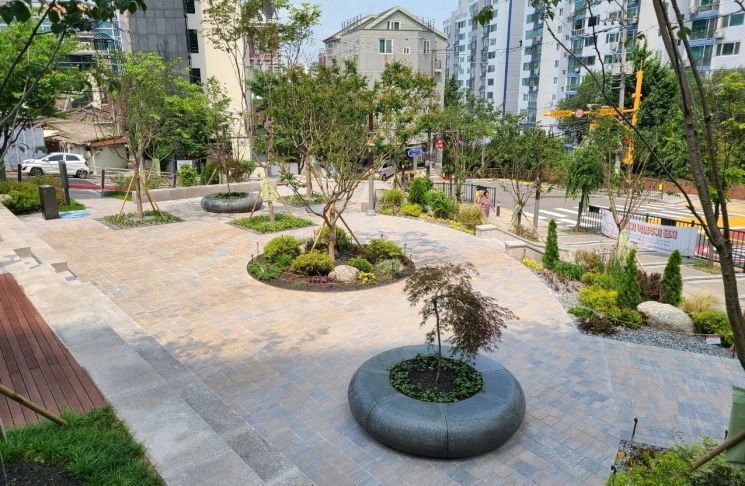
Seodaemun-gu (Mayor Lee Seong-heon) announced on the 28th that the ‘Donggeurami Rest Area’ (20 Bukahyeon-ro 1-ga-gil) in Bukahyeon-dong has been transformed into a comfortable and pleasant living garden for residents through recent refurbishment work.
The district promoted this project using the budget secured from Seoul City’s ‘Rainwater Management Facility Expansion Project’ contest and the supplementary budget established for ground leveling.
The rest area covers 1,207㎡, where the district installed a ‘submerged trench’ and ‘permeable pavement materials’ beneath the ground to establish a smooth rainwater circulation system.
Additionally, a three-dimensional flower bed was created on the existing steep slope, and exercise facilities, a drinking fountain, and a pergola (a resting facility similar to a gazebo) with swing chairs were installed.
Especially, the three-dimensional flower bed was planted with ▲6 species of large trees (arbor) including king cherry trees, 43 trees ▲7 species of shrubs including flowering dogwood, 900 shrubs ▲33 species of herbaceous plants including hydrangea and red ribbon, 4,357 plants to create a beautiful landscape.
Also, to prevent inconvenience such as noise to nearby residents, ‘gobo lighting’ (a device that projects desired images onto the ground using light) is used at night to inform ‘usage compliance rules.’
Lee Seong-heon, Mayor of Seodaemun-gu, said, “We expect the Donggeurami Rest Area, where flowers and trees harmonize, to be loved by residents as a leisure space in daily life.”
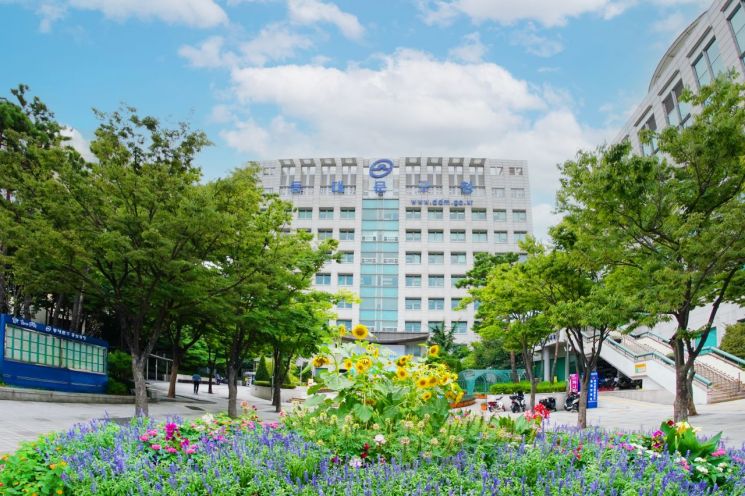
Dongdaemun-gu (Mayor Lee Pil-hyung) is accepting recommendations for exemplary residents who serve as role models in various fields until August 19th, in celebration of the 31st Dongdaemun Residents’ Day.
The ‘31st Dongdaemun-gu Residents’ Award’ will select a total of 14 recipients (1 grand prize and 1 gold prize per category) across seven categories: ▲Proud Resident Award ▲Parents’ Award ▲Filial Piety Award ▲Volunteer Award ▲Model Youth Award ▲Disabled Person Award ▲Multicultural Family Award.
Recommended candidates must have contributed to the harmony and development of residents in each field and must have resided in Dongdaemun-gu or been active in organizations located in Dongdaemun-gu for at least three years as of July 20th this year.
Candidate recommendations can be made through ▲recommendation letters from heads of institutions, organizations, or schools ▲joint recommendation letters from two or more Dongdaemun-gu council members ▲petition signatures from 10 or more residents. However, for organization head recommendations, direct recommendations are possible only if the organization’s activity scope is within Dongdaemun-gu or larger.
Applications can be submitted by visiting the district’s Autonomous Administration Division or local community service centers, or by mail or email with the recommendation letter.
Detailed candidate qualifications for each award category can be found in the announcement section of the Dongdaemun-gu website under Dongdaemun News.
The final awardees will be decided through deliberation by the Dongdaemun-gu Residents’ Award judging committee, and the awards will be presented at the 31st Dongdaemun Residents’ Day commemorative event on September 27th.
For further details regarding candidate recommendations and awards for the 31st Dongdaemun-gu Residents’ Award, please contact the Autonomous Administration Division.
Lee Pil-hyung, Mayor of Dongdaemun-gu, stated, “We expect the Residents’ Award ceremony to be an opportunity to inform more residents of the awardees’ merits and good deeds and to contribute to making Dongdaemun-gu a better place to live.”
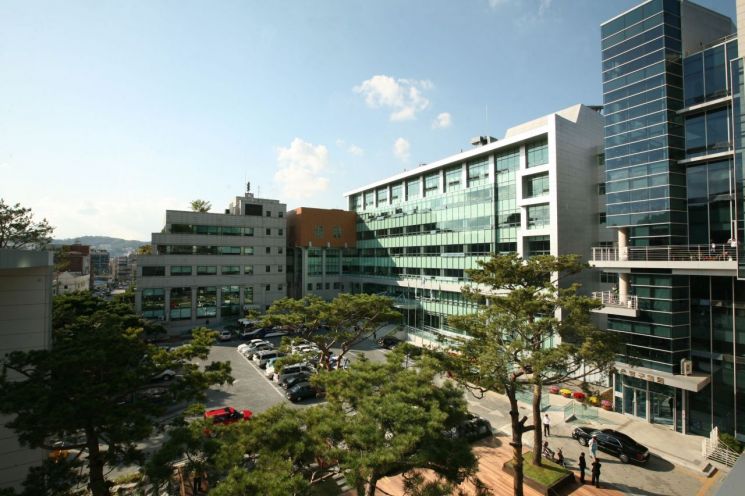
Eunpyeong-gu (Mayor Kim Mi-kyung) announced that it will establish and implement the ‘2022 Illegal Building Investigation and Maintenance Plan’ to improve fair building administration.
The Illegal Building Investigation and Maintenance Plan is established annually to enhance trust in building administration and promote fair building administration through the prevention and post-management of illegal buildings.
Illegal buildings occur for the purpose of unfair economic gain by illegally affecting sunlight, ventilation, and views of adjacent buildings, so inspection is necessary.
This year, the district will also establish the investigation and maintenance plan and conduct focused inspections targeting small and medium-to-large buildings.
Small buildings under 2,000㎡ of total floor area will undergo quarterly cross-inspections between autonomous districts, focusing on unauthorized use changes, partitioning, balcony violations, etc. Medium-to-large buildings over 2,000㎡ will be inspected once a year for landscaping damage, public open spaces, and more.
Major cases of illegal buildings include ▲Installing roofs with panels/sashes on natural balconies to expand living rooms or utility rooms ▲Unauthorized change of neighborhood living facilities to residential use ▲Unauthorized extension or reconstruction of rooftop structures for residential or storage use ▲Unauthorized extension or use change of pilotis and parking lots on the first floor ▲Installation of temporary structures such as tents, iron posts, or container boxes in vacant land ▲Landscaping damage.
If an illegal building is detected, the district first encourages voluntary maintenance by issuing a first correction order, a second correction urging notice, and a third notice of imposition of a performance penalty. If voluntary maintenance is not done within the specified period after the third notice, a performance penalty is imposed, and the building is registered as illegal in the building register. Registration as an illegal building results in loan restrictions, disadvantages in real estate transactions, and various permit and approval restrictions.
Illegal buildings with imposed performance penalties will be subject to annual building performance penalties until restoration, and criminal penalties may be applied according to related regulations.
The district sends a ‘Publicity Letter for Prevention of Illegal Buildings’ quarterly to building owners of approved buildings, informing them of major illegal cases and administrative actions related to illegal activities.
Kim Mi-kyung, Mayor of Eunpyeong-gu, said, “We will do our best to eradicate illegal building activities through systematic investigation and maintenance and to establish fair and just building administration.”
© The Asia Business Daily(www.asiae.co.kr). All rights reserved.



















