Kim Jaehyung, CEO of BizModelLine
Support for Early Startup IP-related Tasks
Systematization of Startup Support System
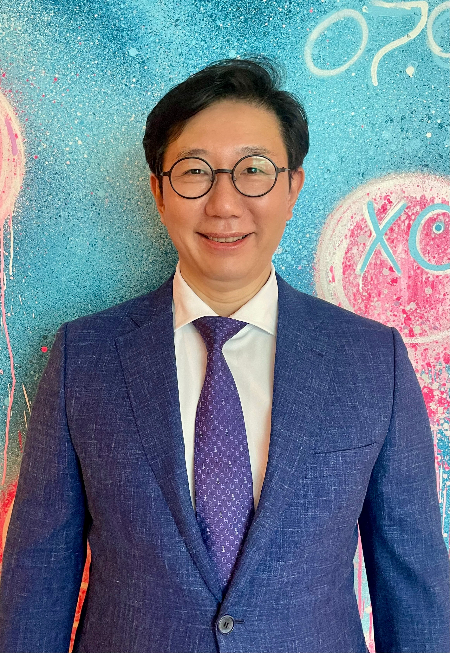
‘BizModelLine,’ which has supported founders in the startup ecosystem for over 20 years with its own patents, is now actively promoting a commercialization project that combines intellectual property (IP) and technology.
BizModelLine holds about 1,500 patents. According to CEO Kim Jae-hyung, this is an unparalleled level in the small and medium-sized enterprise sector. Instead of acquiring equity in early-stage startups, the company supports businesses by assisting with IP-related tasks such as building patent portfolios and securing foundational patents.
A representative startup that BizModelLine has been involved in commercializing is ‘OneTwoCM.’ OneTwoCM has expanded into more than 20 countries overseas with its ‘Smart Stamp’ technology, which authenticates by stamping on smartphone touchscreens, and is currently preparing for an initial public offering (IPO).
Founded in 2000, BizModelLine has supported startups in their first and second years facing various challenges such as patent issues, technology development, market access, and organizational restructuring, helping them achieve stable growth. CEO Kim’s management philosophy is to “always challenge something new.”
While working as a researcher at a government-funded research institute, CEO Kim recognized the importance of internet-related patents in the late 1990s and filed seven patents during his parental leave. Through this, he received investments of 500 million KRW and 100 million KRW from Daeycom and a Japanese company, respectively.
He said, “Ideas and patents discovered in the early 2000s were only commercialized in 2020. Now, the world is changing even faster. Even if there are trial and errors, it is important to quickly jump into areas unseen by others and secure the market.”
Going forward, BizModelLine plans to provide more systematic support by dividing its efforts into ▲project companies and ▲in-house incubating. CEO Kim stated, “I have always approached the success of junior entrepreneurs with an open attitude,” but added, “As the company grows, conflicts over equity often arise, so we decided to reorganize the business system.”
Project companies involve partnering with external firms or establishing joint ventures with early-stage startups to promote government research and development (R&D) projects. Recently, they have been discussing the establishment of a project company related to non-fungible token (NFT) business with a fintech company listed on the KOSDAQ.
In-house incubating refers to recruiting next-generation CEOs or capable retired executives to run businesses based on BizModelLine’s developed business models and then spin them off. Currently, in-house incubating is underway in fields such as fashion and online wine sales.
CEO Kim said, “Based on the know-how accumulated through working with various startups, including business model design and patent investment, we will overcome the challenges startups face,” and added, “By gaining experience through successful project execution, we aim to become a platform sought after by startups in the future.”
© The Asia Business Daily(www.asiae.co.kr). All rights reserved.
![Clutching a Stolen Dior Bag, Saying "I Hate Being Poor but Real"... The Grotesque Con of a "Human Knockoff" [Slate]](https://cwcontent.asiae.co.kr/asiaresize/183/2026021902243444107_1771435474.jpg)
















